
🌶️Cajun vs Old Bay Seasoning: What's the Difference?
Cajun vs Old Bay Seasoning: What's the Difference?
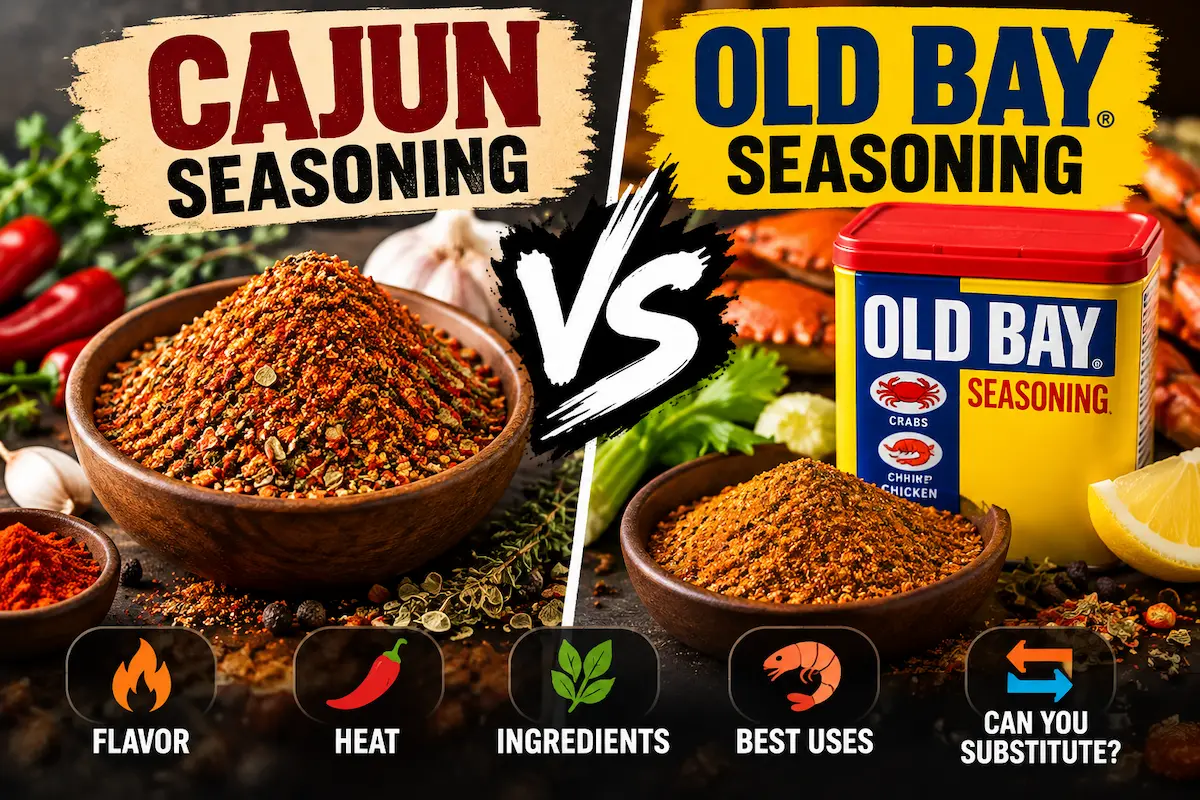
Cajun seasoning and Old Bay seasoning are both popular American spice blends, but they bring different flavors to your food. 🌶️ Cajun seasoning is often more peppery, garlicky, and spicy, while Old Bay is known for its distinctive celery-salt flavor and complex blend of spices. However, Cajun recipes vary, and the exact flavor and heat depend on the product you choose.
Both seasonings work well with seafood, chicken, potatoes, and vegetables. The best choice depends on whether you want a bold, pepper-forward kick or the distinctive flavor associated with classic seafood seasoning.
Let's compare their ingredients, taste, heat levels, and best uses so you can choose the right seasoning for your next meal.
⚡ Quick Answer: Cajun vs Old Bay
Choose Cajun seasoning when you want a bold, savory, peppery flavor, often with noticeable garlic and chili heat.
Choose Old Bay when you want its distinctive celery-salt flavor and complex seasoning profile, especially for crab, shrimp, and other seafood.
Can you substitute one for the other? Yes, in many recipes, but the final flavor will be different.
Which is spicier? Many Cajun blends are hotter than classic Old Bay, but the answer depends on the specific products.
📊 Cajun vs Old Bay: Quick Comparison Table
| Feature | Cajun Seasoning | Old Bay Seasoning |
|---|---|---|
| Type | A family of spice blends | A specific commercial seasoning blend |
| Flavor | Savory, peppery, garlicky, and often earthy | Savory, distinctive, celery-forward, and complex |
| Heat level | Mild to hot, depending on the blend | Usually a mild-to-moderate kick, depending on the product |
| Common ingredients | Often paprika, garlic, onion, black pepper, cayenne, and herbs | Celery salt, spices including red and black pepper, and paprika |
| Salt content | Varies by recipe and brand | Classic Old Bay contains celery salt |
| Popular uses | Cajun chicken, seafood, gumbo, fries, and roasted vegetables | Crab, shrimp, fish, crab cakes, chicken, fries, and vegetables |
| Best for | A bold, pepper-forward seasoning | A distinctive seafood-style seasoning |
| Can they substitute for each other? | Yes, with flavor and heat adjustments | Yes, with flavor and salt adjustments |
Ingredient lists and heat levels vary. Check the label of the exact product you're using.
🧄 What Does Cajun Seasoning Taste Like?
Cajun seasoning is a blend rather than one fixed recipe. Homemade versions and commercial products can contain different combinations and proportions of spices.
Common ingredients include:
Paprika: Adds red color and pepper flavor.
Garlic powder: Provides a savory, garlicky note.
Onion powder: Adds depth and sweetness.
Black pepper: Creates a sharp, peppery bite.
Cayenne pepper: Commonly adds chili heat.
Thyme and oregano: Contribute herbal, earthy flavors.
The result is often a bold, savory seasoning with a noticeable pepper kick. Some blends are mild enough for everyday cooking, while others are considerably hotter.
Cajun seasoning is particularly useful when you want the seasoning itself to contribute a strong pepper-and-garlic character to the dish.
Curious about paprika's role in seasoning blends? Read our guide to Paprika vs Chili Powder: What's the Difference?.
🦀 What Does Old Bay Seasoning Taste Like?
Old Bay is a specific seasoning blend associated with Maryland and the Chesapeake Bay seafood tradition. McCormick describes its classic seasoning as a blend of celery salt, spices, and paprika, with red and black pepper among the spices. It is also promoted for chicken, vegetables, fries, and other savory foods.
Its distinctive flavor comes from the balance of salty, peppery, and aromatic notes. Celery salt is especially important to its recognizable taste.
Old Bay is not exclusively for seafood. You can also use it on:
French fries and roasted potatoes
Corn on the cob
Chicken and fish
Crab cakes and shrimp
Popcorn and roasted vegetables
If you want the recognizable flavor of a classic seafood seasoning, Old Bay is a natural choice.
For product details and the current ingredient declaration, see the official Old Bay seasoning page.
🌶️ Which Is Spicier: Cajun or Old Bay?
In many everyday comparisons, Cajun seasoning delivers more noticeable chili heat than classic Old Bay. But there is no universal rule because Cajun blends vary widely, and Old Bay also contains pepper.
Here's a practical guide:
| If you want... | Try... |
|---|---|
| A stronger cayenne-style kick | A hotter Cajun blend |
| A savory, celery-salt flavor | Classic Old Bay |
| A milder seasoning option | A mild blend, used sparingly |
| More control over the heat | A homemade seasoning with adjustable cayenne |
Remember that peppery flavor and chili heat are not exactly the same thing. A seasoning can taste bold and aromatic without being extremely hot.
If you want to understand how paprika compares with other pepper-based seasonings, explore Paprika vs Smoked Paprika: What's the Real Difference?.
🍤 Can You Substitute Cajun Seasoning for Old Bay?
Yes. Cajun seasoning can replace Old Bay in many savory recipes, and Old Bay can stand in for Cajun seasoning in others. However, neither is an exact match for the other.
When using Cajun seasoning instead of Old Bay
Cajun seasoning can work well on shrimp, fish, chicken, fries, and vegetables. Expect a different flavor, often with more garlic and a stronger pepper kick.
Start with less than the recipe calls for, especially if your Cajun blend is hot or salty. Taste the food and adjust gradually.
When using Old Bay instead of Cajun seasoning
Old Bay can work well in seafood boils, fish dishes, crab cakes, fries, and other savory recipes. The result may have a more noticeable celery-salt character and less of the garlic-forward flavor associated with many Cajun blends.
If the recipe depends on Cajun seasoning's heat, you may need to add a little cayenne separately.
A simple substitution rule
Start with a smaller amount, account for the salt already in the blend, and adjust the flavor before adding more.
You can always add more seasoning, but correcting an overly salty or spicy dish can be difficult.
🍗 Which Is Better for Chicken, Shrimp, and Fries?
Neither seasoning is universally better. Choose based on the flavor you want.
| Food | Cajun seasoning | Old Bay seasoning |
|---|---|---|
| Chicken | Great for a bold, peppery rub | Adds a distinctive savory seasoning |
| Shrimp | Works well when you want a spicy kick | A classic choice for seafood flavor |
| Crab | Useful for a bolder, pepper-forward flavor | Particularly associated with crab and crab cakes |
| French fries | Adds a savory, often spicy coating | Adds a celery-salt and peppery flavor |
| Roasted potatoes | Works well with garlic and herbs | Adds a distinctive all-purpose seasoning |
| Fish | Good for a bold, seasoned crust | Good for a classic seafood-style flavor |
| Vegetables | Adds a stronger spice profile | Provides a savory, aromatic flavor |
🍤 For shrimp and seafood boils
Choose Old Bay if you want its distinctive celery-salt profile. Choose Cajun seasoning if you prefer a more pepper-forward flavor, particularly when the recipe calls for extra heat.
🍟 For fries
Both seasonings work. Cajun seasoning is a good choice for a bolder, often spicy coating, while Old Bay offers a different savory flavor. Sprinkle a small amount over hot fries and adjust to taste.
🍗 For chicken
Cajun seasoning works well as a rub for baked, grilled, or pan-cooked chicken. Old Bay is another option when you want its distinctive seasoning character without necessarily aiming for the same Cajun-style flavor.
🍲 Can You Use Cajun Seasoning or Old Bay in Gumbo?
You can use either seasoning in some gumbo recipes, but they do not produce identical results.
Cajun seasoning may contribute a bold, peppery flavor that suits the style of gumbo you're preparing. Old Bay can add a different combination of salt, pepper, and aromatic spices, especially in seafood-focused dishes.
However, gumbo flavor depends on much more than a seasoning blend. The roux, the vegetables, the stock, the protein, and the overall recipe all matter.
If you're following a traditional or family recipe, use the seasoning specified by that recipe when possible. If experimenting, start with a small amount and taste before adding more.
💡 Real-Life Example: Choosing the Right Seasoning
Imagine you're making shrimp and fries for dinner.
You want the shrimp to have a recognizable seafood-seasoning flavor, so you reach for Old Bay. For the fries, you want something more peppery with a stronger kick, so you choose a Cajun blend.
You could use either seasoning on both foods, but the flavor would change. That's the real difference: the best seasoning is the one that suits the dish and your personal taste.
⚠️ Common Mistakes to Avoid
Assuming all Cajun seasoning is equally hot: Different blends have different ingredients and proportions.
Treating Old Bay and Cajun seasoning as identical: They share some ingredients but have distinct flavor profiles.
Adding too much at once: Begin with a small quantity and adjust gradually.
Ignoring salt content: Some blends already contain substantial salt, so reduce any additional salt as needed.
Expecting an exact substitute: Swapping seasonings changes the flavor even when the recipe still works.
✅ Quick Summary
Cajun seasoning is a variable blend that often emphasizes pepper, garlic, and chili heat.
Old Bay is a specific seasoning known for its celery-salt flavor and complex spice profile.
Many Cajun blends are spicier than classic Old Bay, but individual products vary.
Both can be used on seafood, chicken, fries, and vegetables.
You can substitute one for the other in many recipes, but adjust for flavor, heat, and salt.
The bottom line: Choose Cajun seasoning for a bold, often pepper-forward kick, and Old Bay for its distinctive classic seafood-seasoning flavor. Both can be useful in the kitchen, but they are not interchangeable without changing the taste of your dish.
❓ Frequently Asked Questions
Is Cajun seasoning the same as Old Bay?
No. Cajun seasoning refers to a family of spice blends that often emphasize pepper, garlic, and chili heat. Old Bay is a specific commercial blend known for celery salt, spices, and paprika.
Which is spicier, Cajun or Old Bay?
Many Cajun blends are spicier than classic Old Bay, but the exact heat depends on the products. Check the ingredients and choose a blend that matches your preference.
Can I replace Old Bay with Cajun seasoning?
Yes, in many recipes. Cajun seasoning can work on seafood, chicken, and fries, but it may add more heat and a different flavor. Start with a smaller amount and adjust.
Can I replace Cajun seasoning with Old Bay?
Yes. Old Bay can work as a substitute in many savory dishes, especially seafood recipes. However, it may provide a different celery-salt flavor and less of the pepper-and-garlic character of your original blend.
Is Old Bay only for seafood?
No. Although it is strongly associated with seafood, Old Bay can also be used on chicken, fries, vegetables, popcorn, and other savory foods.
Can you use Cajun seasoning in a seafood boil?
Yes. Cajun seasoning can be used in seafood boils, particularly when you want a bold, pepper-forward flavor. Adjust the amount to suit the recipe and account for salt already present in the blend.
🧠 Quick Knowledge Check
1. Which ingredient is especially important to Old Bay's recognizable flavor?
A. Celery salt
B. Cinnamon sugar
C. Cocoa powder
2. Which seasoning often provides a stronger pepper-and-garlic character?
A. Cajun seasoning
B. Plain sugar
C. Vanilla powder
3. Can Cajun seasoning and Old Bay be substituted in many recipes?
A. Never
B. Yes, with flavor adjustments
C. Only in desserts
4. What should you do when trying a seasoning substitute?
A. Add the maximum amount immediately
B. Ignore the salt content
C. Start small and adjust
Answers: 1-A, 2-A, 3-B, 4-C.
Explore More Spice Guides 🌶️
Want to understand how other seasonings compare?
What's your pick? Do you prefer Cajun seasoning's peppery kick or Old Bay's distinctive seafood flavor?