Spices are dried seeds, fruits, roots, bark, or flowers used to add flavor, aroma, and color to food. Common spices include Turmeric (Haldi), Cumin (Jeera), Coriander (Dhaniya), Black Pepper (Kali Mirch), and Cardamom (Elaichi).
What Are Whole Spices?
Whole spices are spices used in their natural, unground form. They may be seeds, bark, flower buds, fruits, pods, or other dried parts of plants. Whole spices are commonly added to hot oil or cooked directly in dishes to release their aroma and flavor.
🌱 Test your knowledge of Spices Name in English and Hindi 🇮🇳🇬🇧
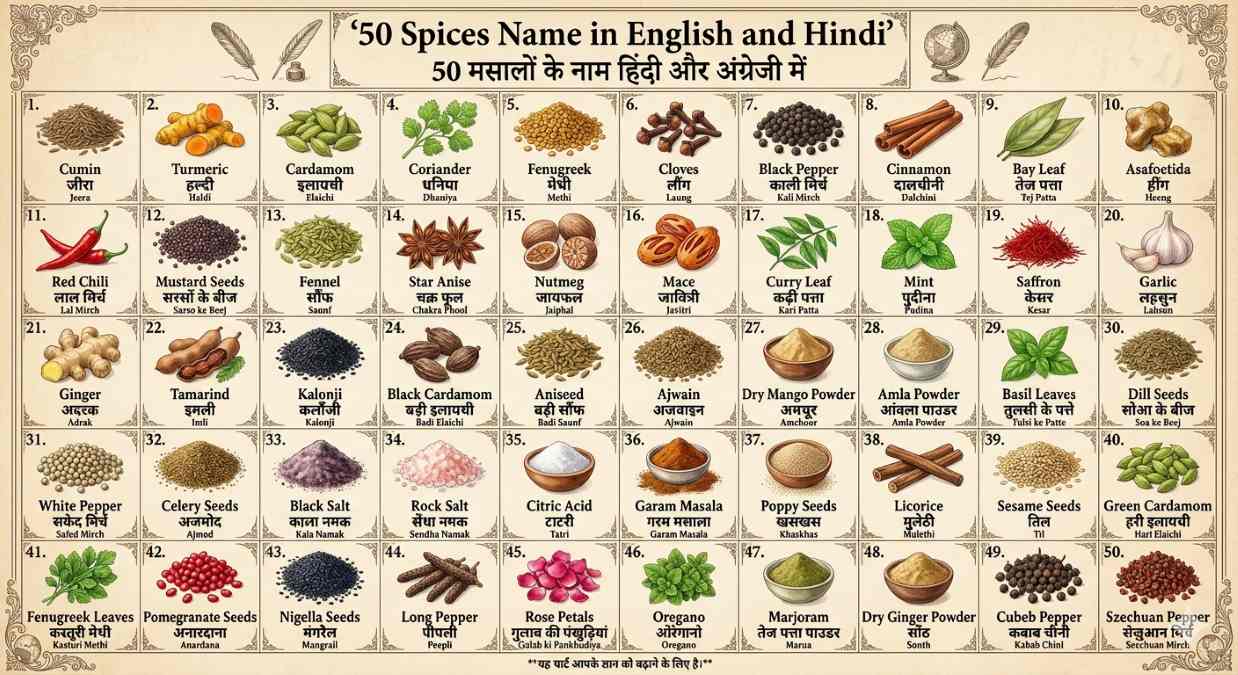
Spices Name in English and Hindi (Masalon ke Naam)
25 Common Spices in Hindi and English | Indian Masala Names | English Vocabulary Video ⬇️Watch the video to know full names in english and hindi⬇️ Spicy Introduction:
Socho ghar ki kitchen 🍳… mummy tadka laga rahi hain, aur poore ghar me ek amazing smell aa rahi hai! Yeh magic hota hai spices (masale) ka. India me har dish ka taste inhi masalon se banta hai.
Aaj hum simple tareeke se spices ke naam English aur Hindi me seekhenge — bilkul easy aur fun way me 😊
Want to know how these spices are actually used in daily cooking? Read our detailed guide on 50 Indian Spices and Their Usesto learn their taste, kitchen uses, storage tips, and traditional uses.
Har spice ka alag taste hota hai (sweet, spicy, bitter)
Spices plants se aate hain (seeds, bark, leaves)
🤯 Interesting Fact (Myth Buster)
❌ Myth: Sab spices sirf spicy hote hain ✅ Truth:
Elaichi (Cardamom) → sweet hoti hai
Dalchini (Cinnamon) → meethi aur warm
Haldi (Turmeric) → earthy taste
👉 Har masala mirchi jaisa teekha nahi hota!
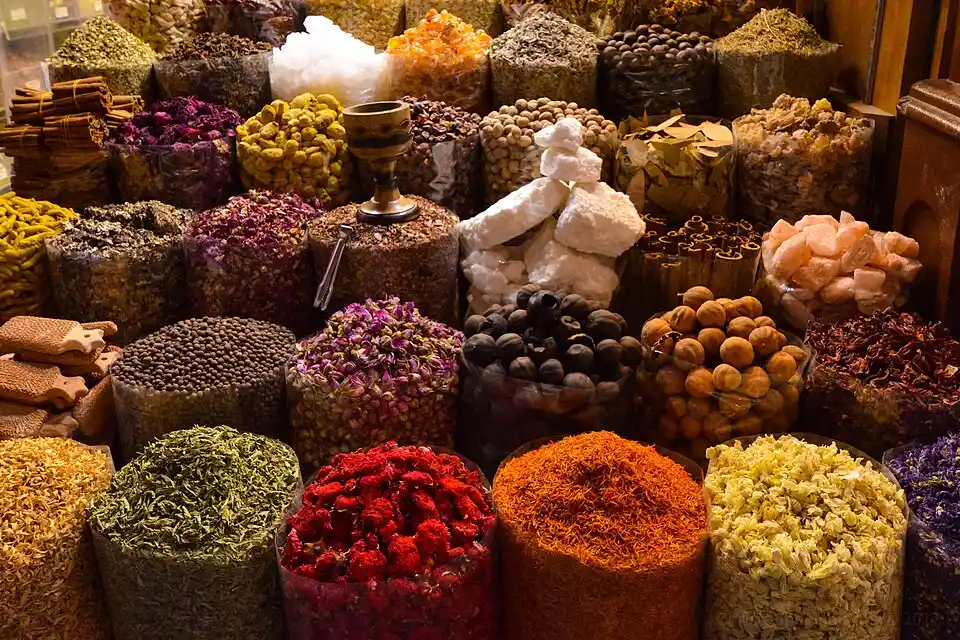
spice bazaar showing different spices (Photo- Christophe Schindler, CC0, via Wikimedia Commons)
🌶️ 100 Spices Name in English and Hindi (Numbered List)
Socho ek baar apni kitchen 🏠 — dabbe kholte hi kitne saare masale (spices) dikhte hain! India me toh har ghar me alag-alag masalon ka khazana hota hai.
Aaj hum 100 spices ke naam English + Hindi + Roman Hindi me seekhenge — easy aur school-friendly tareeke se 😊
This list includes individual spices as well as commonly used herbs, aromatic ingredients, spice products, and regional seasonings. Some ingredients have different names or classifications depending on region and culinary tradition.
🧂 Popular Masala Blends, Seasonings & Spice Mixes
Spices are often combined to create flavorful masala blends and seasoning mixes. These blends can vary by region, cuisine, brand, and recipe. Here are some popular examples used in Indian and international cooking.
No.
Masala / Seasoning in English
Hindi Name
Romanized Hindi
1
Garlic Flakes
लहसुन फ्लेक्स
Lehsun Flakes
2
Onion Flakes
प्याज फ्लेक्स
Pyaz Flakes
3
Chili Flakes
मिर्च फ्लेक्स
Mirch Flakes
4
Mixed Herbs
मिक्स हर्ब्स
Mixed Herbs
5
Garam Masala
गरम मसाला
Garam Masala
6
Chaat Masala
चाट मसाला
Chaat Masala
7
Sambar Masala
सांभर मसाला
Sambar Masala
8
Rasam Powder
रसम पाउडर
Rasam Powder
9
Pav Bhaji Masala
पाव भाजी मसाला
Pav Bhaji Masala
10
Biryani Masala
बिरयानी मसाला
Biryani Masala
11
Kitchen King Masala
किचन किंग मसाला
Kitchen King Masala
12
Meat Masala
मीट मसाला
Meat Masala
13
Fish Masala
फिश मसाला
Fish Masala
14
Pickle Masala
अचार मसाला
Achar Masala
15
Tandoori Masala
तंदूरी मसाला
Tandoori Masala
16
Chai Masala
चाय मसाला
Chai Masala
17
Jaljeera Powder
जलजीरा पाउडर
Jaljeera Powder
18
Peppercorn Blend
मिक्स पेपरकॉर्न
Mixed Peppercorns
19
Panch Phoron
पंच फोरन
Panch Phoron
20
Chinese Five-Spice
चाइनीज़ फाइव-स्पाइस
Chinese Five-Spice
21
Barbecue Seasoning
बारबेक्यू मसाला
Barbecue Masala
22
Steak Seasoning
स्टेक सीज़निंग
Steak Seasoning
23
Taco Seasoning
टैको सीज़निंग
Taco Seasoning
24
Italian Seasoning
इटालियन सीज़निंग
Italian Seasoning
25
Cajun Seasoning
काजुन सीज़निंग
Cajun Seasoning
Note: Masala blends and seasoning mixes are combinations of spices, herbs, salts, and other flavoring ingredients. Their exact ingredients can vary depending on the recipe, region, or brand.
🍛 Spices Used in Biryani — English & Hindi Names
These spice Blend are mainly used in Veg, Chicken, and Mutton Biryanis and in most Indian curries and masalas.
Spice
Hindi Name
Why It’s Used
Cumin
जीरा
Earthy aroma
Green Cardamom
हरी इलायची
Sweet fragrance
Black Cardamom
बड़ी इलायची
Smoky, deep aroma
Cinnamon
दालचीनी
Warm sweetness
Cloves
लौंग
Strong aromatic flavor
Bay Leaf
तेज पत्ता
Fragrance
Star Anise
चक्र फूल
Sweet, licorice-like aroma
Mace
जावित्री
Warm aromatic note
Nutmeg
जायफल
Rich, warm fragrance
Black Pepper
काली मिर्च
Heat and pungency
Kalpasi
कालपासी
Warm
Stone Flower
पत्थर फूल / दगड़ फूल
aromatic
🌿 What Is Stone Flower (Kalpasi)?
Explain:
What it is
Its English/common names
Hindi and regional names
What it looks like
How it is used as a spice
Its aroma
Why it appears in some biryani and masala preparations
Difference between stone flower as a spice and the literal idea of a “flower”
Where it is commonly used in Indian cooking
🥣 Spices Used in Sambar — English & Hindi Names
Spice
Hindi Name
Role in Sambar
Coriander Seeds
धनिया
Main aromatic base
Cumin
जीरा
Earthy flavor
Fenugreek Seeds
मेथी
Slight bitterness and depth
Black Pepper
काली मिर्च
Mild heat
Mustard Seeds
राई / सरसों
Tempering
Dried Red Chili
सूखी लाल मिर्च
Heat and color
Turmeric
हल्दी
Color and earthy flavor
Asafoetida
हींग
Savory aroma
🍲 Common Spices Used in Rasam
Spice
Hindi Name
Common Role in Rasam
Black Pepper
काली मिर्च
Sharp heat and aroma
Cumin
जीरा
Earthy, warm flavor
Coriander Seeds
धनिया
Aromatic base
Dried Red Chili
सूखी लाल मिर्च
Heat and color
Mustard Seeds
राई / सरसों
Tempering
Fenugreek Seeds
मेथी
Adds depth and slight bitterness
Turmeric
हल्दी
Color and earthy flavor
Asafoetida
हींग
Strong savory aroma
Curry Leaves
कड़ी पत्ता
Fragrance and South Indian character
Not every rasam uses exactly the same spices. Tomato rasam, pepper rasam, garlic rasam, Mysore-style rasam, and other regional versions can have different spice combinations.🍛 Popular Indian Dishes and the Spices Used
Popular Dish
Key Spices
Biryani
Cardamom, cloves, cinnamon, bay leaf, star anise
Sambar
Coriander, cumin, fenugreek, red chili, mustard
Rasam
Black pepper, cumin, coriander, dried red chili
Chole
Cumin, coriander, black cardamom, cloves
Rajma
Cumin, coriander, turmeric, chili
Aloo Gobi
Cumin, turmeric, coriander, chili
Chicken Curry
Turmeric, coriander, cumin, chili
Masala Chai
Cardamom, cinnamon, cloves, ginger
🌶️ 7 Indian Spices
This can be a compact table:
Spice
Hindi Name
Common Uses
Cumin
जीरा
Dal, curries, rice dishes
Coriander
धनिया
Curries, masalas
Turmeric
हल्दी
Curries, dal, vegetables
Black Pepper
काली मिर्च
Rasam, curries, beverages
Cardamom
इलायची
Biryani, tea, desserts
Cloves
लौंग
Biryani, pulao, masala
Cinnamon
दालचीनी
Biryani, curries, tea
Important: “the 7 Indian spices” isn't a universally fixed list. Different sources and traditions may choose different seven. We should say “Seven commonly used Indian spices”, rather than pretending there is one official seven.
🌿 What Are the 10 Types of Spices?
Instead, explain that spices come from different plant parts, such as:
Seeds — cumin, coriander
Bark — cinnamon
Flower buds — cloves
Fruits — black pepper, chili
Roots/rhizomes — turmeric
Bulbs — garlic
Arils — mace
Pods — cardamom
Dried leaves — bay leaf
Lichens — stone flower/kalpasi
🍚 What Are the Ingredients Needed for Biryani?
Biryani recipes vary considerably by region and style. Common components include rice, a protein or vegetables, onions, yogurt in many versions, herbs, and a combination of whole and ground spices.
Check our Biryani Spices table above.
⭐ What Are the 7 Super Spices?
The phrase “super spices” is commonly used online for spices that are especially valued for their flavor, traditional culinary use, or naturally occurring plant compounds. There is no official list of seven super spices.
🧠 Simple Samajh
👉 Spices wo ingredients hote hain jo khane ka taste, smell aur color badhate hain.
Roman Hindi line: 👉 Masale har simple khane ko bhi special bana dete hain — bina masale sab feeka lagta hai.
Answer: Spices are natural ingredients obtained from seeds, roots, bark, leaves, flowers, or fruits of plants. They add flavor, aroma, color, and taste to food.
2. What is the Hindi meaning of spices?
Answer: Spices are called "Masale (मसाले)" in Hindi. They are widely used in Indian cooking to enhance the flavor and aroma of dishes.
3. Which is the most common spice in India?
Answer:Turmeric (Haldi) is one of the most commonly used spices in India and is found in almost every Indian kitchen.
4. Total kitne spices hote hain?
Answer: Duniya bhar me 100 se bhi zyada spices paye jaate hain. Is article me sirf sabse common aur important spices ki list di gayi hai.
5. Sabse important spice kaunsa hai?
Answer:Haldi (Turmeric) ko India ke sabse important spices me se ek mana jata hai, kyunki iska use cooking ke saath-saath traditional remedies me bhi hota hai.
6. Garam masala kya hai?
Answer:Garam masala kai alag-alag spices ka blend hota hai, jisme aam taur par cinnamon, cloves, cardamom, black pepper aur cumin shamil hote hain.
7. Whole aur powder me kya difference?
Answer:Whole spices apne original seed ya bark form me hote hain, jabki powder spices unhi spices ka pisa hua roop hote hain.
8. Sabse mehenga spice kaunsa hai?
Answer:Kesar (Saffron) duniya ka sabse mehenga spice mana jata hai, kyunki ise tayyar karne me bahut adhik mehnat lagti hai.
9. Kya spices har country me use hote hain?
Answer:Haan. Spices ka use duniya bhar ki cuisines me hota hai, lekin India ko "Land of Spices" ke naam se bhi jana jata hai kyunki yahan spices ki bahut badi variety aur parampara milti hai.
Popular Indian Spices and Their Uses
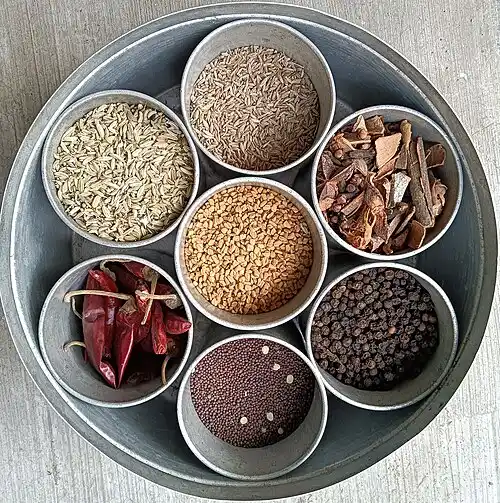
Box containing spices like pepper, chilli, mustard, cinnamon, cumin, fenugreek, fennel. (Photo- Saral Shots, CC0, via Wikimedia Commons)
I believe spices are the heart of every Indian kitchen. Whether I'm making a simple dal or a festive biryani, the right spice can completely change the taste and aroma of the dish. Over the years, I've realized that learning spices name in English and Hindi also makes it much easier to understand recipes, shop for ingredients, and improve everyday cooking.
Here are some of the most commonly used Indian spices and how I use them:
Turmeric (Haldi) – I use turmeric almost every day in curries and vegetables. It adds a beautiful golden color and is also well known for its health benefits.
Cumin (Jeera) – Jeera is one of my favorite spices for tempering. It gives dals, curries, and rice dishes a rich, earthy flavor.
Coriander (Dhaniya) – Whether whole or ground into powder, coriander is an essential spice in many Indian recipes.
Mustard Seeds (Sarson/Rai) – I often use mustard seeds for tempering, especially in South Indian dishes and homemade pickles.
Fenugreek (Methi) – Methi seeds have a slightly bitter taste, but when used correctly, they add wonderful depth to curries and spice blends.
Black Pepper (Kali Mirch) – Freshly ground black pepper adds a natural kick to soups, curries, and many everyday dishes.
Cardamom (Elaichi) – Elaichi is my go-to spice for tea, sweets, and biryani because of its amazing aroma.
Cloves (Laung) – I usually add cloves while cooking rice, pulao, and garam masala for a warm, rich flavor.
Cinnamon (Dalchini) – A small piece of cinnamon can make a big difference in desserts, tea, and spicy gravies.
Ajwain (Carom Seeds) – I often use ajwain in parathas, pakoras, and other snacks. It is also popularly known for supporting healthy digestion.
If you're just starting to learn Indian spices, don't try to memorize all of them at once. Start with the everyday spices you see in your kitchen, and gradually you'll recognize their English and Hindi names naturally. That's exactly how I learned them too.
Why Learning Spices Names in English and Hindi is Useful
When I first started learning different spices, I often got confused by their English names. Many recipes, grocery stores, and online shopping websites use English names, while we are more familiar with Hindi names at home.
Knowing both English and Hindi names makes it much easier to follow recipes, buy the right ingredients, travel abroad, or simply improve your cooking knowledge. Whether you're a student, home cook, or food enthusiast, this list can be a handy reference whenever you need it.
Tips to Store Spices Properly
To keep your spices fresh and aromatic, I always recommend storing them in airtight containers away from direct sunlight and moisture. Whole spices generally stay fresh longer than ground spices, so I prefer buying whole spices whenever possible and grinding them only when needed. Proper storage helps retain both flavor and aroma for a longer time.
Whole Spices vs Ground Spices
One thing I've noticed is that whole spices usually have a stronger aroma and a longer shelf life than ground spices. Ground spices are convenient for everyday cooking, while whole spices are perfect for tempering, biryanis, pulao, and freshly prepared masalas. I like keeping both in my kitchen because each has its own purpose.
Ajwain in English (Carom Seeds)
Many readers ask me, "What is Ajwain called in English?" The answer is simple—Ajwain is called Carom Seeds in English. Its scientific name is Trachyspermum ammi. It is a popular spice in Indian kitchens and is known for its strong aroma, slightly bitter taste, and digestive properties.
Personally, I use ajwain quite often while making parathas, pakoras, mathri, and other homemade snacks. My family has also used it as a simple home remedy for indigestion and bloating for years. While I'm not a doctor and don't recommend it as a medical treatment, I do find that adding a small amount of ajwain to certain dishes gives them a unique flavor and makes them feel lighter to digest.
If you're shopping online or reading an international recipe, remember that Ajwain = Carom Seeds. Knowing this English name will make it much easier to identify the right ingredient.
Ajwain in English (Hinglish)
Mujhse bahut log puchte hain, "Ajwain ko English mein kya bolte hain?" Iska simple answer hai Ajwain ko English mein Carom Seeds kehte hain. Indian kitchens mein yeh ek bahut hi common spice hai aur iska taste thoda strong aur halka sa kadwa hota hai.
Main khud ajwain ka use paratha, pakora, poori aur mathri banate waqt karta hoon. Ghar mein bhi bachpan se dekhta aaya hoon ki log kabhi-kabhi digestion ke liye ajwain ka istemal karte hain. Mere experience mein, thodi si ajwain khane ka taste aur aroma dono ko improve kar deti hai. Agar aap kisi English recipe ya grocery website par Carom Seeds dekhen, to samajh jaiye ki wahi hamari Ajwain hai.
📚 Continue Learning at Monto Fact Jungle
Explore our most popular educational resources designed for students, parents, teachers, and lifelong learners.
💻 Computer Keyboard Keys Name List (English + Hindi) 📌 Quick Answer Keyboard keys are the buttons on a computer or laptop keyboard used to type text, enter commands, and perform different functions. Common keyboard keys include Alphabet Keys, Number Keys, Function Keys (F1–F12), Arrow…
📱 Mobile Keyboard Symbols Name and Symbols List (English + Hindi) 📌 Quick Answer *Mobile keyboard symbols are special characters available on smartphone keyboards for typing text, numbers, punctuation, currency symbols, and emojis. Common mobile keyboard symbols include @, #, $, %, &, , ?,…
🍎 100 Fruits Name in English and Hindi (Falon ke Naam) - Complete list 100 Fruits Name List in English and Hindi 📌 Quick Answer Fruits are the edible, seed-bearing parts of flowering plants that are rich in vitamins, minerals, and fiber. Common fruits include…
🍎 50 Types of Fruits Name in Hindi and English (फलों के नाम) Iske Saath Spices Names in english and hindi, 100 fruits name ine english and hindi, 50 types of birds name in hindi and english aur lion kya khata hai bhi interested hai,…
✍️ Written by Monto Fact Jungle (Mohan R) Founder of Monto Fact Jungle, an independent educational website exploring birds, animals, nature, plants, and home & garden. Interested in documenting everyday nature through original articles, observations, and photography, while creating clear and useful learning resources for curious readers.

 Spices Name in English and Hindi (Masalon ke Naam)