
🌿What Is Sumac Spice? Taste, Uses, Origin & Substitutes
🌿 What Is Sumac Spice? Taste, Uses, Origin and Cooking Guide
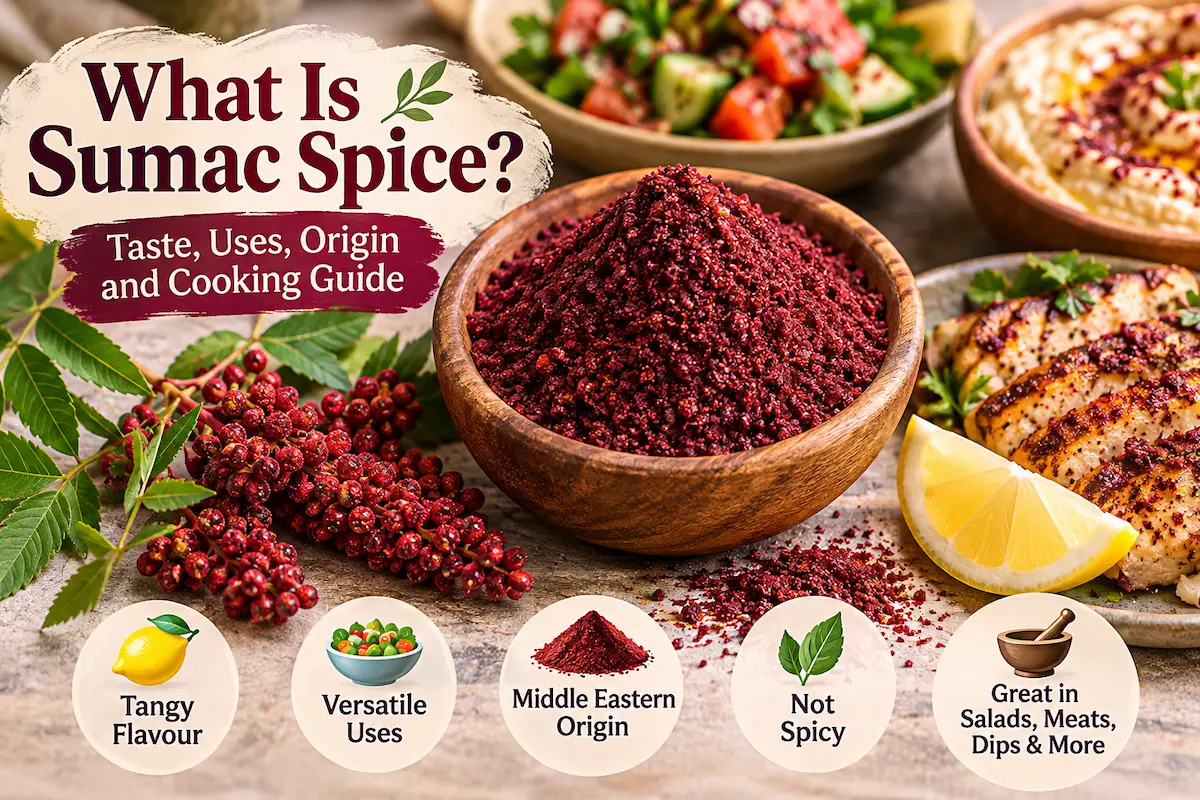
⚡ Quick Answer: What Is Sumac Spice?
Sumac is a tangy, reddish-purple spice made from dried and ground berries of the sumac plant (Rhus coriaria). Popular in Middle Eastern and Mediterranean cooking, it has a bright, lemon-like flavour with a mild fruity and slightly earthy taste.
Sumac is commonly sprinkled over salads, hummus, grilled meats, rice, vegetables and dips. It adds acidity and colour without making food spicy.
Taste: Tangy, citrusy and slightly fruity
Made from: Dried sumac berries
Origin: Traditionally used across the Middle East and Mediterranean
Common uses: Salads, meats, dips, rice and spice blends
Is it spicy? No, culinary sumac is generally not hot or pungent.
Sumac is a tangy, reddish-purple spice made from dried and ground berries. Popular in Middle Eastern and Mediterranean cooking, it adds a refreshing, lemon-like sourness to salads, grilled meats, vegetables, rice dishes and dips.
Unlike chilli powder and other hot seasonings, sumac is generally not spicy. Its distinctive tart and slightly fruity flavour makes it an excellent ingredient for adding brightness to everyday meals.
You may have seen sumac sprinkled over hummus, mixed into salad dressings or used as a seasoning for grilled chicken. It is also an important ingredient in some traditional regional spice blends, including za'atar.
But what exactly is sumac made of? Where does it come from? What does it taste like, and how can you use it in your kitchen?
Let's explore this fascinating spice. 🌶️ Explore our 100 spices name page
🌱 What Is Sumac Spice?
Sumac is a culinary spice produced from the dried and ground fruits of certain sumac plants. The species most commonly associated with the traditional Middle Eastern seasoning is Rhus coriaria.
The plant is a shrub or small tree that produces clusters of small reddish fruits. These fruits are harvested, dried and processed into a coarse or fine powder.
The resulting seasoning is usually deep red, burgundy or reddish-purple in colour.
Sumac is particularly popular in countries such as Turkey, Lebanon, Syria, Jordan and Iran, where it is used to season meats, vegetables, rice, salads and other savoury foods.
Quick facts about sumac
| Feature | Description |
|---|---|
| Common name | Sumac |
| Alternative spellings | Sumach, Sumak |
| Botanical species | Rhus coriaria |
| Plant family | Anacardiaceae |
| Main ingredient | Dried sumac fruits |
| Appearance | Red to reddish-purple powder |
| Taste | Sour, tangy and slightly fruity |
| Common culinary regions | Middle East and Mediterranean |
| Common form | Ground powder |
| Main purpose | Adds acidity and flavour to food |
💡 Did you know? Sumac is a seasoning that adds sourness without the chilli-like heat associated with many other spices.
🗺️ Where Does Sumac Come From?
Sumac has a long history in Mediterranean and Middle Eastern food traditions.
The culinary species Rhus coriaria is native to southern Europe and has been cultivated and used across Mediterranean and neighbouring regions.
Today, sumac is especially associated with Middle Eastern cooking traditions, including those of Turkey, Lebanon, Syria, Jordan and Iran.
It is commonly used as a table seasoning, mixed into marinades, sprinkled over salads and incorporated into traditional spice blends.
Why is sumac called sumac?
The English word sumac is generally traced to the Arabic word summaq, meaning dark red. This refers to the characteristic colour of the fruit.
The spice is also known by alternative spellings such as sumach and sumak.
👅 What Does Sumac Taste Like?
Sumac has a distinctly sour, tangy and slightly fruity flavour.
Many people compare it to lemon because it provides a refreshing acidity. However, sumac has its own flavour profile and is not simply dried lemon powder.
Its taste can vary depending on the plant, growing conditions, processing and quality of the seasoning.
| Taste characteristic | Description |
|---|---|
| Sourness | Noticeably tart and tangy |
| Citrus notes | Similar to lemon |
| Fruitiness | Mild berry-like character |
| Earthiness | Subtle earthy notes |
| Heat | Generally not hot or spicy |
| Aroma | Mild, fruity and earthy |
Is sumac spicy?
No. Culinary sumac is generally not hot like chilli powder, cayenne pepper or paprika.
It adds sourness rather than chilli heat.
This makes it useful when you want to introduce a tangy flavour without making your food hotter.
What spice is similar to sumac?
Some ingredients provide flavours that resemble parts of sumac's taste.
| Ingredient | Similarity |
|---|---|
| Lemon zest | Fresh citrus aroma |
| Lemon juice | Sour, acidic flavour |
| Amchur powder | Dry, fruity sourness |
| Tamarind powder | Tangy and fruity flavour |
| Vinegar | Acidity, especially in dressings |
None of these ingredients reproduces the exact flavour of sumac, but they can work as alternatives in different recipes.
🧺 What Is Sumac Made Of?
Pure culinary sumac is generally made from dried sumac fruits that are ground into powder.
The fruits naturally contain organic acids, including malic acid, which contribute to their sour taste.
| Component | Role |
|---|---|
| Dried sumac fruits | Main raw ingredient |
| Natural organic acids | Contribute to the sour flavour |
| Natural fruit pigments | Give the seasoning its reddish colour |
| Other naturally occurring plant compounds | Contribute to its overall flavour profile |
Does sumac contain salt?
Pure ground sumac does not need added salt.
However, some commercial products contain salt or other ingredients. Always check the ingredient label if you want a product made entirely from sumac.
🍽️ How to Use Sumac in Cooking
Sumac is a versatile seasoning that can be used in many different types of food.
Its sour flavour pairs particularly well with olive oil, garlic, onions, fresh herbs, vegetables, chicken and fish.
Here are some common ways to use it.
| Food | How to use sumac |
|---|---|
| 🥗 Salads | Sprinkle over fresh vegetables |
| 🍗 Grilled chicken | Add to marinades or dry rubs |
| 🥩 Meat | Season kebabs, lamb and grilled meat |
| 🥔 Roasted vegetables | Toss with olive oil and sumac |
| 🧆 Hummus | Sprinkle over the finished dip |
| 🍚 Rice | Add a little before serving |
| 🐟 Fish | Use as a finishing seasoning |
| 🥣 Yogurt dips | Mix with yogurt, garlic and herbs |
| 🫓 Flatbread | Sprinkle over bread with olive oil |
| 🍳 Eggs | Add a pinch to fried or boiled eggs |
1. Sumac in salads 🥗
Sumac is commonly used in Middle Eastern salads.
Sprinkle it over chopped cucumber, tomato, onion, parsley and lettuce. Add olive oil and salt to create a simple tangy dressing.
It works particularly well in fattoush, a popular Middle Eastern salad.
2. Sumac on grilled chicken 🍗
Mix ground sumac with olive oil, garlic, black pepper and other seasonings.
Use the mixture as a marinade or dry seasoning for chicken before grilling or roasting.
3. Sumac on roasted vegetables 🥕
Toss potatoes, carrots, cauliflower or sweet potatoes with olive oil and sumac before roasting.
The spice adds a tangy flavour that complements the natural sweetness of roasted vegetables.
4. Sumac on hummus 🧆
Prepare your favourite hummus and sprinkle a little sumac over the surface.
Add olive oil and fresh parsley for a colourful finish.
5. Sumac with rice 🍚
Add a small amount of sumac to cooked rice or sprinkle it over rice dishes before serving.
It provides a refreshing contrast to rich and aromatic ingredients.
👩🍳 Easy Recipe: Simple Sumac Onion Salad
Want to try sumac for the first time? This simple salad is an easy way to experience its flavour.
Ingredients
1 medium red onion
1 teaspoon ground sumac
1 tablespoon lemon juice
1 tablespoon olive oil
A small handful of chopped parsley
Salt to taste
Preparation
Slice the red onion thinly.
Place it in a mixing bowl.
Add ground sumac and salt.
Pour in the lemon juice and olive oil.
Add chopped parsley.
Mix everything gently.
Allow the salad to rest for a few minutes before serving.
Serve it alongside grilled chicken, kebabs, rice or flatbread.
Cooking tip: Start with a small quantity of sumac and adjust according to your taste.
🫙 Different Forms of Sumac
Sumac is available in different forms depending on how it is processed and sold.
| Form | Appearance | Common uses |
|---|---|---|
| Whole dried fruits | Small dried reddish fruits | Traditional preparations and infusions |
| Coarse ground sumac | Textured reddish powder | Seasoning and finishing dishes |
| Fine ground sumac | Fine red or purple powder | Marinades, sauces and dressings |
| Sumac seasoning blend | Mixed seasoning powder | Ready-to-use food seasoning |
What is ground sumac?
Ground sumac is the dried fruit processed into a powder.
It is the most convenient form for everyday cooking because it can be sprinkled directly onto food or mixed into marinades, sauces and dressings.
Some commercial ground products may include salt or other ingredients, so check the packaging.
🛒 How to Choose Good-Quality Sumac
If you are buying sumac for your kitchen, consider these points:
| What to check | What to look for |
|---|---|
| Colour | Red, burgundy or reddish-purple |
| Aroma | Pleasant, mild and fruity |
| Texture | Coarse or fine, depending on preference |
| Ingredients | Pure sumac if you want an unblended product |
| Packaging | Airtight, sealed packaging |
| Label | Food-grade product with clear ingredient information |
Avoid purchasing unidentified wild berries or homemade powders from unknown plants.
Important: Only buy culinary sumac from a reliable food supplier. Not every plant commonly called sumac is suitable for eating.
🏺 How to Store Sumac
Proper storage helps preserve the flavour and aroma of ground sumac.
Follow these simple tips:
Keep it in an airtight container.
Store it in a cool, dry place.
Keep it away from direct sunlight.
Avoid introducing moisture into the container.
Follow the manufacturer's best-before instructions.
A tightly sealed spice jar is convenient for everyday use.
🔄 What Is a Good Substitute for Sumac?
If you cannot find sumac, several ingredients can provide a similar sour flavour.
The best alternative depends on the recipe.
| Sumac substitute | Flavour | Best use |
|---|---|---|
| Lemon zest | Fresh citrus | Dry seasoning and salads |
| Lemon juice | Sour and acidic | Marinades and dressings |
| Amchur powder | Dry, fruity sourness | Indian-style dry seasoning |
| Tamarind powder | Fruity and tangy | Sauces and marinades |
| Vinegar | Sharp acidity | Dressings and sauces |
Which substitute is closest to sumac?
There is no perfect substitute.
For a dry seasoning, lemon zest or amchur powder may work well. For a dressing or marinade, lemon juice can provide the necessary acidity.
Tamarind powder is another option when a fruity sour flavour is suitable for the dish.
Remember: Lemon juice and vinegar add moisture, while ground sumac is a dry seasoning. Adjust the liquid in your recipe accordingly.
🌿 Sumac vs Za'atar: What Is the Difference?
Sumac and za'atar are closely connected in Middle Eastern cooking, but they are not the same ingredient.
Sumac is an individual spice made from dried fruits. Za'atar can refer to a herb and also to a regional seasoning blend that commonly contains dried herbs, sumac and sesame seeds.
| Feature | Sumac | Za'atar |
|---|---|---|
| Type | Individual spice | Herb or spice blend |
| Main flavour | Sour and tangy | Herbal, nutty and tangy |
| Main ingredients | Ground sumac fruits | Often herbs, sumac and sesame |
| Appearance | Reddish-purple powder | Usually greenish-brown blend |
| Common uses | Salads, meat and vegetables | Flatbread, dips and seasoning |
Sumac can be one of the ingredients in za'atar, but za'atar contains additional components.
🧂 Sumac vs Paprika: What Is the Difference?
Both sumac and paprika are commonly sold as coloured powders, but they have different ingredients and flavours.
| Feature | Sumac | Paprika |
|---|---|---|
| Source | Dried sumac fruits | Dried peppers |
| Main flavour | Sour and tangy | Sweet, earthy or smoky |
| Heat | Generally not hot | Depends on the variety |
| Colour | Reddish-purple | Red or orange-red |
| Common use | Adds acidity | Adds pepper flavour and colour |
Sumac is useful when a dish needs tanginess, while paprika is generally used for pepper flavour and colour.
They are not direct substitutes for each other.
🌍 What Is Sumac Called in Different Languages?
The name of sumac varies across languages and regions.
| Language | Name |
|---|---|
| English | Sumac / Sumach |
| Arabic | سماق |
| German | Sumach |
| French | Sumac |
| Spanish | Zumaque |
| Turkish | Sumak |
Note: Local spellings, transliterations and culinary names can vary. The table refers to commonly used names rather than every regional variation.
What is sumac called in Hindi?
Sumac is not a standard everyday spice in every Indian kitchen, so regional names and transliterations can vary.
The name sumac is often retained when the imported spice is sold in Indian food shops. If purchasing it, look for the English product name and botanical identification rather than relying only on an unfamiliar local-name translation.
🔊 How to Pronounce Sumac
The English pronunciation is commonly given as:
SOO-mak
It has two syllables, with the emphasis on the first.
The word may also appear as sumach or sumak in different English-language and regional food references.
🛡️ Is Sumac Safe to Eat?
Culinary sumac made from food-grade ingredients is commonly used as a seasoning in traditional cooking.
However, it is important to distinguish edible culinary sumac from other plants that share the common name.
Purchase food-grade seasoning from a reliable supplier.
Do not collect or eat unidentified wild sumac berries.
Do not confuse culinary sumac with poison sumac.
Check the ingredients if you have known food allergies or sensitivities.
If you have a specific medical concern, ask a qualified healthcare professional rather than using sumac as a treatment.
Is poison sumac the same as culinary sumac?
No.
Culinary sumac commonly refers to Rhus coriaria. Poison sumac is a different plant, known botanically as Toxicodendron vernix.
They should not be treated as interchangeable plants.
Never prepare food using unidentified wild berries.
✨ Interesting Facts About Sumac
A natural sour seasoning: Sumac is used to add tanginess to food without relying entirely on lemon juice or vinegar.
A Middle Eastern favourite: It is commonly used in Turkish, Lebanese, Syrian, Jordanian and Iranian cooking.
An ingredient in za'atar: Sumac is often combined with dried herbs and sesame seeds in regional za'atar blends.
A colourful seasoning: Its reddish-purple powder adds colour as well as flavour.
More than a cooking ingredient: The sumac plant has also been used historically for tanning leather and producing natural dyes.
Different plant species exist: The word sumac refers to a group of plants, but not all species have the same culinary uses.
A versatile finishing spice: A small sprinkle can add a noticeable tangy flavour to hummus, salads and grilled food.
📌 Quick Summary: Sumac Spice
| Question | Quick answer |
|---|---|
| What is sumac? | A spice made from dried sumac fruits |
| Botanical species | Commonly Rhus coriaria |
| What does it taste like? | Sour, tangy and slightly fruity |
| Is it spicy? | Generally no |
| Where is it popular? | Middle Eastern and Mediterranean cuisines |
| What is it used for? | Salads, meat, chicken, rice, dips and vegetables |
| What is ground sumac? | Dried sumac fruits processed into powder |
| What is a substitute? | Lemon zest, amchur or tamarind powder |
| Is it the same as za'atar? | No, but it is often an ingredient in za'atar |
| How is it stored? | In an airtight container in a cool, dry place |
🧠 Test Your Knowledge: Sumac Quiz
Let's see how much you have learned about this tangy spice!
1. What is culinary sumac generally made from?
A. Dried leaves
B. Dried fruits
C. Tree bark
D. Flower petals
2. What is the main flavour of sumac?
A. Sweet
B. Bitter
C. Tangy and sour
D. Very spicy
3. Which plant species is commonly associated with culinary sumac?
A. Rhus coriaria
B. Piper nigrum
C. Cinnamomum verum
D. Curcuma longa
4. Which ingredient is commonly used in za'atar blends alongside herbs and sesame?
A. Vanilla
B. Sumac
C. Nutmeg
D. Clove
5. Which of these can be used as a sumac substitute?
A. Lemon zest
B. Sugar
C. Cocoa powder
D. Vanilla extract
6. Is culinary sumac generally hot like chilli powder?
A. Yes
B. No
Answers: 1-B, 2-C, 3-A, 4-B, 5-A, 6-B.
❓ Frequently Asked Questions About Sumac
1. What is sumac spice used for?
Sumac is used to season salads, grilled meat, chicken, fish, vegetables, rice, hummus, yogurt dips and marinades. It adds a tangy, lemon-like flavour.
2. What is sumac spice made of?
Culinary sumac is generally made from the dried fruits of Rhus coriaria, which are ground into a reddish-purple powder.
3. What does sumac taste like?
Sumac tastes sour, tangy and slightly fruity. Its flavour is often compared to lemon, although it has a distinctive berry-like character.
4. Is sumac spicy or hot?
No. Sumac is generally not hot like chilli powder. It adds sourness and tanginess rather than heat.
5. What is sumac called in English?
Sumac is already the commonly used English name. It is also sometimes spelled sumach or sumak.
6. What is sumac called in Arabic?
Sumac is commonly written as سماق in Arabic.
7. Can I use sumac instead of lemon?
Sumac can provide a similar tangy flavour in some dishes. However, it does not provide the moisture or full citrus flavour of fresh lemon juice.
8. What is the best substitute for sumac?
There is no exact substitute. Lemon zest, amchur powder and tamarind powder can provide similar sour or fruity notes, depending on the recipe.
9. Is sumac the same as paprika?
No. Sumac is made from dried sumac fruits, while paprika is made from dried peppers. Sumac is sour and tangy, whereas paprika is generally sweet, earthy or smoky.
10. Is sumac the same as za'atar?
No. Sumac is an individual spice, while za'atar can refer to a herb or a seasoning blend that often contains sumac, sesame seeds and dried herbs.
11. Can sumac be used on chicken?
Yes. Sumac works well in chicken marinades and dry rubs. It pairs nicely with olive oil, garlic, black pepper and herbs.
12. How should ground sumac be stored?
Keep ground sumac in an airtight container in a cool, dry place away from direct sunlight and moisture. Follow the product's best-before guidance.
13. Who should not eat sumac?
Anyone with a known allergy or sensitivity to an ingredient in a sumac product should check its composition and seek appropriate professional advice. Avoid unidentified wild plants and do not use sumac as a medical treatment.
🔎 Explore More Spices and Seasonings
Discover more ingredients, regional blends and culinary traditions in our growing spice collection. (coming soon)
Middle Eastern Spices: Essential Spice Names and Their Uses
What Is Za'atar? Ingredients, Taste and Cooking Uses
What Is Baharat? A Guide to Middle Eastern Spice Blends
What Is Ras el Hanout? Moroccan Spice Blend Explained
What Is Harissa? North African Chili Paste and Its Uses
🌍 Explore our global spice library to discover the ingredients, flavours and food traditions found in kitchens around the world.