
🌶️40 Most Common Spices Used in American Kitchens (With Pictures & Uses)
🌶️ 40 Most Common Spices Used in American Kitchens
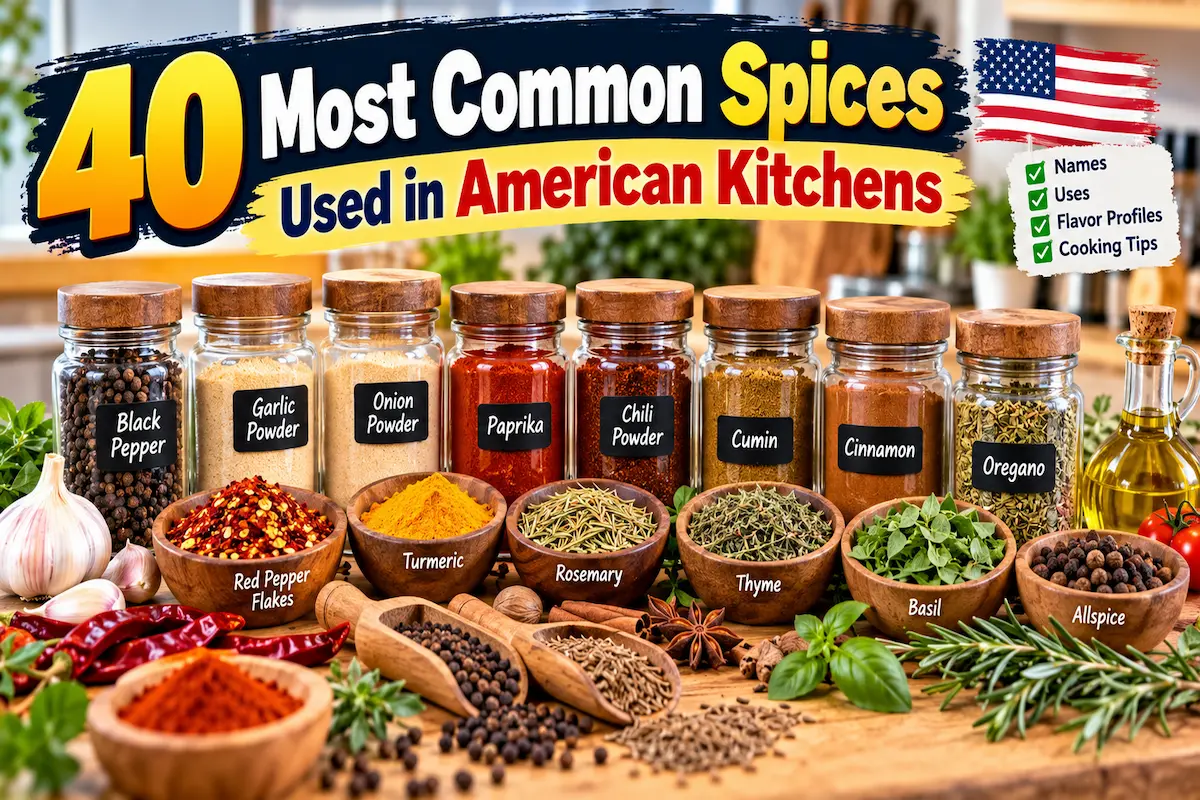
A visual guide to common spices and seasonings used in American cooking, featuring black pepper, garlic powder, onion powder, paprika, chili powder, cumin, cinnamon, oregano, rosemary, thyme, basil, and other pantry staples.
Quick Answer: Some of the most common spices used in American kitchens are black pepper, garlic powder, onion powder, paprika, chili powder, cumin, and cinnamon. American cooks also use herbs such as oregano, basil, and thyme, along with seasoning blends like taco seasoning, Italian seasoning, Cajun seasoning, and Old Bay. These ingredients add flavor, aroma, color, and warmth to everyday dishes, from roasted chicken and pasta to tacos, soups, and baked desserts.
Explore 🔥 100 Spices Name ,
and🌿 100+ Spices and Herbs A–Z Names
Here’s a quick reference table of popular spices and seasonings used in American kitchens, along with their common cooking uses.
| Spice or Seasoning | Common Uses |
|---|---|
| Black Pepper | Steaks, eggs, soups |
| Garlic Powder | Chicken, potatoes, sauces |
| Onion Powder | Burgers, marinades, meat |
| Paprika | Chicken, roasted vegetables |
| Chili Powder | Chili, tacos, beans |
| Ground Cumin | Tacos, chili, beans |
| Cinnamon | Oatmeal, cookies, apple pie |
| Cayenne Pepper | Spicy sauces, chicken wings |
| Oregano | Pizza, pasta, sauces |
| Basil | Tomato sauces, pasta |
| Rosemary | Roasted potatoes, chicken |
| Thyme | Soups, stews, roasted meat |
| Taco Seasoning | Tacos, fajitas, ground beef |
| Italian Seasoning | Pasta, pizza, marinades |
| Cajun Seasoning | Seafood, chicken, rice |
| Old Bay Seasoning | Crab, shrimp, potatoes |
Have you ever wondered what gives American food its delicious flavor, from smoky barbecue chicken and crispy roasted potatoes to spicy tacos and homemade apple pie? The secret often lies in the spices and seasonings used in everyday cooking!
American kitchens use a wide variety of ingredients to add warmth, color, aroma, sweetness, and heat to food. Some, such as black pepper and garlic powder, are everyday staples. Others, such as cinnamon, nutmeg, and pumpkin pie spice, are especially popular in baking and seasonal recipes.
Imagine a family preparing dinner on a busy weekday. One person seasons chicken with paprika and garlic powder, another adds oregano to pasta sauce, and someone else sprinkles cinnamon over oatmeal. Different ingredients, different flavors, but one common goal: making food taste better.
In this guide, you'll discover 40 common spices, herbs, and seasoning blends used in American cooking, along with their flavors, uses, and helpful tips for beginners.
Let's explore the American spice rack! 🧂
🧂 Quick List: 40 Common Spices and Seasonings
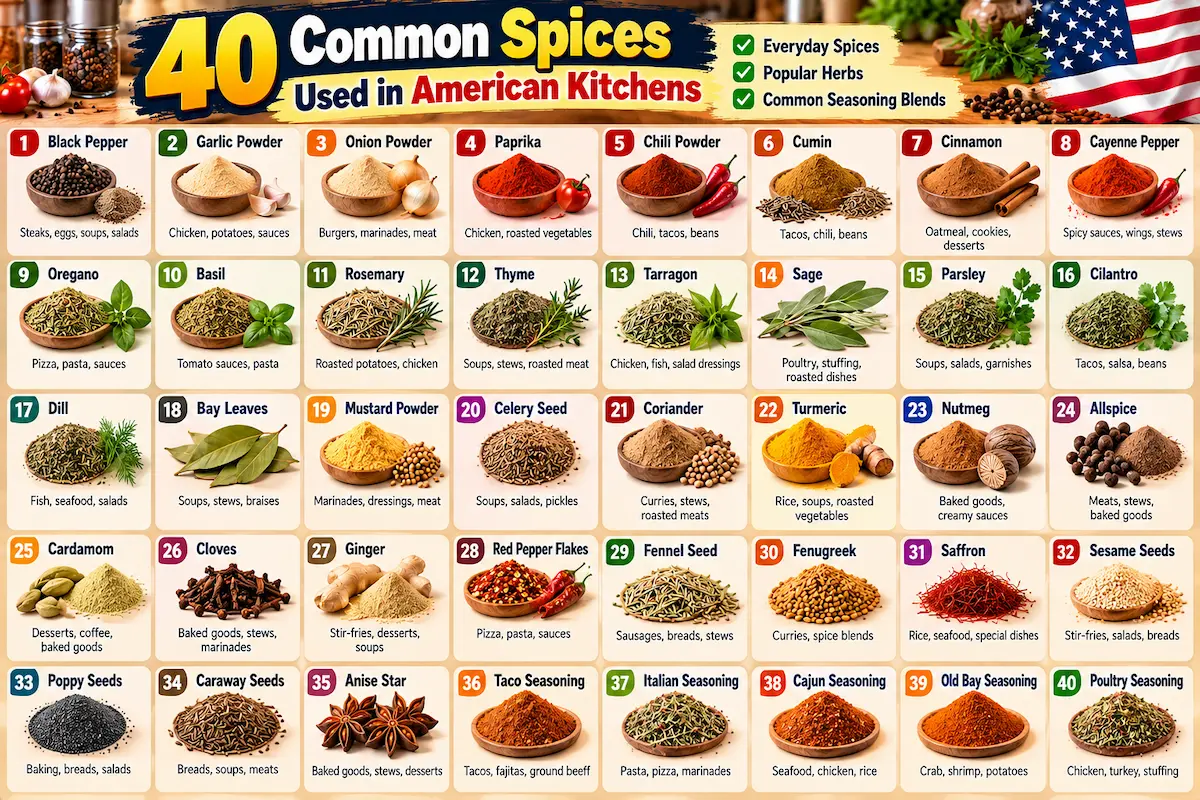
A numbered infographic featuring 40 common spices, culinary herbs, seeds, and seasoning blends used in American cooking. It includes black pepper, garlic powder, onion powder, paprika, chili powder, cumin, cinnamon, oregano, basil, rosemary, turmeric, taco seasoning, Italian seasoning, Cajun seasoning, and Old Bay seasoning, along with typical culinary uses.
The following list covers widely used ingredients found in American home cooking. It includes individual spices, dried herbs, and popular seasoning blends rather than a strict popularity ranking.
| No. | Spice or Seasoning | Flavor Profile | Common Uses |
|---|---|---|---|
| 1 | Black Pepper | Sharp and peppery | Steaks, eggs, soups |
| 2 | Garlic Powder | Savory and garlicky | Chicken, potatoes, sauces |
| 3 | Onion Powder | Mild and savory | Burgers, meat, marinades |
| 4 | Paprika | Mild, sweet, or smoky | Chicken, potatoes, eggs |
| 5 | Chili Powder | Warm and mildly spicy | Chili, tacos, meat |
| 6 | Ground Cumin | Earthy and warm | Tacos, beans, chili |
| 7 | Cayenne Pepper | Hot and pungent | Spicy sauces, wings |
| 8 | Cinnamon | Sweet and warming | Oatmeal, cookies, pies |
| 9 | Ground Ginger | Warm and slightly peppery | Gingerbread, stir-fries |
| 10 | Nutmeg | Sweet and nutty | Baking, creamy sauces |
| 11 | Ground Cloves | Strong and warming | Cakes, holiday desserts |
| 12 | Allspice | Warm and aromatic | Baking, marinades |
| 13 | Ground Coriander | Citrusy and earthy | Marinades, spice blends |
| 14 | Mustard Powder | Sharp and tangy | Dressings, sauces |
| 15 | Red Pepper Flakes | Hot and peppery | Pizza, pasta |
| 16 | Celery Seed | Earthy and slightly bitter | Pickles, coleslaw |
| 17 | Fennel Seed | Sweet and anise-like | Sausage, bread |
| 18 | Dill Seed | Herbal and tangy | Pickles, dressings |
| 19 | Cardamom | Sweet and aromatic | Baking, specialty drinks |
| 20 | Turmeric | Earthy and slightly bitter | Rice, soups, spice blends |
| 21 | Saffron | Floral and delicate | Rice, specialty dishes |
| 22 | Garlic Salt | Savory and salty | Fries, vegetables |
| 23 | Seasoned Salt | Salty and savory | Chicken, fries |
| 24 | Taco Seasoning | Savory and spicy | Tacos, fajitas |
| 25 | Cajun Seasoning | Spicy and savory | Seafood, chicken |
| 26 | Creole Seasoning | Peppery and aromatic | Gumbo, rice dishes |
| 27 | Poultry Seasoning | Herbal and savory | Chicken, turkey, stuffing |
| 28 | Pumpkin Pie Spice | Sweet and warming | Pumpkin pie, oatmeal |
| 29 | Apple Pie Spice | Sweet and aromatic | Apple pie, baked apples |
| 30 | Chili-Lime Seasoning | Tangy and spicy | Corn, vegetables, snacks |
| 31 | Dried Oregano | Earthy and herbal | Pizza, pasta, sauces |
| 32 | Dried Basil | Sweet and herbal | Tomato sauces, pasta |
| 33 | Dried Thyme | Earthy and minty | Soups, roasts |
| 34 | Dried Rosemary | Woody and pine-like | Potatoes, roasted chicken |
| 35 | Bay Leaves | Herbal and subtle | Soups, stews |
| 36 | Dried Parsley | Mild and fresh | Sauces, garnishes |
| 37 | Dried Sage | Earthy and savory | Stuffing, poultry |
| 38 | Dried Marjoram | Mild and sweetly herbal | Soups, meat dishes |
| 39 | Italian Seasoning | Herbal and aromatic | Pasta, pizza, marinades |
| 40 | Old Bay Seasoning | Savory and peppery | Seafood, crab, shrimp |
Quick note: Some entries are herbs or blends rather than spices in the strict botanical sense. They're included because American cooks commonly group these ingredients together in their kitchen spice racks.
🌶️ 1–10: Everyday Spices Used in American Cooking
These ten ingredients are a practical starting point for anyone learning to cook American-style meals.
1. Black Pepper
Black pepper is one of the most versatile seasonings in American kitchens. It has a sharp, slightly woody flavor that enhances both simple and elaborate dishes.
Flavor: Sharp, warm, peppery.
Common uses: Steaks, scrambled eggs, soups, salads, roasted vegetables.
Cooking tip: Freshly ground black pepper often delivers a stronger aroma than pre-ground pepper.
2. Garlic Powder
Garlic powder is made from dried garlic and offers a convenient way to add savory flavor without peeling or chopping fresh cloves.
Flavor: Savory, pungent, slightly sweet.
Common uses: Chicken, burgers, fries, roasted potatoes, marinades.
Cooking tip: Combine it with black pepper and paprika for a simple chicken seasoning.
3. Onion Powder
Onion powder provides concentrated onion flavor in a convenient, dry form. It mixes easily into sauces, spice rubs, and ground meat.
Flavor: Savory, mildly sweet.
Common uses: Burgers, meatloaf, soups, dips, marinades.
Cooking tip: Pair onion powder with garlic powder to create a versatile savory seasoning base.
4. Paprika
Paprika is made from ground peppers. Depending on the variety, it can taste sweet, mild, hot, or smoky.
Flavor: Mild and sweet, or smoky and earthy.
Common uses: Deviled eggs, chicken, roasted potatoes, stews.
Cooking tip: Smoked paprika adds a smoky character to food without requiring a smoker.
5. Chili Powder
American-style chili powder is commonly a blend of ground chili peppers and other seasonings, which may include cumin, garlic, and oregano.
Flavor: Warm, earthy, mildly spicy.
Common uses: Beef chili, tacos, beans, soups, meat rubs.
Cooking tip: Check the label before adding extra salt or heat because blends vary between brands.
6. Ground Cumin
Cumin has an earthy, warm aroma that is especially familiar in Tex-Mex cooking and many international cuisines.
Flavor: Earthy, nutty, slightly smoky.
Common uses: Tacos, chili, beans, roasted vegetables.
Cooking tip: Start with a small amount. Its distinctive flavor can quickly dominate a dish.
7. Cayenne Pepper
Cayenne pepper is a hot ground chili pepper used to add concentrated heat.
Flavor: Sharp and intensely spicy.
Common uses: Buffalo-style sauces, spicy chicken, chili, marinades.
Cooking tip: Add a pinch at a time. It is easier to increase the heat than to correct an overly spicy dish.
8. Cinnamon
Cinnamon is a favorite in American baking and breakfast foods. It adds warmth and sweetness without being a sweetener itself.
Flavor: Sweet, woody, warming.
Common uses: Apple pie, cinnamon rolls, oatmeal, cookies.
Cooking tip: Sprinkle it over oatmeal or mix it into a homemade baking spice blend.
9. Ground Ginger
Ground ginger is made from dried ginger root and has a warm, spicy flavor.
Flavor: Warm, peppery, slightly citrusy.
Common uses: Gingerbread, cookies, cakes, sauces, stir-fries.
Cooking tip: Ground ginger is convenient for baking, while fresh ginger gives a different, brighter flavor in many savory recipes.
10. Nutmeg
Nutmeg is a fragrant seed used in sweet and savory dishes. A small quantity can add depth to creamy recipes.
Flavor: Warm, sweet, nutty.
Common uses: Cakes, custards, cream sauces, mashed potatoes.
Cooking tip: Use a light sprinkle rather than a heavy spoonful.
🍂 11–20: More Spices for Flavor and Variety
These ingredients help expand your cooking beyond the basics.
11. Ground Cloves
Cloves have an intense, warming aroma and are often used in holiday baking.
Best uses: Gingerbread, spice cakes, baked fruit, selected marinades.
Tip: Cloves are powerful, so use them sparingly.
12. Allspice
Despite its name, allspice is a single spice made from the dried berries of the allspice tree. Its flavor resembles a combination of warm baking spices.
Best uses: Cookies, cakes, meat marinades, selected Caribbean-inspired dishes.
Tip: Allspice can add depth to both sweet and savory recipes.
13. Ground Coriander
Ground coriander comes from coriander seeds and has a gentle citrus-like, earthy flavor.
Best uses: Marinades, spice rubs, soups, vegetable dishes.
Tip: It pairs well with cumin, garlic, and chili powder.
14. Mustard Powder
Mustard powder is made from ground mustard seeds and contributes a sharp, tangy flavor.
Best uses: Salad dressings, barbecue sauces, marinades, homemade condiments.
Tip: Mix it into a sauce or dressing for a subtle mustard kick.
15. Red Pepper Flakes
Red pepper flakes are pieces of dried chili peppers used to add heat and texture.
Best uses: Pizza, pasta, soups, roasted vegetables.
Tip: Add a small pinch to tomato sauce while it simmers.
16. Celery Seed
Celery seed has an earthy flavor reminiscent of celery and is used in several traditional seasoning blends.
Best uses: Coleslaw, pickles, salad dressings, savory sauces.
Tip: Crush the seeds lightly when you want their aroma to come through more strongly.
17. Fennel Seed
Fennel seeds have a sweet, anise-like flavor and are common in some sausage recipes and baked goods.
Best uses: Sausage, bread, tomato sauces, roasted vegetables.
Tip: Lightly crushing the seeds can release more aroma.
18. Dill Seed
Dill seed has a stronger, warmer flavor than fresh dill leaves and is particularly useful in pickling.
Best uses: Pickles, vegetable brines, dressings, selected fish dishes.
Tip: Don't confuse dill seed with dried dill weed; they have different flavor profiles.
19. Cardamom
Cardamom is an aromatic spice used in sweet and savory cooking around the world.
Best uses: Specialty baked goods, sweet breads, selected desserts and drinks.
Tip: Its flavor is strong and distinctive, so begin with a small quantity.
20. Turmeric
Turmeric is a golden-yellow spice with an earthy, slightly bitter flavor. Although especially associated with South Asian cooking, it also appears in some American spice blends and contemporary recipes.
Best uses: Rice, soups, marinades, selected vegetable dishes.
Tip: Use a small amount initially because turmeric can strongly affect a dish's color and flavor.
🧂 21–30: Specialty Spices and Popular Seasoning Blends
The next ten entries include individual spices and ready-made blends that make seasoning convenient.
21. Saffron
Saffron consists of delicate flower stigmas and is known for its distinctive aroma and golden color.
Best uses: Specialty rice dishes, selected soups, celebratory recipes.
Tip: A little goes a long way, and saffron is generally more expensive than everyday spices.
22. Garlic Salt
Garlic salt combines garlic flavor with salt.
Best uses: Fries, roasted vegetables, meat, savory snacks.
Tip: Reduce additional salt when using it to prevent oversalting.
23. Seasoned Salt
Seasoned salt typically combines salt with spices and other flavorings. Ingredients vary by brand.
Best uses: Chicken, fries, burgers, vegetables.
Tip: Check the ingredient list because some varieties contain paprika, garlic, onion, or other seasonings.
24. Taco Seasoning 🌮
Taco seasoning is a blend designed to flavor taco fillings and other Tex-Mex-inspired foods.
Common ingredients include chili powder, cumin, paprika, garlic powder, onion powder, and oregano. Some blends also contain salt, starch, or additional spices.
Best uses: Ground beef, chicken, beans, fajitas.
Tip: You can make a homemade version by combining chili powder, cumin, paprika, garlic powder, and onion powder, then adjusting the heat and salt to taste.
25. Cajun Seasoning
Cajun seasoning is associated with Louisiana-inspired cooking and often combines paprika, cayenne, black pepper, garlic, onion, and other seasonings.
Best uses: Seafood, chicken, roasted vegetables, rice dishes.
Tip: Start with a small amount and check the salt content before adding more.
26. Creole Seasoning
Creole seasoning is another Louisiana-associated blend. Its ingredients overlap with Cajun seasoning, but recipes and commercial products vary.
Best uses: Gumbo, rice dishes, seafood, chicken.
Tip: There is no single universal recipe, so check the blend's ingredients.
27. Poultry Seasoning
Poultry seasoning is an herb-forward blend often containing sage, thyme, rosemary, marjoram, and other ingredients.
Best uses: Roast chicken, turkey, stuffing, savory casseroles.
Tip: Rub it into poultry before roasting or add it to stuffing.
28. Pumpkin Pie Spice 🎃
Pumpkin pie spice is a sweet baking blend typically featuring cinnamon, ginger, nutmeg, and sometimes cloves or allspice.
Best uses: Pumpkin pie, muffins, oatmeal, pancakes.
Tip: You can use it to add a warming flavor to seasonal baked goods without measuring several spices separately.
29. Apple Pie Spice 🍎
Apple pie spice is a baking blend designed to complement apples and other fruits. Cinnamon is usually a major ingredient, often accompanied by nutmeg and other warming spices.
Best uses: Apple pie, baked apples, fruit crisps, cakes.
Tip: Add it to sliced apples with a little sugar and lemon juice before baking.
30. Chili-Lime Seasoning
Chili-lime seasoning combines chili flavor with tangy citrus notes. Some blends use dried lime or citric acid, salt, and additional spices.
Best uses: Corn, fruit, roasted vegetables, snacks.
Tip: Sprinkle it over grilled corn or roasted vegetables for a tangy, spicy finish.
🌿 31–40: Common Herbs and Seasonings Found on American Spice Racks
Technically, herbs are generally the leafy parts of plants, while spices usually come from other plant parts, such as seeds, bark, roots, or fruits. In everyday cooking, both are commonly stored together.
31. Dried Oregano
Oregano has an earthy, slightly peppery flavor and is widely used in Mediterranean-inspired and Italian-American cooking.
Best uses: Pizza, pasta sauce, marinades, roasted vegetables.
Tip: Crush dried oregano between your fingers before adding it to release its aroma.
32. Dried Basil
Basil has a sweet, herbal flavor and is particularly useful in tomato-based recipes.
Best uses: Pasta sauce, pizza, soups, vegetable dishes.
Tip: Dried basil is convenient for simmered sauces, although fresh basil offers a different aroma and texture.
33. Dried Thyme
Thyme has an earthy, herbal flavor that works well in slow-cooked and roasted dishes.
Best uses: Soups, stews, roasted chicken, vegetables.
Tip: Add it early in cooking when preparing dishes that simmer for a long time.
34. Dried Rosemary
Rosemary has a strong, woody aroma that pairs especially well with roasted foods.
Best uses: Potatoes, chicken, lamb, breads.
Tip: Crush or chop the leaves before adding them to a dish.
35. Bay Leaves
Bay leaves provide a subtle herbal aroma to dishes that cook slowly.
Best uses: Soups, stews, broths, sauces.
Tip: Add a leaf while the dish simmers, then remove it before serving.
36. Dried Parsley
Dried parsley offers a mild herbal flavor and is often used as a convenient seasoning or garnish.
Best uses: Soups, sauces, pasta, vegetable dishes.
Tip: Add it to dishes where a gentle herbal note is preferred.
37. Dried Sage
Sage has a strong, earthy flavor and is particularly familiar in traditional American holiday cooking.
Best uses: Stuffing, turkey, sausage, roasted vegetables.
Tip: Use it carefully because too much can overwhelm milder ingredients.
38. Dried Marjoram
Marjoram is a mild, sweetly herbal ingredient related to oregano, but generally more delicate in flavor.
Best uses: Soups, sauces, vegetables, meat dishes.
Tip: Try it when you want an herbal flavor that is gentler than oregano.
39. Italian Seasoning 🍝
Italian seasoning is a dried herb blend that commonly contains oregano, basil, thyme, and rosemary. The exact combination varies.
Best uses: Pasta sauce, pizza, marinades, roasted vegetables.
Tip: Mix it with olive oil, garlic, and black pepper for a simple vegetable marinade.
40. Old Bay Seasoning 🦀
Old Bay is a well-known American seasoning blend associated with seafood and Maryland-style crab dishes. Its flavor is savory, peppery, and aromatic.
Best uses: Crab, shrimp, fish, corn, potatoes.
Tip: Try it on roasted potatoes or corn for a classic seafood-seasoning twist. Check the package for ingredients and salt content.
🍳 Which Spices Should Beginners Buy First?
You don't need to purchase all 40 ingredients to start cooking. A small collection of versatile seasonings can cover many everyday recipes.
| Pantry Essential | Why It's Useful |
|---|---|
| Black pepper | Works with a wide range of savory dishes |
| Garlic powder | Adds convenient savory flavor |
| Onion powder | Enhances meat, vegetables, and sauces |
| Paprika | Adds color and mild pepper flavor |
| Chili powder | Useful for chili and Tex-Mex-inspired meals |
| Ground cumin | Adds warmth to beans, tacos, and chili |
| Cinnamon | Useful for breakfast foods and baking |
| Dried oregano | Works in tomato sauces and pizza |
| Italian seasoning | A convenient all-purpose herb blend |
| Taco seasoning | Simplifies taco-night preparation |
Beginner tip: Buy small containers of ingredients you use frequently. A crowded spice cabinet isn't a cooking achievement if half the jars lose their aroma before you open them again!
🌮 What Spices Are Commonly Used in American Tacos?

Taco seasoning is a useful example of how several individual ingredients can work together.
| Ingredient | Purpose in Taco Seasoning |
|---|---|
| Chili powder | Provides the main chili flavor |
| Ground cumin | Adds earthy warmth |
| Paprika | Contributes color and mild sweetness |
| Garlic powder | Adds savory depth |
| Onion powder | Adds a rounded savory flavor |
| Dried oregano | Contributes herbal notes |
| Cayenne pepper | Adds optional extra heat |
| Black pepper | Adds peppery sharpness |
Easy Homemade Taco Seasoning
For a simple homemade blend, combine:
2 teaspoons chili powder
1 teaspoon ground cumin
1 teaspoon paprika
½ teaspoon garlic powder
½ teaspoon onion powder
¼ teaspoon dried oregano
Black pepper and salt to taste
Mix well and adjust the heat to your preference. Use a portion to season ground beef, chicken, beans, or vegetables, adding a little water if needed to help distribute the spices.
This is a flexible homemade recipe, not a universal or standardized taco seasoning formula. Commercial blends may contain different ingredients and proportions.
🔍 Spices vs. Herbs vs. Seasoning Blends
These terms are often used interchangeably in everyday conversation, but they describe different things.
| Category | What It Means | Examples |
|---|---|---|
| Spices | Ingredients commonly obtained from seeds, bark, roots, fruits, or other non-leaf plant parts | Cinnamon, cumin, black pepper |
| Herbs | Usually the aromatic leaves of plants | Basil, oregano, thyme |
| Seasoning blends | Mixtures of spices, herbs, salt, and sometimes other ingredients | Taco seasoning, Italian seasoning, Cajun seasoning |
Why does the difference matter?
Understanding these categories makes it easier to follow recipes, choose ingredients at the grocery store, and experiment with your own combinations.
For example, cumin is a single spice, oregano is an herb, and taco seasoning is a blend that may contain both.
🧠 Interesting Facts About American Kitchen Spices
🌶️ Paprika comes in different varieties. Sweet, hot, and smoked paprika can produce noticeably different results.
🍎 Cinnamon is a baking favorite. It is commonly used in apple pie, cinnamon rolls, and oatmeal.
🌮 Taco seasoning is a blend, not a single spice. Its ingredients and heat level vary by recipe and brand.
🍝 Italian seasoning saves time. A single blend can supply several familiar dried-herb flavors.
🦀 Old Bay has a strong regional association. It is particularly well known for seasoning seafood in the Mid-Atlantic United States.
🧂 Salt is not a spice. It is a mineral seasoning, although it often appears alongside spices in seasoning blends.
🌿 Herbs and spices can be used together. Garlic powder, black pepper, oregano, and paprika can all contribute different qualities to one dish.
🫙 How to Store Spices and Keep Them Fresh
Proper storage helps preserve the flavor and aroma of your ingredients.
Keep containers tightly closed. Air exposure gradually reduces aroma and quality.
Store them away from heat. Avoid keeping jars directly above a hot stove.
Protect them from moisture. Use a dry spoon rather than shaking spices directly over steaming pots.
Label containers clearly. Write the name and, where useful, the purchase or opening date.
Buy sensible quantities. Purchase larger containers only for ingredients you use regularly.
Check aroma and appearance. Spices generally lose flavor over time, even when stored properly. Discard anything showing signs of moisture damage or mold.
Whole spices often retain their aroma longer than ground versions, although actual shelf life depends on the ingredient and storage conditions.
⚡ Quick Summary
Black pepper, garlic powder, onion powder, and paprika are versatile choices for savory American cooking.
Chili powder and cumin are useful for chili, tacos, beans, and Tex-Mex-inspired dishes.
Cinnamon, ginger, nutmeg, and cloves are useful for baking.
Oregano, basil, thyme, and rosemary are common culinary herbs.
Taco seasoning, Cajun seasoning, Italian seasoning, and Old Bay are blends rather than individual spices.
Beginners can start with a small collection and add specialty ingredients as their cooking interests grow.
Store spices in airtight containers away from heat, light, and moisture.
📝 Test Your Knowledge: Spices Quiz
Think you've mastered the American spice rack? Try these ten multiple-choice questions.
1. Which spice is commonly used to add a sharp, peppery flavor to steaks?
A. Cinnamon
B. Black pepper
C. Nutmeg
D. Cardamom
2. Which seasoning blend is commonly used for tacos?
A. Pumpkin pie spice
B. Poultry seasoning
C. Taco seasoning
D. Apple pie spice
3. Which spice is especially popular in apple pie?
A. Cinnamon
B. Cayenne pepper
C. Celery seed
D. Dill seed
4. Which ingredient adds concentrated heat to spicy sauces?
A. Dried parsley
B. Nutmeg
C. Cayenne pepper
D. Cardamom
5. Which herb is commonly associated with pizza and pasta sauce?
A. Oregano
B. Dill seed
C. Saffron
D. Cloves
6. What is Italian seasoning?
A. A single ground seed
B. A blend of dried herbs
C. A type of salt
D. A sweetener
7. Which spice provides an earthy, warm flavor in many taco recipes?
A. Cumin
B. Cinnamon
C. Nutmeg
D. Cardamom
8. Which seasoning is especially associated with American seafood dishes?
A. Pumpkin pie spice
B. Poultry seasoning
C. Old Bay seasoning
D. Apple pie spice
9. Which ingredient is made from dried garlic?
A. Onion powder
B. Garlic powder
C. Paprika
D. Ground coriander
10. Where should spices generally be stored?
A. Beside a hot stove
B. In an open container
C. In a damp cupboard
D. In tightly closed containers away from heat and moisture
✅ Quiz Answer Key
B — Black pepper
C — Taco seasoning
A — Cinnamon
C — Cayenne pepper
A — Oregano
B — A blend of dried herbs
A — Cumin
C — Old Bay seasoning
B — Garlic powder
D — In tightly closed containers away from heat and moisture
Your score:
9–10 correct: 🌟 Spice Expert!
7–8 correct: 👏 Great job!
5–6 correct: 🌿 Good start — keep learning!
0–4 correct: 🧂 Time to explore the spice rack again!
🍗 Real-Life Example: Preparing a Family Dinner in an American Kitchen

Imagine the Johnson family is preparing dinner on a busy Wednesday evening. They decide to make roasted chicken, crispy potatoes, and a fresh salad for the family.
First, Mrs. Johnson seasons the chicken with garlic powder, paprika, black pepper, and dried thyme. The garlic powder adds a savory flavor, paprika gives the chicken an appealing reddish color, black pepper adds a mild kick, and thyme contributes an earthy herbal aroma.
Next, she cuts potatoes into small pieces, tosses them with olive oil, rosemary, garlic powder, and black pepper, and places them in the oven. As the potatoes roast, the seasonings help create a delicious aroma and a flavorful exterior.
Meanwhile, her son prepares a quick salad dressing using olive oil, dried oregano, black pepper, and a little vinegar. For the following day's lunch, the family also prepares taco-seasoned ground beef with cumin, chili powder, paprika, and onion powder.
By using just a handful of everyday spices and seasonings, the family creates several dishes with different flavors without needing complicated recipes.
What can we learn from this example?
🌶️ Paprika adds color and mild pepper flavor.
🧄 Garlic powder provides convenient savory flavor.
🌿 Thyme, rosemary, and oregano bring different herbal aromas.
⚫ Black pepper adds a versatile peppery kick.
🌮 Cumin and chili powder help create the familiar flavor of taco seasoning.
MFJ takeaway: You don't need an enormous spice collection to cook flavorful meals. Start with a few versatile ingredients, learn how each one tastes, and combine them according to the dish you're preparing. A small, well-used spice rack can make everyday family cooking more enjoyable!
❓ Frequently Asked Questions
1. What are the most common spices used in American kitchens?
Black pepper, garlic powder, onion powder, paprika, chili powder, cumin, and cinnamon are among the widely used spices in American home cooking. The exact selection varies by household and cuisine.
2. What are the top 10 spices every kitchen should have?
A practical starter collection includes black pepper, garlic powder, onion powder, paprika, chili powder, cumin, cinnamon, oregano, thyme, and a versatile seasoning blend such as Italian seasoning.
3. What spices are used in American tacos?
Taco seasoning commonly includes chili powder, cumin, paprika, garlic powder, onion powder, and oregano. Additional ingredients vary by recipe and brand.
4. Is chili powder the same as cayenne pepper?
No. American-style chili powder is often a blend of ground chili peppers and other seasonings. Cayenne pepper is a specific type of hot ground chili pepper and is generally used to add more concentrated heat.
5. What is the difference between paprika and chili powder?
Paprika is a ground pepper spice available in sweet, mild, hot, and smoked varieties. American-style chili powder is usually a seasoning blend that may include ground chilies, cumin, garlic, and other ingredients.
6. Which spices are commonly used in American baking?
Cinnamon, ginger, nutmeg, cloves, allspice, and cardamom are used in various baked goods. Pumpkin pie spice and apple pie spice are convenient blends for particular recipes.
7. What is the difference between spices and herbs?
Spices generally come from parts of plants such as seeds, bark, roots, or fruits, while culinary herbs usually refer to aromatic leaves. Examples include cumin as a spice and oregano as an herb.
8. Are seasoning blends the same as individual spices?
No. Individual spices are single ingredients, while seasoning blends combine two or more ingredients. Taco seasoning, Italian seasoning, and Cajun seasoning are examples of blends.
9. Do all American kitchens use the same spices?
No. Spice preferences vary by region, family tradition, cultural background, and cooking style. A household that frequently prepares barbecue may use different seasonings from one that specializes in baking or seafood.
10. How can beginners build a useful spice collection?
Start with black pepper, garlic powder, onion powder, paprika, cumin, chili powder, cinnamon, and dried oregano. Add specialty spices and seasoning blends as you explore different recipes.
📚 Continue Learning
Want to discover more spice names and their uses?
Spices Name in English and Hindi: Explore our complete guide to spice names in English and Hindi.
🌟 Final Thoughts
Spices do more than add flavor. They help transform everyday ingredients into memorable meals, whether you're making tacos for dinner, roasting chicken for the family, preparing homemade pasta sauce, or baking an apple pie.
You don't need dozens of expensive jars to become a better cook. Start with a few versatile ingredients, learn how they taste, and experiment with combinations that suit your preferences.
Which spice or seasoning do you use most often in your kitchen? Explore the list, try a new combination, and discover how a small pinch can make a big difference!
👨🍳 A Note from the Founder
By Mohan R. | Founder, Monto Fact Jungle
While exploring different cooking ingredients, I've also used American-style spices and seasonings in my own cooking. Ingredients such as black pepper, garlic powder, paprika, cumin, and oregano can add different layers of flavor to everyday meals. I've found that understanding each seasoning's flavor and purpose makes it easier to choose the right combination for a dish.
For this guide, I've organized 40 common spices, culinary herbs, and seasoning blends with their typical flavors and cooking uses, helping readers understand how these ingredients fit into everyday American cooking.
At Monto Fact Jungle, my goal is to make everyday knowledge practical, accessible, and easy to understand, so readers can confidently explore new ingredients and cooking ideas.
You should also read:
🫘 50 Pulses Name in English and Hindi with Pictures (दालों के नाम)
🫘Pulses Name in English and Hindi with Pictures (दालों के नाम) Educational chart picture showing 50 Pulses Name in English and Hindi with pictures, including popular Indian dals such as Moong, Chana, Masoor, Urad, Toor, and Rajma. Almost every evening, my mother Sharada asks me…
Continue reading...🌱50 Seeds Name in English and Hindi with Pictures (बीजों के नाम)
🌱Seeds Name in English and Hindi with Pictures (बीजों के नाम) Educational chart showing 50 seeds name in English and Hindi with pictures, including edible seeds, spice seeds, oil seeds, cereal seeds, and garden seeds. 📌 Quick Answer Seeds are the small reproductive parts of…
Continue reading...🌿 50 Herbs Name in English and Hindi with Pictures | जड़ी-बूटियों के नाम
🌿Herbs Name in English and Hindi with Pictures (जड़ी-बूटियों के नाम) Educational chart of 50 herbs name in English and Hindi with pictures, including common kitchen herbs, medicinal herbs, and aromatic herbs used in India and around the world. 📌 Quick Answer Herbs are plants…
Continue reading...
🌶️50 Indian Spices and Their Uses (भारतीय मसालों के उपयोग) – Cooking & Kitchen Guide
🌶️50 Complete Indian Spices and Their Uses (भारतीय मसालों के उपयोग) – Cooking & Kitchen Guide Introduction Indian food is famous around the world because of its rich flavors, colors, and aroma. The secret behind these delicious dishes is spices. From a simple bowl of…
Continue reading...