
🌶️50 Indian Spices and Their Uses (भारतीय मसालों के उपयोग) – Cooking & Kitchen Guide
%20%E2%80%93%20Cooking%20%26%20Kitchen%20Guide)
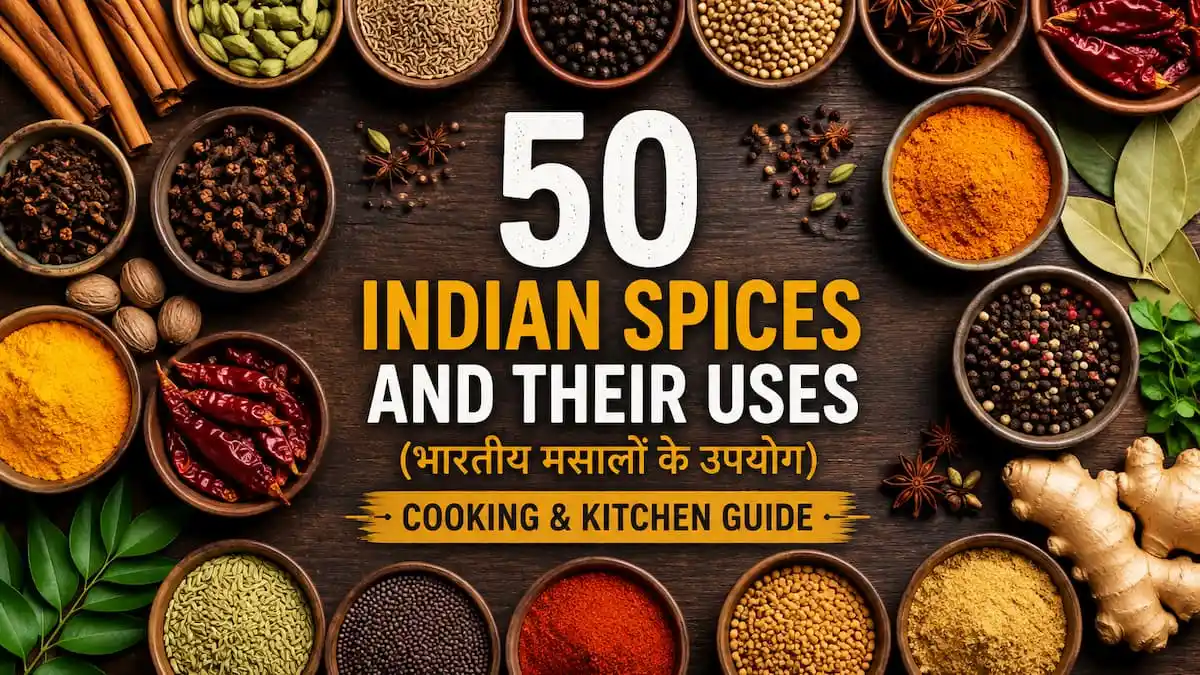
🌶️50 Complete Indian Spices and Their Uses (भारतीय मसालों के उपयोग) – Cooking & Kitchen Guide
Introduction
Indian food is famous around the world because of its rich flavors, colors, and aroma. The secret behind these delicious dishes is spices. From a simple bowl of dal to a festive biryani, every recipe becomes special with the right combination of spices.
Some spices add heat, some bring sweetness, while others provide a pleasant aroma or beautiful color. Every Indian desi kitchen usually has a collection of everyday spices such as turmeric, cumin, coriander, mustard seeds, black pepper, and cardamom.
In this complete guide, you'll learn about 50 Indian spices, their Hindi and English names, how they are used in cooking, their taste, storage tips, traditional uses, and much more. Also u will like the family story below, erad it without fail, aapko accha lagega.
Looking for the Hindi and English names of spices? Explore our complete 100 Spices Name in English and Hindi guide to learn the names of common and rare spices.
DOWNLOAD Indian Spices List PDF ,
Read Is Paprika Spicy? Read 🌶️40 Common Spices: Names, Pictures, Uses & Interesting Facts Guides
Simple Meaning (आसान भाषा में):
Indian spices यानी भारतीय मसाले, वे प्राकृतिक चीज़ें हैं जो पौधों के बीज, जड़, छाल, पत्तियों, फूलों या फलों से प्राप्त होती हैं। इन्हें खाने में स्वाद (Taste), खुशबू (Aroma), रंग (Color) और फ्लेवर (Flavor) बढ़ाने के लिए इस्तेमाल किया जाता है।
🔠ABCD Chart (A to Z English Alphabet for Kids) – Easy Learning Guide with Pictures
👉 “📌 Learn different types of birds with pictures below” Also Read 🐦100 Pet Birds Name in English and Hindi | पालतू पक्षियों के नाम, Vegetables Name A to Z in English and Hindi
What Are Indian Spices?
Indian spices are natural ingredients obtained from the seeds, bark, roots, flowers, fruits, leaves, or stems of different plants. They are mainly used to:
- Add flavor
- Improve aroma
- Enhance color
- Balance taste
- Make dishes more delicious
Unlike vegetables, spices are usually added in small quantities but have a big impact on the final taste of food.
Indian Spices Kya Hain?
Easy Explanation
अगर आपकी मम्मी दाल बनाते समय हल्दी, जीरा और राई डालती हैं, तो ये सभी Indian Spices (भारतीय मसाले) हैं। हर मसाले का अपना अलग स्वाद और काम होता है। कोई रंग देता है, कोई खुशबू, तो कोई तीखापन।
Why Are Spices Important in Indian Cooking?
Every spice has a unique role.
For example:
- Turmeric gives a golden-yellow color.
- Cumin adds an earthy aroma.
- Coriander provides freshness.
- Cinnamon offers sweetness.
- Black pepper gives mild heat.
- Mustard seeds add a nutty flavor after tempering.
Indian cooking is not about making food spicy—it's about balancing flavors using different spices.
Table of Contents
- 🌶️50 Complete Indian Spices and Their Uses (भारतीय मसालों के उपयोग) – Cooking & Kitchen Guide
- Introduction
- What Are Indian Spices?
- Why Are Spices Important in Indian Cooking?
- 👨👩👧 My Simple Family Example.
- 👨👩👧👦 Real-Life Family Example (My Kitchen Story)
- 🌶️ Top 50 Indian Spices and Their Uses
- 🍛 Most Common Spices Used Every Day
- 🌿 Traditional Uses of Common Indian Spices
- ⚖️ Whole Spices vs Ground Spices
- 🧂 Most Common Indian Masalas
- 🧑🍳 Kitchen Tip
- 📦 Spice Storage Tips
- 💡 Interesting Facts
- 🌟 क्या आप जानते हैं?
- 📝 Quick Summary
- 🧠 Quick Quiz
- 🌶️ Related Spicy Articles
- ❓ Frequently Asked Questions (Faq)
- 🔗 Continue Learning Related Articles at Monto Fact Jungle
👨👩👧 My Simple Family Example.
One Sunday morning, Mohan and his son Vishnu decided to help Sharada Amma prepare lunch.
As vegetables were chopped, Amma explained each spice:
- Turmeric added color to the curry.
- Cumin seeds were roasted to release their aroma.
- Coriander powder balanced the flavors.
- Mustard seeds crackled in hot oil before adding curry leaves.
- Garam masala was sprinkled at the end for fragrance.
While watching, little Charvi learned that every spice has a different purpose, and using them in the right amount makes food tasty.
By the end of lunch, the family understood that spices are not just ingredients—they are the heart of Indian cooking. U can share this to students or your kids in home 🐦100+ Birds in India Name in Hindi and English
🌟 What We Learned (हमने क्या सीखा?)
- 🌼 Haldi gives color.
- 🌿 Jeera adds aroma.
- 🌱 Dhania balances flavor.
- 🌶️ Red chilli adds heat.
- ✨ Garam masala is usually added near the end for aroma.
👨👩👧👦 Real-Life Family Example (My Kitchen Story)
Every Sunday, our kitchen becomes the busiest place in the house. One morning, I was helping my mom, Sharada Amma, prepare lunch while my son Vishnu and little Charvi watched with curiosity.
As Amma heated the pan, she first added mustard seeds (राई). They started crackling, and Vishnu immediately asked, "Papa, why are they making that sound?"
I smiled and replied, "That is called tempering (तड़का). It helps release the flavor and aroma of the spices."
Next, Amma added cumin (जीरा), curry leaves (करी पत्ता), and a pinch of asafoetida (हींग). Soon, the kitchen was filled with a wonderful fragrance.
While cooking the dal, she mixed in turmeric (हल्दी) for its beautiful yellow color, coriander powder (धनिया पाउडर) for balanced flavor, and red chilli powder (लाल मिर्च) for a little heat. Just before serving, she sprinkled a small amount of garam masala to enhance the aroma.
Little Charvi pointed at all the spice jars and asked, "Do all these spices do the same job?"
Amma smiled and explained, "No, beta. Every spice has its own purpose. Some give color, some add aroma, some make the food spicy, and others improve the overall taste."
That simple cooking session taught Vishnu and Charvi an important lesson: Indian spices are not just ingredients—they are a team. When each spice is used in the right quantity and at the right time, ordinary food becomes delicious and memorable.
This style feels authentic, teaches naturally, and reinforces the educational purpose of the article without sounding like a made-up story.
🌶️ Top 50 Indian Spices and Their Uses
| Spice | Hindi Name | English Name | Main Use | Taste |
|---|---|---|---|---|
| Haldi | हल्दी | Turmeric | Curry, Dal | Earthy |
| Jeera | जीरा | Cumin | Tempering | Warm |
| Dhania | धनिया | Coriander | Curry | Mild |
| Kali Mirch | काली मिर्च | Black Pepper | Soup | Spicy |
| Laung | लौंग | Clove | Biryani | Strong |
| Dalchini | दालचीनी | Cinnamon | Desserts | Sweet |
| Elaichi | इलायची | Cardamom | Tea | Sweet Aroma |
| Tej Patta | तेज पत्ता | Bay Leaf | Rice | Fragrant |
| Rai | राई | Mustard Seeds | Tempering | Nutty |
| Methi | मेथी | Fenugreek | Curry | Slight Bitter |
| Saunf | सौंफ | Fennel | Mouth Freshener | Sweet |
| Ajwain | अजवाइन | Carom Seeds | Paratha | Strong |
| Hing | हींग | Asafoetida | Dal | Pungent |
| Kalonji | कलौंजी | Nigella Seeds | Pickles | Peppery |
| Til | तिल | Sesame Seeds | Sweets | Nutty |
| Khus Khus | खसखस | Poppy Seeds | Gravy | Mild |
| Star Anise | चक्र फूल | Star Anise | Biryani | Sweet |
| Nutmeg | जायफल | Nutmeg | Desserts | Warm |
| Mace | जावित्री | Mace | Biryani | Aromatic |
| Dry Ginger | सोंठ | Dry Ginger | Tea | Warm |
| Tamarind Powder | इमली पाउडर | Tamarind Powder | Chutney | Sour |
| Dry Mango Powder | अमचूर | Amchur | Chaat | Tangy |
| Red Chilli | लाल मिर्च | Red Chilli | Curry | Hot |
| Kashmiri Chilli | कश्मीरी मिर्च | Kashmiri Chilli | Color | Mild |
| White Pepper | सफेद मिर्च | White Pepper | Soup | Mild Heat |
| Saffron | केसर | Saffron | Sweets | Floral |
| Curry Leaves | करी पत्ता | Curry Leaves | Tempering | Aromatic |
| Stone Flower | दगड़ फूल | Stone Flower | Biryani | Earthy |
| Black Cardamom | बड़ी इलायची | Black Cardamom | Rice | Smoky |
| Long Pepper | पीपली | Long Pepper | Spice Mix | Hot |
| Caraway | शाह जीरा | Caraway | Rice | Earthy |
| Celery Seed | अजमोद | Celery Seed | Pickles | Bitter |
| Kokum | कोकम | Kokum | Curry | Tangy |
| Dried Mint | सूखा पुदीना | Dried Mint | Chutney | Fresh |
| Rosemary | रोज़मेरी | Rosemary | Fusion Cooking | Herbal |
| Thyme | थाइम | Thyme | Baking | Earthy |
| Oregano | ओरिगैनो | Oregano | Pizza | Herbal |
| Paprika | पपरिका | Paprika | Snacks | Mild |
| Sumac | सुमाक | Sumac | Salads | Tangy |
| Dill Seeds | सोआ | Dill Seeds | Pickles | Mild |
| Anardana | अनारदाना | Dried Pomegranate | Chutney | Sweet Sour |
| White Sesame | सफेद तिल | White Sesame | Sweets | Nutty |
| Black Sesame | काला तिल | Black Sesame | Ladoo | Rich |
| Juniper Berry | जुनिपर | Juniper Berry | Special Recipes | Pine Aroma |
| Caper | काबर | Caper | Fusion | Salty |
| Celery Flakes | अजमोद पत्ती | Celery Flakes | Soup | Mild |
| Garlic Powder | लहसुन पाउडर | Garlic Powder | Seasoning | Savory |
| Onion Powder | प्याज पाउडर | Onion Powder | Snacks | Mild |
| Smoked Paprika | स्मोक्ड पपरिका | Smoked Paprika | BBQ | Smoky |
| Chilli Flakes | मिर्च फ्लेक्स | Chilli Flakes | Pizza | Hot |
| Mixed Herbs | मिक्स्ड हर्ब्स | Mixed Herbs | Pasta | Aromatic |
| Spice | Main Use | आसान भाषा में |
|---|---|---|
| Turmeric | Curry | खाने को पीला रंग और हल्का मिट्टी जैसा स्वाद देती है। |
| Jeera | Tempering | तड़के में सबसे ज़्यादा इस्तेमाल होने वाला मसाला। |
| Coriander | Curry | सब्ज़ी और दाल का स्वाद संतुलित करता है। |
🍛 Most Common Spices Used Every Day
Nearly every Indian kitchen contains these essential spices:
- Turmeric
- Cumin
- Coriander
- Red Chilli
- Mustard Seeds
- Black Pepper
- Cardamom
- Cinnamon
- Clove
- Bay Leaf
These spices form the foundation of countless Indian recipes.
👩🍳 Mummy's Kitchen Trick
अगर जीरा को पहले हल्का भून लिया जाए, तो उसकी खुशबू और स्वाद दोनों बढ़ जाते हैं।
🌿 Traditional Uses of Common Indian Spices
Many Indian households have traditionally used spices for purposes beyond cooking.
| Spice | Traditional Everyday Use |
|---|---|
| Turmeric | Used in festive rituals and home cooking |
| Ginger | Commonly added to tea during rainy or winter seasons |
| Fennel | Often enjoyed after meals as a mouth freshener |
| Clove | Frequently included in spice blends and traditional home practices |
| Cinnamon | Popular in festive sweets and warm beverages |
| Cardamom | Used to flavor tea, desserts, and sweets |
| Black Pepper | Added to soups and spice mixes for warmth |
Note: These are traditional household uses and are not medical advice.
⚖️ Whole Spices vs Ground Spices
| Feature | Whole Spices | Ground Spices |
|---|---|---|
| Shelf Life | Longer | Shorter |
| Aroma | Stronger | Fades Faster |
| Best For | Tempering & Rice | Curry & Gravies |
| Storage | Easy | Airtight Container |
| Freshness | Better | Best when freshly ground |
🧂 Most Common Indian Masalas
Many people confuse spices with masalas.
- Garam Masala – Blend of aromatic spices added near the end of cooking.
- Kitchen King Masala – Multipurpose spice blend for vegetables and curries.
- Chaat Masala – Tangy seasoning for fruits, snacks, and chaats.
- Sambar Powder – South Indian spice mix for sambar.
- Rasam Powder – Used to prepare rasam.
- Pav Bhaji Masala – Special blend for pav bhaji.
🧑🍳 Kitchen Tip
हल्दी हमेशा कम मात्रा में डालें।
ज़्यादा हल्दी डालने से सब्ज़ी का स्वाद कड़वा लग सकता है।
📦 Spice Storage Tips
To keep spices fresh:
- Store in airtight glass jars.
- Keep away from direct sunlight.
- Avoid moisture.
- Use a dry spoon.
- Buy whole spices whenever possible.
- Grind small quantities as needed.
- Label containers with purchase dates.
- Replace old spices if their aroma becomes weak.
💡 Interesting Facts
- India is one of the world's largest producers of spices.
- Black pepper was once called "Black Gold" because of its high value in trade.
- Saffron is among the most expensive spices in the world.
- More than 70 different spices are commonly used across Indian regional cuisines.
- Different Indian states use different spice combinations, giving each cuisine its unique taste.
🌟 क्या आप जानते हैं?
Black Pepper को कभी Black Gold कहा जाता था क्योंकि पुराने समय में इसकी कीमत बहुत ज़्यादा थी।
📝 Quick Summary
- Indian spices add flavor, aroma, color, and depth to food.
- Every spice has a unique purpose in cooking.
- Whole spices generally stay fresh longer than ground spices.
- Proper storage helps preserve freshness and flavor.
- Masalas are blends of multiple spices, while individual spices come from different parts of plants.
🧠 Quick Quiz
1. Which spice gives curry its yellow color?
✅ Turmeric
2. Which spice is commonly used for tempering?
✅ Cumin
3. Which spice is known for its sweet aroma in tea?
✅ Cardamom
4. Which spice blend is usually added near the end of cooking?
✅ Garam Masala
5. Which type of spice generally has a longer shelf life?
✅ Whole Spices
🌶️ Related Spicy Articles
If you're building your spice collection, you may also want to explore:
❓ Frequently Asked Questions (Faq)
What are the most commonly used Indian spices?
Turmeric, cumin, coriander, red chilli, mustard seeds, black pepper, cinnamon, cardamom, cloves, and bay leaf are among the most commonly used spices in Indian kitchens.
What is the difference between spices and masalas?
A spice is a single ingredient (such as cumin or turmeric), while a masala is a blend of multiple spices prepared for specific dishes.
Should I buy whole or ground spices?
Whole spices generally stay fresh longer and retain their aroma better. Ground spices are convenient for everyday cooking but should be stored carefully.
How should spices be stored?
Store them in airtight containers, away from heat, sunlight, and moisture. Using a dry spoon also helps maintain freshness.
Why are spices important in Indian cooking?
They contribute flavor, aroma, color, and balance, allowing dishes to develop their distinctive regional tastes.
🔗 Continue Learning Related Articles at Monto Fact Jungle
Explore our most popular educational resources designed for students, parents, teachers, and lifelong learners.
- 🐦 Birds Name in Hindi and English
- 🥦 Vegetables Name in English and Hindi
- 🍎 Fruits Name in English and Hindi
- 🌶 Spices Name in English and Hindi
- 🌸 Flowers Name in English and Hindi
- 🦁 Animals Kya Khate Hain List
- ⌨️ Keyboard Symbols Name in Hindi
- 📖 Meaning in Hindi with Examples
- 🦁 50 fruits name in hindi and english
- 🦁 100 fruits name in hindi and english
- 🦁 Dry fruits name in hindi and english
- Thank You So Much Meaning in Hindi Examples
- 🧠 100+ Body Parts Name in Hindi and English