
🌿 100+ Spices and Herbs A–Z: Names, Pictures & Uses
🌿 100+ Spices and Herbs A–Z: Names, Pictures & Uses
100+ Spices and Herbs A–Z: Names, Pictures & Uses
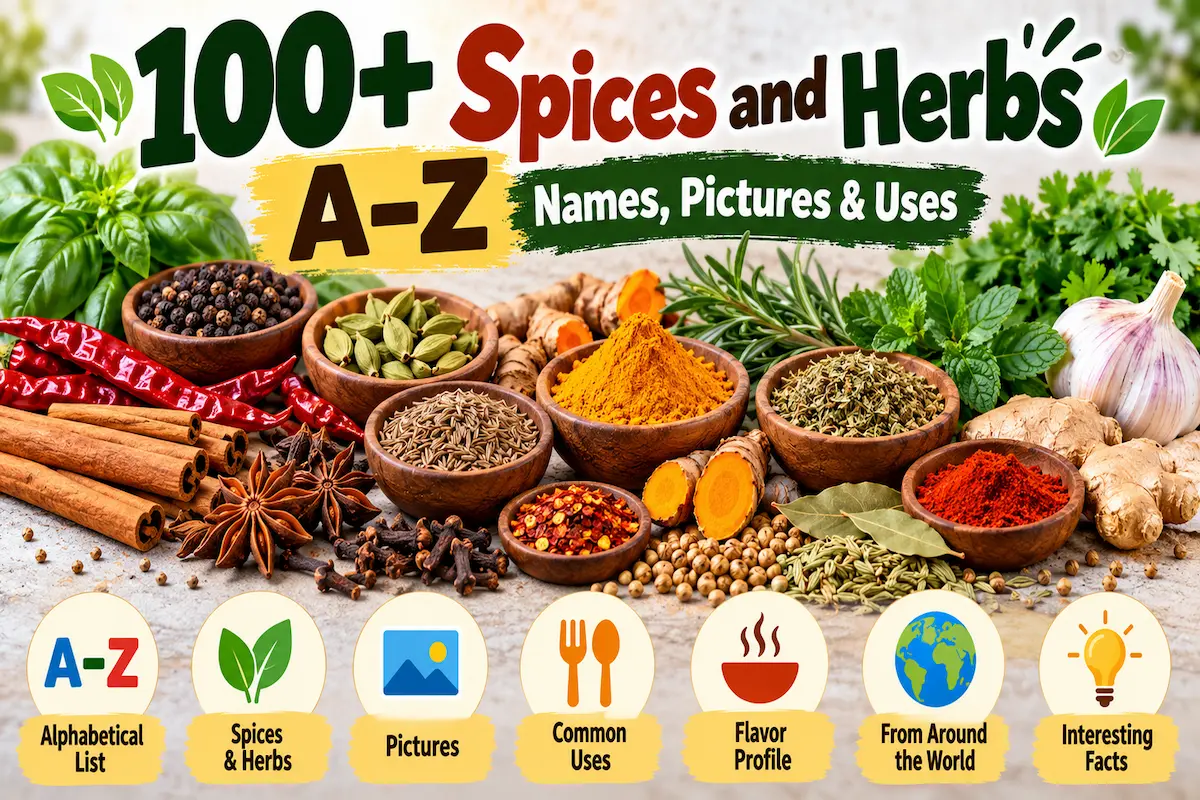
⚡ Quick Answer
Spices and herbs are plant-based ingredients used to add flavor, aroma, color, or character to food. Herbs usually come from the leafy parts of plants, while spices commonly come from seeds, fruits, bark, roots, berries, or flower buds.
This guide includes 100+ spices and herbs from A–Z, with their names, common uses, flavor profiles, and interesting facts.
From aromatic cinnamon and earthy cumin to fragrant basil and tangy sumac, spices and herbs give food its distinctive flavor, aroma, color, and character.
But how many can you actually recognize?
Explore 100 Spices Name in English
This A–Z list of 100+ spices and herbs is designed as an easy reference for students, beginners, home cooks, parents, and anyone interested in food and plants.
You'll find the name, flavor profile, and common culinary uses of each ingredient, along with interesting facts and simple explanations. Explore 🌶️40 Common Spices: Names, Pictures, Uses & Interesting Facts
🌶️ Quick tip: Herbs are generally associated with the leafy parts of plants, while spices commonly come from seeds, bark, roots, fruits, or flower buds. Culinary terminology can vary, and some plants can provide both herbs and spices.
🧂 What Is the Difference Between Herbs and Spices?
Herbs and spices both come from plants, but the plant part used is usually different.
🌿 Herbs commonly refer to the leafy parts of plants, either fresh or dried.
🌶️ Spices commonly come from seeds, bark, roots, fruits, berries, or flower buds.
For example:
🍃 Basil → herb
🌿 Mint → herb
🌱 Cumin → spice
🪵 Cinnamon → spice
🌸 Cloves → spice
🌱 Coriander leaves → herb
🌰 Coriander seeds → spice
Some ingredients don't fit neatly into a single everyday category, which is why broad culinary lists often discuss herbs and spices together. Read Cinnamon Benefits guide
🌿 100+ Spices and Herbs A–Z
🅰️ Spices and Herbs Starting With A
1. Allspice
Flavor: Warm, sweet, peppery
Uses: Baking, sauces, meat dishes, stews
Despite its name, allspice is a single spice rather than a mixture of several spices.
2. Anise
Flavor: Sweet, licorice-like
Uses: Desserts, breads, drinks, spice blends
3. Annatto
Flavor: Mild, earthy, slightly peppery
Uses: Coloring, rice dishes, sauces, cheese
Annatto is especially valued for the reddish-orange color it can add to food.
4. Asafoetida
Flavor: Strong, savory, pungent
Uses: Lentils, curries, vegetable dishes, spice blends
5. Ajwain
Flavor: Strong, aromatic, thyme-like
Uses: Flatbreads, snacks, lentils, fried foods
🅱️ Spices and Herbs Starting With B
6. Basil
Flavor: Sweet, herbal, slightly peppery
Uses: Pasta, sauces, salads, pesto
7. Bay Leaf
Flavor: Woody, herbal, aromatic
Uses: Soups, stews, rice dishes, sauces
8. Black Pepper
Flavor: Sharp, warm, pungent
Uses: Soups, vegetables, eggs, meat, sauces
9. Black Cardamom
Flavor: Smoky, earthy, aromatic
Uses: Curries, rice dishes, stews, spice blends
10. Black Mustard Seeds
Flavor: Pungent, nutty
Uses: Tempering, pickles, curries, vegetables
11. Borage
Flavor: Mild, cucumber-like
Uses: Salads, soups, garnishes
🅲️ Spices and Herbs Starting With C
12. Caraway
Flavor: Warm, earthy, slightly anise-like
Uses: Breads, stews, vegetables, sauces
13. Cardamom
Flavor: Sweet, floral, aromatic
Uses: Tea, desserts, rice dishes, curries
14. Cayenne Pepper
Flavor: Hot, peppery
Uses: Sauces, soups, marinades, spicy dishes
15. Celery Seed
Flavor: Strong, herbal, celery-like
Uses: Pickles, soups, sauces, seasoning blends
16. Chervil
Flavor: Mild, delicate, slightly anise-like
Uses: Soups, salads, sauces
17. Chili Pepper
Flavor: Mild to very hot, depending on variety
Uses: Curries, sauces, salsa, marinades
18. Chives
Flavor: Mild onion-like
Uses: Salads, soups, potatoes, sauces
19. Cinnamon
Flavor: Sweet, warm, woody
Uses: Desserts, tea, rice dishes, curries
🌿 Related guide: Learn more in our Cinnamon Benefits: Uses, Nutrition, Potential Benefits & Facts.
20. Cloves
Flavor: Strong, warm, slightly sweet
Uses: Rice dishes, curries, baking, spice blends
21. Coriander
Flavor: Warm, earthy, slightly citrusy
Uses: Curries, sauces, spice blends, vegetables
22. Cumin
Flavor: Warm, earthy, nutty
Uses: Curries, rice, soups, vegetables, spice blends
🅳️ Spices and Herbs Starting With D
23. Dill
Flavor: Fresh, herbal, slightly citrusy
Uses: Pickles, fish, salads, sauces
24. Dill Seeds
Flavor: Warm, aromatic
Uses: Pickles, breads, vegetables, spice blends
25. Dried Ginger
Flavor: Warm, spicy, aromatic
Uses: Tea, baking, curries, spice blends
🅴️ Spices and Herbs Starting With E
26. Epazote
Flavor: Strong, earthy, distinctive
Uses: Beans, soups, traditional Mexican dishes
🅵️ Spices and Herbs Starting With F
27. Fennel Seeds
Flavor: Sweet, aromatic, anise-like
Uses: Curries, breads, pickles, spice blends
28. Fenugreek
Flavor: Earthy, slightly bitter
Uses: Curries, pickles, spice blends
29. Fenugreek Leaves
Flavor: Earthy, aromatic, slightly bitter
Uses: Curries, flatbreads, vegetable dishes
🅶️ Spices and Herbs Starting With G
30. Garlic
Flavor: Strong, savory, pungent
Uses: Sauces, curries, pasta, vegetables, marinades
31. Garlic Powder
Flavor: Savory, pungent
Uses: Seasoning, sauces, marinades, snacks
32. Galangal
Flavor: Sharp, citrusy, spicy
Uses: Thai curries, soups, sauces
33. Ginger
Flavor: Warm, spicy, slightly citrusy
Uses: Curries, soups, drinks, sauces, baking
34. Green Cardamom
Flavor: Sweet, floral, fragrant
Uses: Tea, desserts, rice dishes, spice blends
🅷️ Spices and Herbs Starting With H
35. Horseradish
Flavor: Sharp, pungent, peppery
Uses: Sauces, meat dishes, sandwiches, condiments
36. Hyssop
Flavor: Herbal, slightly bitter
Uses: Herbal teas, seasoning, traditional cooking
🅸️ Spices and Herbs Starting With I
37. Indian Bay Leaf
Flavor: Aromatic, woody, slightly cinnamon-like
Uses: Rice dishes, curries, stews, spice blends
38. Italian Parsley
Flavor: Fresh, herbal
Uses: Pasta, sauces, salads, garnishes
🅹️ Spices and Herbs Starting With J
39. Juniper Berries
Flavor: Pine-like, aromatic, slightly fruity
Uses: Sauces, meat dishes, traditional European cooking
40. Jamaican Allspice
Flavor: Warm, sweet, peppery
Uses: Baking, sauces, meat dishes
🅺️ Spices and Herbs Starting With K
41. Kaffir Lime Leaves
Flavor: Strong, citrusy, aromatic
Uses: Thai curries, soups, sauces
42. Kalonji
Flavor: Peppery, nutty, slightly bitter
Uses: Pickles, breads, curries, vegetable dishes
Kalonji is also commonly known as nigella seed.
43. Kashmiri Chili
Flavor: Mild to moderately hot, fruity
Uses: Curries, sauces, marinades
It is often valued for its deep red color.
🅻️ Spices and Herbs Starting With L
44. Lavender
Flavor: Floral, aromatic
Uses: Desserts, teas, baking, culinary infusions
45. Lemongrass
Flavor: Fresh, citrusy
Uses: Soups, curries, sauces, teas
46. Lemon Balm
Flavor: Mild lemon-like, herbal
Uses: Teas, desserts, drinks
47. Licorice Root
Flavor: Naturally sweet, distinctive
Uses: Herbal preparations, teas, confectionery
48. Long Pepper
Flavor: Warm, pungent, peppery
Uses: Spice blends, curries, traditional dishes
🅼️ Spices and Herbs Starting With M
49. Mace
Flavor: Warm, aromatic, slightly sweet
Uses: Rice dishes, curries, spice blends
Mace is the dried covering surrounding the nutmeg seed.
50. Marjoram
Flavor: Sweet, herbal, earthy
Uses: Soups, sauces, vegetables, meat dishes
51. Mint
Flavor: Cool, fresh, refreshing
Uses: Chutneys, salads, drinks, desserts
52. Mustard Seeds
Flavor: Pungent, spicy, nutty
Uses: Tempering, pickles, sauces, vegetables
🅽️ Spices and Herbs Starting With N
53. Nigella Seeds
Flavor: Peppery, earthy, nutty
Uses: Naan, pickles, curries, breads
54. Nutmeg
Flavor: Warm, sweet, nutty
Uses: Desserts, sauces, drinks, spice blends
🅾️ Spices and Herbs Starting With O
55. Oregano
Flavor: Earthy, herbal, slightly bitter
Uses: Pizza, pasta, sauces, salads
56. Onion Powder
Flavor: Savory, mildly sweet
Uses: Seasoning, sauces, soups, snacks
🅿️ Spices and Herbs Starting With P
57. Paprika
Flavor: Mild, sweet to hot depending on variety
Uses: Soups, sauces, vegetables, meat dishes
58. Parsley
Flavor: Fresh, green, herbal
Uses: Salads, sauces, pasta, garnishes
59. Peppermint
Flavor: Cool, minty
Uses: Teas, desserts, drinks
60. Poppy Seeds
Flavor: Mild, nutty
Uses: Breads, pastries, desserts, sauces
61. Pink Peppercorns
Flavor: Mild, fruity, peppery
Uses: Sauces, salads, seasoning
62. Perilla
Flavor: Herbal, slightly minty
Uses: Korean and East Asian dishes, pickles, wraps
🆀️ Spices and Herbs Starting With Q
63. Quassia
Flavor: Intensely bitter
Uses: Traditional flavoring and bitter preparations
Quassia is much less common in everyday kitchens than spices such as cumin or cinnamon.
🆁️ Spices and Herbs Starting With R
64. Red Pepper Flakes
Flavor: Spicy, peppery
Uses: Pizza, pasta, sauces, vegetables
65. Rosemary
Flavor: Pine-like, woody, aromatic
Uses: Roasted vegetables, potatoes, breads, meat dishes
66. Rose Petals
Flavor: Floral, fragrant
Uses: Desserts, teas, syrups, culinary decorations
🆂️ Spices and Herbs Starting With S
67. Saffron
Flavor: Delicate, floral, earthy
Uses: Rice dishes, desserts, drinks
68. Sage
Flavor: Earthy, savory, slightly peppery
Uses: Stuffing, sauces, meat dishes, vegetables
69. Savory
Flavor: Peppery, herbal
Uses: Beans, soups, vegetables, meat dishes
70. Sesame Seeds
Flavor: Nutty, rich
Uses: Breads, sauces, salads, toppings
71. Sichuan Pepper
Flavor: Citrusy, aromatic, tingling
Uses: Stir-fries, noodles, sauces, meat dishes
72. Spearmint
Flavor: Mild, fresh, sweet-mint
Uses: Drinks, salads, sauces, desserts
73. Star Anise
Flavor: Sweet, licorice-like
Uses: Broths, rice dishes, spice blends, desserts
74. Sumac
Flavor: Tangy, citrus-like
Uses: Salads, grilled meats, dips, rice dishes
🆃️ Spices and Herbs Starting With T
75. Tarragon
Flavor: Herbal, slightly anise-like
Uses: Sauces, chicken, vegetables, dressings
76. Thyme
Flavor: Earthy, herbal, slightly minty
Uses: Soups, sauces, roasted vegetables, meat dishes
77. Turmeric
Flavor: Earthy, warm, slightly bitter
Uses: Curries, rice, vegetables, soups, spice blends
78. Tamarind
Flavor: Sour, fruity, sweet-tart
Uses: Chutneys, sauces, curries, soups, drinks
🆄️ Spices and Herbs Starting With U
79. Upland Cress
Flavor: Peppery, fresh
Uses: Salads, sandwiches, garnishes
80. Umeboshi
Flavor: Sour, salty, fruity
Uses: Japanese dishes, rice, seasonings
🆅️ Spices and Herbs Starting With V
81. Vanilla
Flavor: Sweet, rich, aromatic
Uses: Cakes, ice cream, desserts, drinks
Vanilla comes from the fruit pods of vanilla orchids.
82. Vietnamese Coriander
Flavor: Peppery, citrusy, herbal
Uses: Vietnamese and Southeast Asian dishes, salads, soups
🆆️ Spices and Herbs Starting With W
83. Wasabi
Flavor: Sharp, pungent, green and peppery
Uses: Sushi, sashimi, noodles, Japanese dishes
84. White Pepper
Flavor: Sharp, warm, slightly earthy
Uses: Soups, sauces, vegetables, light-colored dishes
85. Winter Savory
Flavor: Peppery, herbal
Uses: Beans, soups, stews, meat dishes
🆇️ Spices and Herbs Starting With X
86. Xylopia
Flavor: Aromatic, peppery
Uses: Traditional West and Central African cooking
Xylopia species are used as aromatic spices in several regional cuisines.
🆈️ Spices and Herbs Starting With Y
87. Yarrow
Flavor: Herbal, slightly bitter
Uses: Traditional herbal preparations and limited culinary applications
88. Yerba Buena
Flavor: Minty, refreshing
Uses: Herbal drinks, teas, flavoring
🆉️ Spices and Herbs Starting With Z
89. Za'atar
Flavor: Herbal, earthy, tangy
Uses: Flatbreads, dips, salads, roasted vegetables
Za'atar can refer to a traditional herb as well as a popular Middle Eastern spice blend.
90. Zedoary
Flavor: Earthy, bitter, aromatic
Uses: Traditional spice blends, regional cooking
91. Zucchini Blossoms
Flavor: Mild, delicate, slightly sweet
Uses: Stuffed dishes, fritters, salads
🌶️ More Common Spices and Herbs to Know
The alphabet gives us a useful reference structure, but many everyday ingredients deserve a quick mention too.
92. Amchur
Dried unripe mango powder with a tangy flavor. Common in Indian snacks, curries, chutneys, and spice blends.
93. Anardana
Dried pomegranate seeds with a fruity, sour flavor. Used in chutneys, curries, and spice mixtures.
94. Carom Seeds
Also called ajwain, these aromatic seeds are commonly used in Indian flatbreads, snacks, and savory dishes.
95. Chia Seeds
Small seeds commonly used in drinks, puddings, breakfast foods, and baked recipes.
96. Curry Leaves
A highly aromatic leaf used especially in South Asian cooking for tempering and curries.
97. Dried Red Chili
Whole dried chilies can provide heat, color, and a deeper pepper aroma to dishes.
98. Green Peppercorns
Young pepper fruits with a fresher, less mature character than black peppercorns.
99. Kokum
A sour fruit used in several Indian regional cuisines, particularly in curries, drinks, and coastal dishes.
100. Sesame
Small nutty seeds used in breads, sauces, sweets, salads, and toppings.
101. Shiso
An aromatic Japanese herb with a distinctive herbal flavor, commonly used with sushi, pickles, and garnishes.
102. Sorrel
A leafy herb with a naturally tangy, lemon-like flavor. Used in soups, sauces, salads, and vegetable dishes.
103. Stevia
A plant whose leaves contain intensely sweet compounds and are used as a sweetening ingredient.
104. Watercress
A peppery leafy green commonly used in salads, sandwiches, soups, and garnishes.
105. Woodruff
An aromatic herb traditionally used for flavoring certain drinks and desserts.
🌍 Spices and Herbs From Around the World
Spice use varies enormously between cuisines.
🇮🇳 South Asia: Cumin, turmeric, coriander, cardamom, cloves, mustard seeds, fenugreek, black pepper and many regional spices.
🇲🇽 Mexico: Chili peppers, cumin, oregano, cinnamon and other herbs and spices are important in many dishes.
🇮🇹 Italy: Basil, oregano, rosemary, sage and black pepper are common in many traditional preparations.
🇯🇵 Japan: Wasabi, shiso, ginger, sesame and other aromatic ingredients are used in different dishes.
🇹🇭 Thailand: Lemongrass, galangal, kaffir lime leaves, chili and coriander are important ingredients in many dishes.
🇲🇦 North Africa: Cumin, coriander, cinnamon, paprika and other spices are widely used.
🇱🇧 Middle Eastern cuisine: Sumac, cumin, coriander, mint, za'atar and cinnamon appear in many traditional preparations.
🧂 Whole Spices vs Ground Spices
Many spices are available in both whole and ground forms.
| Whole Spices | Ground Spices |
|---|---|
| Often retain aroma longer when stored properly | Convenient and ready to use |
| Can be toasted or tempered | Easy to mix into dishes |
| Useful for slow cooking | Convenient for quick recipes |
| Can be ground when needed | May lose aroma faster after grinding |
🌿 Simple tip: If you have the choice, keep strongly aromatic spices whole and grind them when needed for certain recipes.
🫙 How to Store Spices and Dried Herbs
Good storage helps preserve the aroma and quality of your spice collection.
Keep spices:
🫙 In tightly closed containers
🌡️ Away from excessive heat
☀️ Away from direct sunlight
💧 Away from moisture
🧹 In a clean, dry cupboard
A cool, dry cupboard is generally more suitable than storing spice jars directly beside a hot stove.
🌶️ Which Spices Should Beginners Start With?
You don't need to buy 100 spices.
If you're building your first collection, start with a handful of versatile ingredients such as:
🌿 Cumin
🟡 Turmeric
🌱 Coriander
🌶️ Chili
⚫ Black pepper
🌱 Mustard seeds
🪵 Cinnamon
💚 Cardamom
🌸 Cloves
🌿 Bay leaf
👉 If you're completely new to cooking, see our Best Spices for Beginners guide.
🔗 Explore More Spice Guides
🌶️ 40 Common Spices: Names, Pictures, Uses & Interesting Facts — Start with 40 of the most useful common spices.
🌿 100 Spices Name in English and Hindi — Explore a larger existing collection of spice names.
🪵 Cinnamon Benefits: Uses, Nutrition, Potential Benefits & Facts — Learn more about cinnamon, its culinary uses, types, safety, and what research says.
🌱 Best Spices for Beginners — Find a practical starter collection for your kitchen.
💡 Interesting Facts About Spices and Herbs
🌳 Cinnamon comes from bark.
The spice is made from the inner bark of certain Cinnamomum trees.
🌸 Cloves are flower buds.
The cloves used in cooking are dried unopened flower buds.
🌱 Coriander can be both an herb and a spice.
The leaves are commonly used as an herb, while the dried seeds are used as a spice.
🌶️ Black pepper and white pepper come from the same plant.
Their different appearance and characteristics result from different harvesting and processing methods.
⭐ Allspice is not a spice mixture.
Despite its name, allspice is a single spice.
🌿 Za'atar can mean different things.
The word may refer to a particular herb or to a traditional spice blend, depending on context.
🪵 Spices can come from many plant parts.
Seeds, bark, roots, fruits, berries, leaves, and flower buds can all be used as culinary ingredients.
🧠 Quick Summary
Spices and herbs are some of the most useful ingredients in the kitchen. They can change the flavor, aroma, color, texture, and character of food.
You don't need to memorize every name in this A–Z list.
Start with a few familiar ingredients, learn what they taste like, and gradually explore new ones.
🌿 Learn the plant.
🌶️ Understand the flavor.
🍳 Try it in a dish.
🧠 Remember what you liked.
That's a much easier way to build your spice knowledge than trying to memorize 100 names at once.
🎯 Quick Spice & Herb Quiz
1. Which spice comes from tree bark?
A. Cumin
B. Cinnamon
C. Clove
D. Cardamom
Answer: B — Cinnamon
2. Which spice is made from dried flower buds?
A. Cloves
B. Turmeric
C. Cumin
D. Fennel
Answer: A — Cloves
3. Which spice has a strong citrus-like and tingling character?
A. Sichuan pepper
B. Cinnamon
C. Nutmeg
D. Vanilla
Answer: A — Sichuan pepper
4. Which ingredient is commonly associated with Middle Eastern cuisine and has a tangy flavor?
A. Sumac
B. Nutmeg
C. Cardamom
D. Sage
Answer: A — Sumac
5. Which spice comes from an orchid?
A. Vanilla
B. Clove
C. Saffron
D. Mace
Answer: A — Vanilla
❓ Frequently Asked Questions
What are the most common spices?
Some widely used culinary spices include cumin, turmeric, coriander, black pepper, cinnamon, cardamom, cloves, ginger, paprika, chili, mustard seeds, fennel, nutmeg, and saffron.
Can you give me 100 names of spices?
Yes. This guide contains more than 100 names of culinary spices, herbs, aromatic leaves, seeds, roots, fruits, and related seasonings arranged broadly from A to Z.
What are the names of spices in alphabetical order?
Examples include allspice, anise, annatto, asafoetida, basil, bay leaf, black pepper, cardamom, cayenne pepper, cinnamon, cloves, coriander, cumin, dill, fennel, ginger, lavender, mint, nutmeg, oregano, paprika, rosemary, saffron, thyme, turmeric, vanilla, wasabi, white pepper, za'atar, and many more.
What is the difference between herbs and spices?
Herbs generally refer to leafy plant parts used fresh or dried, while spices commonly come from seeds, bark, roots, fruits, berries, or flower buds. The distinction is mainly culinary and can vary between ingredients and cultures.
What are the most useful spices for beginners?
Cumin, turmeric, coriander, black pepper, chili, mustard seeds, cinnamon, cardamom, cloves, and bay leaf are useful starting points for many kitchens.
Are herbs and spices the same thing?
No. They are related plant-based culinary ingredients, but the terms usually refer to different plant parts and uses. Herbs are commonly leafy, while spices often come from other plant parts.
Which spices are used in Indian cooking?
Common examples include cumin, turmeric, coriander, black pepper, mustard seeds, cardamom, cloves, cinnamon, fenugreek, fennel, chili, asafoetida, and many regional spices.
What is the difference between a spice and a seasoning?
A spice is generally a plant-derived ingredient used to add flavor or aroma. Seasoning is a broader culinary term that can include spices, herbs, salt, sauces, and other flavoring ingredients.
🌿 Final Thought
The world of spices and herbs is much bigger than the small collection of jars found in most kitchens.
From cinnamon bark and clove buds to cumin seeds, fragrant herbs, fiery chilies, and tangy sumac, every ingredient has its own story, flavor, and culinary role.
The best way to learn them is one ingredient at a time. 🌶️🌿
You should also read:
🫘 50 Pulses Name in English and Hindi with Pictures (दालों के नाम)
🫘Pulses Name in English and Hindi with Pictures (दालों के नाम) Educational chart picture showing 50 Pulses Name in English and Hindi with pictures, including popular Indian dals such as Moong, Chana, Masoor, Urad, Toor, and Rajma. Almost every evening, my mother Sharada asks me…
Continue reading...🌱50 Seeds Name in English and Hindi with Pictures (बीजों के नाम)
🌱Seeds Name in English and Hindi with Pictures (बीजों के नाम) Educational chart showing 50 seeds name in English and Hindi with pictures, including edible seeds, spice seeds, oil seeds, cereal seeds, and garden seeds. 📌 Quick Answer Seeds are the small reproductive parts of…
Continue reading...🌿 50 Herbs Name in English and Hindi with Pictures | जड़ी-बूटियों के नाम
🌿Herbs Name in English and Hindi with Pictures (जड़ी-बूटियों के नाम) Educational chart of 50 herbs name in English and Hindi with pictures, including common kitchen herbs, medicinal herbs, and aromatic herbs used in India and around the world. 📌 Quick Answer Herbs are plants…
Continue reading...
🌶️50 Indian Spices and Their Uses (भारतीय मसालों के उपयोग) – Cooking & Kitchen Guide
🌶️50 Complete Indian Spices and Their Uses (भारतीय मसालों के उपयोग) – Cooking & Kitchen Guide Introduction Indian food is famous around the world because of its rich flavors, colors, and aroma. The secret behind these delicious dishes is spices. From a simple bowl of…
Continue reading...