
💵100 Budget Categories to Organize Your Monthly Budget
100 Budget Categories to Organize Your Monthly Budget 💵
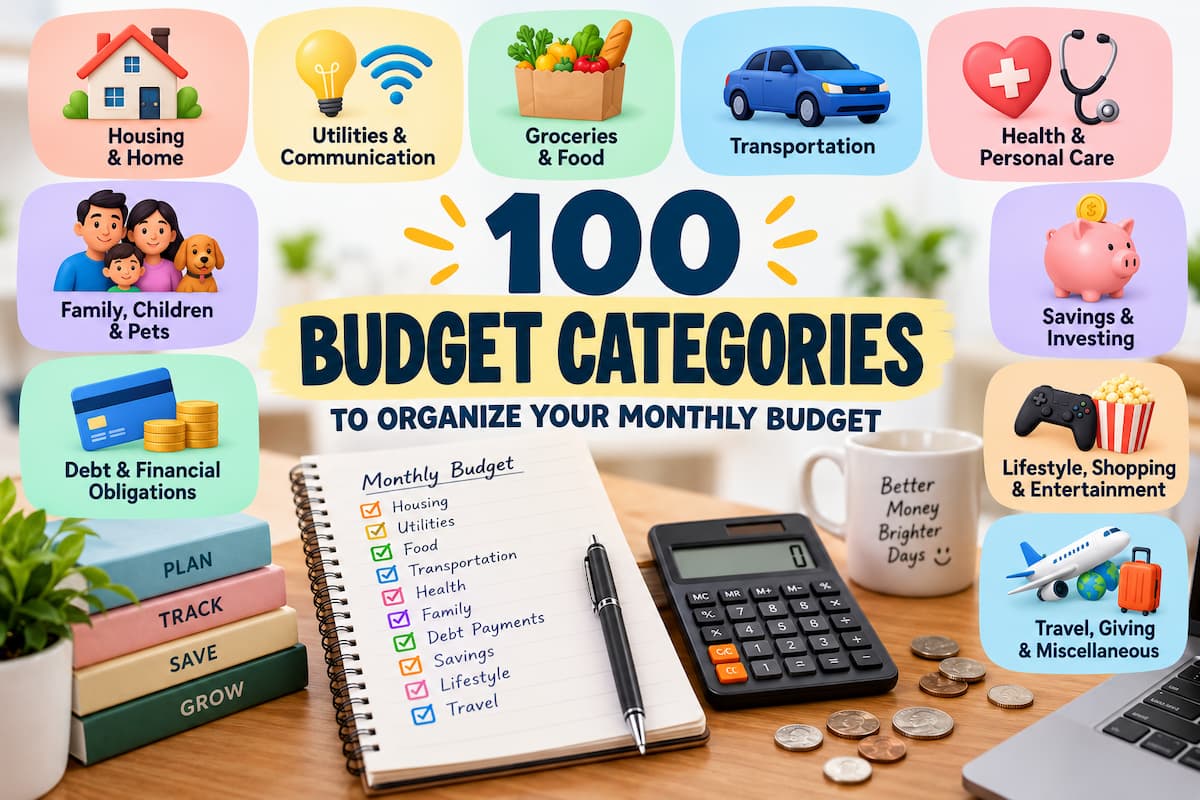
A colorful budgeting infographic featuring 10 major budget groups, including housing and home, utilities, groceries, transportation, health, family, debt, savings and investing, lifestyle, and travel. Designed to help readers choose budget categories that fit their household.
A budget is easier to manage when you know where your money is going. Instead of tracking every purchase in one long list, you can organize your spending into categories such as housing, groceries, transportation, savings, and entertainment.
But how many budget categories do you actually need?
There is no single number that works for everyone. Some people prefer a simple budget with a handful of categories, while others like to track their spending in more detail. The goal is to create a system that helps you understand your money—not one that makes budgeting feel like a second job.
This guide lists 100 possible budget categories for organizing household expenses, savings, debt payments, and everyday spending. You do not need to use all 100. Choose the categories that match your life, then adjust them as your needs change.
📌 What Are Budget Categories?
Budget categories are groups used to organize where your money goes.
For example, instead of recording every electricity bill, grocery purchase, and phone payment in one general “Expenses” section, you can place each transaction into a suitable category.
A simple budget might look like this:
| Main category | Example subcategories |
|---|---|
| Housing 🏠 | Rent, home insurance, repairs |
| Food 🥑 | Groceries, restaurants, takeout |
| Transportation 🚗 | Fuel, insurance, public transit |
| Savings 💰 | Emergency fund, retirement, vacation |
| Entertainment 🎬 | Movies, hobbies, events |
You can keep your budget broad or divide categories into smaller groups. For example, one person might track all grocery spending under Groceries, while another might separate produce, meat, dairy, and pantry items.
Both approaches can work. The important thing is to avoid counting the same purchase twice.
🧾 100 Budget Categories to Consider
The following list is organized into 10 groups. Think of these as options—not a checklist that every household must complete.
🏠 1. Housing & Home
Housing is often one of the largest parts of a household budget. These categories can help you track the cost of maintaining your home, whether you rent or own.
Rent or Mortgage — Monthly rent or mortgage payments.
Property Taxes — Property tax payments made separately from a mortgage.
Homeowners or Renters Insurance — Insurance that covers your home or personal belongings.
Home Maintenance — Routine work such as servicing appliances or maintaining the property.
Home Repairs — Fixing plumbing, electrical issues, broken fixtures, and other problems.
Home Improvement — Planned upgrades such as remodeling or replacing flooring.
HOA or Condo Fees — Homeowners association or condominium fees.
Furniture and Home Decor — Furniture, rugs, curtains, and decorative items.
Household Supplies — Cleaning products, paper goods, and other everyday home essentials.
Pest Control and Home Security — Pest treatments, alarm monitoring, and related services.
💡 2. Utilities & Communication
These categories cover the services that help keep your home connected and running.
Electricity — Monthly electricity bills.
Natural Gas or Heating Fuel — Gas, heating oil, or other home heating fuel.
Water and Sewer — Water supply and sewer service charges.
Trash and Recycling — Waste collection and recycling fees.
Internet — Home broadband or internet service.
Mobile Phone — Cell phone plans and service charges.
Home Phone — Landline service, if applicable.
Streaming Services — Video and music streaming subscriptions.
Software and App Subscriptions — Paid apps and software plans.
Cloud Storage and Digital Services — Online storage, backups, and other digital services.
🥑 3. Groceries & Food
Food spending can be tracked as one broad category or divided into smaller groups. Choose the level of detail you can maintain consistently.
Groceries — General supermarket and grocery-store purchases.
Fresh Produce — Fresh fruits and vegetables, when tracked separately.
Meat, Seafood, and Poultry — Meat, fish, seafood, and poultry purchases.
Dairy and Eggs — Milk, cheese, yogurt, butter, and eggs.
Pantry Staples — Rice, pasta, flour, canned goods, oils, and other cupboard essentials.
Snacks and Beverages — Packaged snacks, soft drinks, and other drinks.
Coffee and Tea — Coffee beans, tea, and related home supplies.
Restaurants and Dining Out — Meals eaten at restaurants.
Takeout and Fast Food — Food ordered for pickup or bought from fast-food outlets.
Meal Delivery Services — Prepared meals or food delivered through a meal service.
🚗 4. Transportation
Transportation categories help you understand the cost of getting to work, running errands, and traveling around your area.
Car Payment — Monthly car loan or lease payments.
Auto Insurance — Insurance premiums for your vehicle.
Fuel — Gasoline, diesel, or other vehicle fuel.
Public Transportation — Bus, subway, train, and transit passes.
Parking and Tolls — Parking fees, road tolls, and related charges.
Vehicle Maintenance — Routine servicing, oil changes, and tire rotations.
Vehicle Repairs — Unplanned mechanical or body repairs.
Vehicle Registration and Inspection — Registration renewals and required inspections.
Rideshare and Taxi — Services such as rideshare trips and traditional taxis.
Bicycle and Other Transportation — Bicycle maintenance and other personal transportation costs.
🩺 5. Health & Personal Care
Health and personal care expenses may be regular, occasional, or unexpected. Keeping them visible can make planning easier.
Health Insurance — Health insurance premiums paid separately from payroll deductions.
Doctor and Specialist Visits — Office visits and consultations.
Dental Care — Dental checkups, cleanings, and treatments.
Vision Care — Eye exams, glasses, and contact lenses.
Prescription Medications — Prescribed medicines.
Over-the-Counter Medicines — Non-prescription medicines and basic remedies.
Medical Supplies and Equipment — Eligible medical supplies and equipment.
Gym and Fitness — Gym memberships, fitness classes, and exercise programs.
Haircuts and Grooming — Haircuts, barber visits, and grooming services.
Toiletries and Personal Care — Soap, shampoo, skincare, and other personal-care products.
👨👩👧👦 6. Family, Children & Pets
Household responsibilities can create expenses that do not fit neatly into housing, food, or transportation.
Childcare — Daycare, babysitting, and other childcare services.
Tuition and School Fees — Tuition and school-related fees.
School Supplies — Books, stationery, backpacks, and classroom supplies.
Children’s Clothing — Clothing and shoes for children.
Children’s Activities — Sports, lessons, clubs, and extracurricular activities.
Baby Supplies — Diapers, formula, and other baby essentials.
Family Outings — Shared family activities and outings.
Pet Food — Food and treats for pets.
Veterinary Care — Vet visits, vaccinations, and treatments.
Pet Supplies and Grooming — Toys, bedding, grooming, and other pet supplies.
💳 7. Debt & Financial Obligations
These categories help track required payments and financial fees. Be careful not to count the same purchase twice—for example, once when you buy something with a credit card and again when you pay the card bill.
Credit Card Payments — Payments toward credit card balances.
Student Loan Payments — Required or planned student loan payments.
Personal Loan Payments — Payments toward personal loans.
Medical Debt Payments — Payments toward outstanding medical bills or medical debt.
Other Debt Payments — Payments toward other debts not listed above.
Bank Fees — Monthly account fees, overdraft fees, and other bank charges.
Financial Service Fees — Fees for financial services, accounts, or platforms.
Income and Estimated Tax Payments — Tax payments made separately, such as estimated tax payments.
Legal and Professional Fees — Legal, accounting, or other professional services.
Child Support and Required Payments — Required support payments and other applicable obligations.
💰 8. Savings & Investing
A budget can track not only what you spend, but also what you plan to set aside for future needs.
Emergency Fund — Money reserved for unexpected financial needs.
Short-Term Savings — Savings for goals you expect to fund in the nearer future.
Long-Term Savings — Money set aside for longer-term goals.
Retirement Contributions — Contributions to retirement accounts.
Investment Contributions — Contributions to investment accounts.
Education Savings — Money set aside for education costs.
Home Down Payment Fund — Savings toward buying a home.
Vehicle Replacement Fund — Savings for a future vehicle purchase.
Vacation Savings — Money set aside for planned trips.
Sinking Funds for Planned Expenses — Regular contributions toward known future costs, such as annual bills or replacement purchases.
🎮 9. Lifestyle, Shopping & Entertainment
These categories cover optional spending and personal interests. They can help you make room for enjoyment while keeping track of your overall budget.
Clothing and Shoes — Everyday clothing, footwear, and accessories.
Laundry and Dry Cleaning — Laundry services and dry cleaning.
Personal Shopping — Personal purchases that do not fit another category.
Hobbies and Crafts — Supplies and expenses for hobbies.
Books and Magazines — Printed books, magazines, and similar reading materials.
Movies and Entertainment — Movie tickets and other entertainment.
Concerts and Live Events — Concerts, shows, and live performances.
Gaming — Video games, gaming subscriptions, and related purchases.
Sports and Recreation — Recreational sports, equipment, and activities.
Gifts and Celebrations — Gifts and costs for personal celebrations.
✈️ 10. Travel, Giving & Miscellaneous
Some expenses happen only a few times a year. Giving them a place in your budget can help you prepare before they arrive.
Flights — Airfare for personal travel.
Hotels and Lodging — Hotels, rentals, and other accommodation.
Rental Cars and Travel Transport — Rental vehicles and local transportation during trips.
Travel Meals — Meals and drinks while traveling.
Travel Activities and Attractions — Tours, tickets, and activities during a trip.
Charitable Donations — Donations to charitable organizations.
Religious and Community Contributions — Contributions to religious or community organizations.
Holiday and Seasonal Expenses — Seasonal decorations, holiday supplies, and related costs.
Unexpected Expenses — Unplanned costs that do not have a more suitable category.
Miscellaneous Expenses — A small catch-all for occasional items that do not fit elsewhere.
🧭 How to Choose the Right Budget Categories
You do not need all 100 categories to build a useful budget. Start with the categories that reflect your actual spending and financial priorities.
Here are a few practical ways to choose:
Start with your regular bills. Include housing, utilities, insurance, transportation, and debt payments.
Add everyday spending. Consider groceries, dining, personal care, and household supplies.
Include future goals. Add savings categories for goals you are actively working toward.
Plan for irregular costs. Include annual bills, gifts, travel, and vehicle maintenance if they apply to you.
Keep the system manageable. If two categories are difficult to distinguish, combine them.
Review and adjust. Your categories can change when your household, income, or priorities change.
Simple Budget Categories vs. Detailed Budget Categories
| Simple budget | Detailed budget |
|---|---|
| Uses fewer, broader categories | Uses more specific categories |
| Easier to maintain | Offers more detail about spending |
| Useful for people starting out | Useful for people who want closer tracking |
| Example: Groceries | Example: Produce, meat, dairy, pantry staples |
| Less time spent recording purchases | More time may be needed to categorize purchases |
Neither method is automatically better. Choose the one you can use consistently.
🏡 Real-Life Example: How Mohan R. Could Organize a Household Budget
Imagine Mohan R. is organizing a household budget. He wants to understand his regular expenses, prepare for less frequent costs, and keep savings visible.
Rather than starting with all 100 categories, Mohan could begin with a smaller set that reflects his household’s needs.
| Main category | Example items Mohan might track |
|---|---|
| Housing & Home 🏠 | Household supplies, repairs, home maintenance |
| Utilities & Communication 💡 | Electricity, water, internet, mobile phone |
| Food 🥑 | Groceries, dining out, takeout |
| Transportation 🚗 | Fuel, vehicle maintenance, insurance |
| Family & Personal Care 👨👩👦 | Family needs, personal care, medical costs |
| Financial Obligations 💳 | Loan payments, bank fees, applicable taxes |
| Savings & Investing 💰 | Emergency savings, planned savings, investment contributions |
| Lifestyle 🎮 | Clothing, hobbies, entertainment |
| Irregular Expenses 📅 | Annual bills, gifts, vehicle replacement savings |
| Miscellaneous 🧾 | Occasional costs that do not fit another category |
Mohan could then review the budget at the end of each month.
For example, if he notices that household supplies and groceries are difficult to separate, he could combine them. If he wants to understand food spending more closely, he could split groceries into smaller categories.
The important point is that Mohan’s budget should reflect his household—not someone else’s template. The same principle applies to anyone creating a personal or family budget.
This is an illustrative example, not a statement of Mohan’s actual income, expenses, or financial accounts.
⚠️ Common Budget Category Mistakes to Avoid
Even a well-organized budget can become confusing if categories are not used consistently.
1. Creating too many categories at the beginning
A long list can make budgeting feel difficult. Start with a manageable set and add detail only when it helps.
2. Counting one purchase twice
If you record a purchase under groceries, do not count it again as a separate expense when paying the credit card bill. Choose a consistent way to track card spending and payments.
3. Mixing broad categories with their subcategories
If you track all spending under Groceries, do not also add the same purchases under Produce, Meat, and Dairy. Those smaller categories should break down the total—not be added on top of it.
4. Treating savings like an ordinary purchase
Savings and investment contributions are planned uses of money, but they are different from consumption expenses. Keep them clearly labeled so you can understand both spending and saving.
5. Forgetting annual and occasional costs
Some expenses do not arrive every month. Planning for them through a sinking fund can make their timing easier to manage.
6. Using “Miscellaneous” for everything
A miscellaneous category is useful for genuinely unusual items. If it keeps growing, review those purchases and consider creating a more specific category.
7. Copying someone else’s budget exactly
A household with children, a car, pets, or frequent travel may need different categories from a household without those expenses. Your budget should match your circumstances.
❓ Frequently Asked Questions
What are the main categories in a monthly budget?
Common main categories include housing, utilities, food, transportation, health, family, debt payments, savings, personal spending, and miscellaneous expenses. The exact categories depend on the household.
How many categories should a budget have?
There is no required number. Some people prefer a small set of broad categories, while others use more detailed lists. Start with what you can maintain and adjust when needed.
What are the 50/30/20 budget categories?
The 50/30/20 approach groups money into three broad areas: needs, wants, and savings or debt repayment. It is a budgeting framework, not a requirement to use the 100 categories in this guide.
Should savings be included in a budget?
Yes. A budget can include savings goals so you can plan how much money to set aside. Keep savings contributions distinct from everyday purchases.
Should credit card payments be a budget category?
They can be, but the tracking method matters. If you categorize each purchase when it happens, counting the full card payment again as spending may duplicate those expenses. Make sure your system treats card purchases and repayments consistently.
How do I budget for expenses that happen once a year?
You can create a category for the expense or use a sinking fund. A sinking fund involves setting money aside over time for a planned future cost.
Can I change my budget categories every month?
Yes. Categories can be adjusted as your needs change. However, keeping some categories consistent can make it easier to compare spending from one month to another.
Should I use separate categories for groceries and restaurants?
You can. Some people prefer one combined food category, while others want to see grocery spending and dining out separately. Choose the approach that gives you useful information without making tracking unnecessarily complicated.
✅ Final Thoughts
A good budget does not need 100 categories. It needs categories that help you understand your money and make decisions about it.
Use this list as a starting point. Select the categories that apply to your household, combine those that feel too detailed, and add new ones when a real need appears.
The best budget is not the most complicated one—it is the one you can understand, update, and use consistently.
Educational note: This article provides general budgeting information. It is not individualized financial, tax, legal, or investment advice. Tax rules and financial circumstances vary by person and location.