
🪶Why Do Birds Have Feathers? 7 Amazing Jobs Feathers Do
Why Do Birds Have Feathers? 7 Jobs Feathers Do
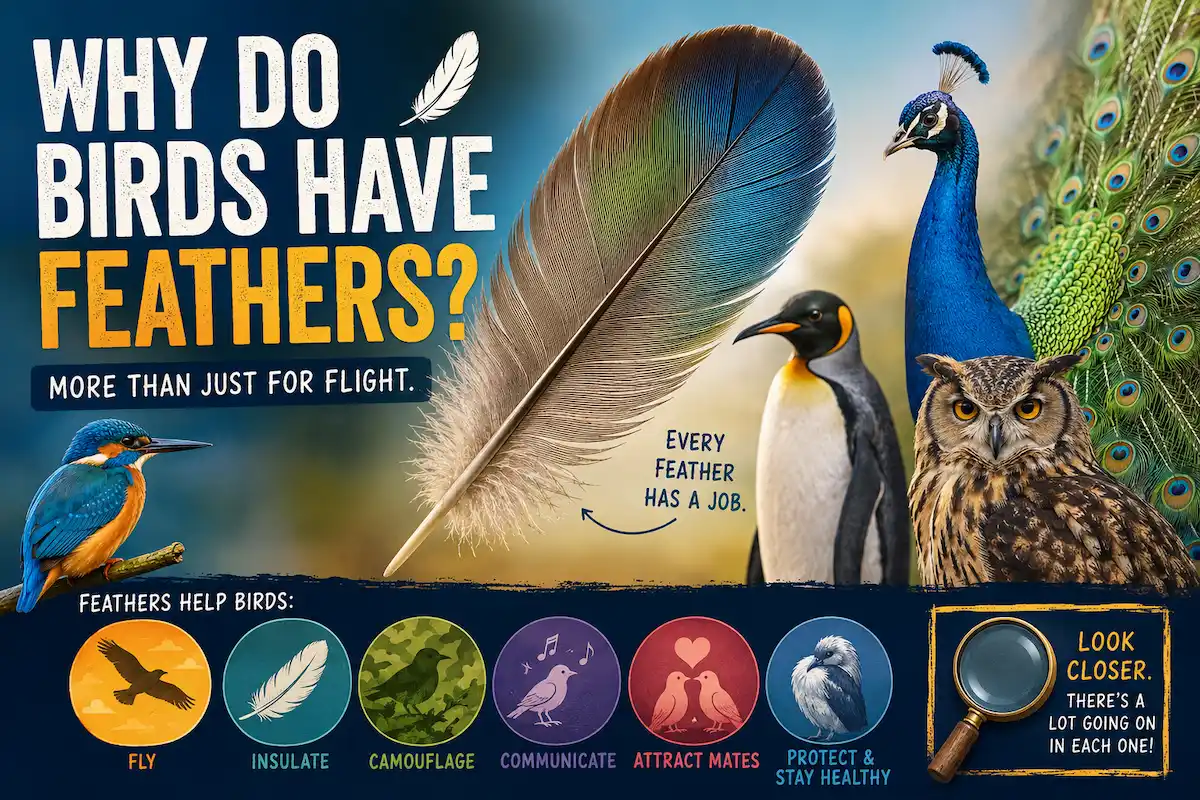
Why Do Birds Have Feathers?
Birds have feathers because feathers perform many different jobs at once. They help birds fly, stay warm, protect their bodies, resist water, blend into their surroundings, communicate with other birds, and attract mates.
Feathers do much more than help birds fly — they also provide insulation, protection, camouflage, communication, and display.
Quick Answer
Birds have feathers because feathers are the most versatile body covering in the animal kingdom — the same lightweight, keratin-based structure can be shaped for flight, insulation, waterproofing, camouflage, or courtship display, often several at once on a single bird. Feathers evolved before flight did: fossil evidence shows feather-like structures on flightless dinosaur relatives, meaning their original job was likely warmth or display, not flying. That's also why flightless birds today, like penguins, ostriches, and kiwis, still have feathers — flight was never the only reason to have them.
Explore 100 Common Birds in the USA
🪶 Quick Look: What Do Feathers Actually Do?
| Feather job | How it helps a bird |
|---|---|
| 🪽 Flight | Shapes the wing into an airfoil, generating lift and letting the bird steer, brake, and turn mid-air |
| 🌡️ Insulation | Traps a layer of warm air against the skin — effective enough to keep a bird's body near 104°F in freezing weather |
| 💧 Waterproofing | Overlaps like roof shingles and sheds preening oil, so rain beads off instead of soaking through |
| 🛡️ Protection | Shields skin from sun, wind, and scrapes — some feathers even guard the eyes and beak |
| 🌿 Camouflage | Colors and patterns dissolve a bird into bark, grass, or shadow to hide from predators |
| ❤️ Courtship | Oversized or brilliantly colored feathers exist purely to be seen — and to win a mate |
| 🗣️ Communication | A raised crest, puffed chest, or fanned tail sends a signal — alarm, aggression, or display — without a sound |
One structure, seven jobs. No other body covering in nature pulls double duty quite like a feather.
Explore our 100 Interesting Facts About Birds, Why Do Birds Have Hollow Bones?, and Types of Birds guides.
Feathers are also older than flight itself. Fossil evidence shows feather-like structures on several dinosaur relatives that couldn't fly at all — the earliest feathers likely served insulation, camouflage, or display, and only later became specialized enough for flight. Different feather types still reflect that split today: down feathers handle warmth, contour feathers cover and protect the body, and only wing and tail feathers are actually built for flight.
You can also browse our 200+ Birds Name in Hindi and English, and our guides on Do Birds Have Ears?, do birds have teeth, do birds have tongues, and do birds have noses.
1. 🪽 Feathers Help Birds Fly
The feathers on a bird's wings aren't all identical. The long, stiff flight feathers are called remiges. They're attached to the wing with an interlocking structure that gives them a strong, relatively smooth surface, and many are asymmetrical — their two sides aren't the same width, which helps generate lift efficiently while resisting unwanted twisting.
Smaller feathers called coverts overlap the bases of the flight feathers, smoothing the wing's surface so it works better as an aerodynamic shape. Tail feathers, arranged like a fan, handle a separate job: steering, braking, and controlling movement in the air.
So when a bird flies, it isn't simply flapping a feather-covered arm — different feather types are working together as a coordinated flight system.
2. 🌡️ Feathers Keep Birds Warm
Not every feather is stiff. Hidden underneath the outer feathers are soft down feathers and semiplumes, whose loose structure traps air close to the bird's body — and that trapped air is what actually provides the insulation. When a bird gets cold, it can fluff up its feathers to trap even more warm air around its body.
This matters most in cold environments. Research on Himalayan songbirds found that birds living at higher elevations tend to have more insulating down than birds at lower elevations — their bodies are literally carrying thicker jackets to match the climate.
3. 💧 Feathers Help Birds Stay Dry
A bird's outer feathers overlap like shingles on a roof, creating a surface that resists water penetration. Preening — the constant grooming birds do with their beaks — maintains that structure and spreads oil from the preen gland over the feathers, adding extra water resistance.
This is especially important for birds that spend a lot of time around water. If feathers become damaged or contaminated, their ability to repel water and hold their normal structure drops — and for a bird, getting soaked isn't just uncomfortable, it can interfere with both insulation and flight.
4. 🛡️ Feathers Protect the Body
Feathers form a protective layer between a bird's skin and the outside world, shielding it from sun, wind, weather, and minor physical contact. Some feathers are specialized purely for this job: bristle feathers, simple and stiff, grow around the head and face and help protect sensitive areas near the eyes and mouth.
Other tiny feathers have a sensory role instead. Filoplumes are delicate, hair-like feathers that help birds detect the position and movement of nearby feathers — Cornell's Bird Academy compares their function to whiskers in mammals.
5. 🎨 Feathers Help Birds Hide
Not every bird wants to be noticed. Feather colors and patterns can help a bird blend into its surroundings — a brown bird against tree bark, or a mottled bird disappearing into leaves and shadow. Camouflage protects birds from predators, and it can also help a nesting bird stay unnoticed while sitting on eggs or caring for young.
Some feathers are built to say "look at me." Camouflage feathers are built to say the opposite.
6. ❤️ Feathers Can Attract Mates
Some birds use feathers as spectacular visual advertisements — peacocks are the obvious example, but far from the only one. Birds can evolve unusually long, bright, or elaborate feathers purely as part of courtship display, and in these cases the feathers aren't primarily about warmth or flight at all. They're about being seen.
Some ornamental feathers even make movement harder, which is a genuinely interesting evolutionary trade-off: sometimes looking impressive is worth carrying extra biological "equipment."
7. 🗣️ Feathers Can Communicate
Birds use feathers as visual language. A bird may raise a crest, puff up its plumage, spread its wings, fan its tail, or expose brightly colored feathers — signals tied to courtship, aggression, alarm, or territory. Some species take it further: specialized feathers can even produce sound during courtship displays, showing just how many different jobs one structure can be adapted for.
🔬 What Is a Feather Actually Made Of?
Under a microscope, a feather is far more complex than it looks. Feathers are made primarily of beta-keratin, a tough structural protein, built from a few key parts:
- Rachis — the central shaft running through the feather
- Barbs — branches extending from the rachis
- Barbules — much smaller branches extending from the barbs
- Hooks — tiny structures on some barbules that interlock with their neighbors
Together, these form the feather's vane — the flat surface you see on most feathers. Cornell describes this microscopic arrangement as a Velcro-like system: lightweight, flexible, and remarkably resilient.
👀 MFJ Feather Check: Look at a Real Feather
If you find a naturally shed feather, don't throw it away — look closely at the vane. You'll see barbs extending from the rachis, and if you look closer still, barbules branching off the barbs. Gently separate some of the barbs, then smooth them back together — you can actually feel the surface reconnect as the barbules re-interlock.
A bird does something similar constantly, using its beak to guide disturbed feathers back into position during preening. It's one reason a feather can be lightweight yet surprisingly strong: nature built a flexible, self-connecting surface out of thousands of microscopic parts.
MFJ observation challenge: Next time you find a shed feather, check whether it's stiff or fluffy. That alone tells you which of the seven jobs above it was probably built for.
🪶 Types of Bird Feathers (And What Each One Does)
Birds have several broad feather types, and their structures differ according to their jobs. Cornell's Bird Academy groups them into these categories:
| Feather type | Main role |
|---|---|
| Wing feathers | Flight |
| Tail feathers | Steering and control |
| Contour feathers | Covering and streamlining the body |
| Down feathers | Insulation |
| Semiplumes | Insulation and body covering |
| Filoplumes | Sensory function |
| Bristles | Protection and sensing |
This is why "birds have feathers for flying" misses most of the story — only two of these seven categories have anything to do with flight at all.
🐧 Do Flightless Birds Still Have Feathers?
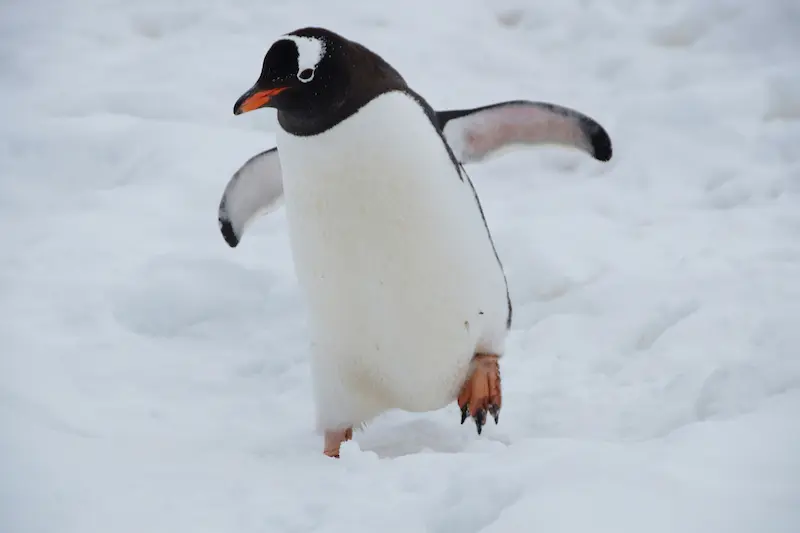
Do Flightless Birds Still Have Feathers?. photo: cornelius-ventures-unsplash.
Yes. Penguins, ostriches, emus, and kiwis all have feathers even though none of them fly — and that's a real clue about what feathers were originally for.
🐧 Penguins
Penguin feathers are among the most specialized in the bird world, built for cold water rather than air. They're short, stiff, and packed far more densely than a typical bird's — dense enough that a small muscle at the base of each feather can pull it tight against the body, locking in a layer of warm air. A gland near the base of the tail produces oil that penguins spread through their feathers while preening, waterproofing the outer layer so cold water never reaches the skin.
You'll often see the claim that penguins have "100 feathers per square inch" — but that number traces back to an unsourced 2004 news report, not an actual study. When researchers finally measured emperor penguin feather density directly, the real figure came out closer to 9 feathers per square centimeter (roughly 58 per square inch) — still remarkably dense for a bird, just not the myth that's been repeated online for two decades.
One more oddity: penguin chicks hatch with a downy coat that isn't waterproof yet, which is exactly why chicks stay out of the water until their adult feathers grow in.
🦤 Ostriches and Emus
Their feathers aren't shaped like the stiff, aerodynamic flight feathers of flying birds — the plumage is loose and soft, adapted to life as large, running birds rather than to generating lift.
🥝 Kiwis
Kiwis have unusual, shaggy, hair-like plumage suited to a ground-dwelling life in dense forest undergrowth.
Different feather structures clearly evolved for different purposes — feathers were never simply "wings growing all over a bird."
🧬 Why Do Birds Have Feathers Instead of Fur?
It's tempting to think birds evolved feathers because they needed to fly — but the fossil record tells a more complicated story. Birds evolved from theropod dinosaurs, and several dinosaur relatives already had feather-like structures before modern bird flight ever evolved. Those early feathers were probably useful for insulation, camouflage, or display, not flight. Only over a long evolutionary process did feather structures become complex enough to produce the interlocking, asymmetric forms used in modern flight feathers.
Flight wasn't the reason feathers appeared — it became one of the remarkable things feathers eventually turned out to be capable of.
🤯 WOW FACT: Feathers are older than bird flight
Some dinosaur relatives had feather-like coverings even though they couldn't fly at all. Feather evolution moved in stages — from simple structures toward increasingly complex, interlocking forms — and only later did some feathers become specialized enough to actually fly with. The story isn't "birds needed to fly, so feathers appeared." It's closer to: feathers evolved first, picked up several useful jobs along the way, and only later did some become extraordinary tools for flight.
🐦 Do Birds Feel Their Feathers?
Yes — though not because the mature feather itself is alive. A grown-in feather is essentially a dead keratin structure, but the skin and feather follicles it grows from are full of living, sensory tissue. That's part of why birds constantly maintain their plumage: preening isn't just about looking neat, it's active maintenance of an important biological system.
🔄 Do Birds Replace Their Feathers?
Yes. Feathers wear out, and unlike skin, a damaged mature feather can't repair itself. Birds periodically shed old feathers and grow new ones in a process called molting, with timing and patterns that vary by species — a constant cycle of grow, use, maintain, wear, and replace.
🔄 Do Birds Replace Their Feathers?
Yes.
Feathers wear out.
Unlike living skin tissue, a mature feather can't simply repair itself after serious structural damage. Birds therefore periodically shed old feathers and grow replacements during a process called molting.
The timing and pattern of molt varies between species.
This creates an interesting cycle:
grow → use → maintain → wear → replace
And then the process begins again.
🌎 One Feather, Many Jobs
The coolest thing about feathers is that they rarely fit neatly into a single category.
A feather can contribute to insulation, water resistance, protection, camouflage or display, while specialized feathers handle flight or sensory functions.
Modern research emphasizes this multifunctionality: feathers can perform several functions simultaneously or at different stages of a bird's life.
That's why feathers are such an extraordinary evolutionary innovation.
They are lightweight.
They are strong.
They can trap air.
They can resist water.
They can produce color.
They can create aerodynamic surfaces.
They can communicate.
And they can even produce sound.
All from variations on the same basic biological structure.
⚡ Quick Summary
- Birds have feathers because feathers perform many different jobs.
- Flight feathers help birds generate and control aerodynamic forces.
- Down feathers trap air and provide insulation.
- Outer feathers help protect the body and shed water.
- Feather colors and patterns can provide camouflage or attract mates.
- Feathers can also help birds communicate and sense feather position.
- Flightless birds still have feathers because feathers are useful for much more than flying.
- Feathers are made primarily of keratin and contain structures such as the rachis, barbs and barbules.
- Feather-like structures existed in dinosaur relatives before modern bird flight evolved.
❓ Frequently Asked Questions
Do all birds have feathers?
Yes. Feathers are a defining characteristic of modern birds.
Why do birds need feathers?
Birds need feathers for several reasons, including flight, insulation, protection, water resistance, camouflage and communication.
Why do birds have feathers instead of fur?
Birds evolved feathers rather than mammalian-style fur. Feather-like structures appeared in dinosaur relatives before modern bird flight and originally may have served functions such as insulation, camouflage or display.
Do birds have fur?
Birds do not have mammalian fur. Their bodies are covered by feathers, although some very fine feather structures can look hair-like.
Do penguins have feathers?
Yes. Penguins have highly specialized feathers adapted for their aquatic and cold environments.
Can birds fly without feathers?
A bird's ability to fly depends heavily on its flight feathers, wings and overall body structure. A bird with severely damaged or missing flight feathers may be unable to fly normally until those feathers are replaced.
How do feathers help birds fly?
Flight feathers form aerodynamic surfaces on the wings and tail. Their shape, arrangement and interlocking structure allow birds to generate and control aerodynamic forces during flight.
How do feathers keep birds warm?
Fluffy feathers such as down trap air close to the body, creating insulation. Birds can also fluff their feathers to trap more air when temperatures fall.
Do birds feel their feathers?
Birds have sensory connections in their skin and feather follicles, allowing them to detect information associated with their plumage. Specialized feathers such as filoplumes can help birds sense feather position.
Do birds replace their feathers?
Yes. Birds periodically shed and replace feathers through a process called molting.
🐦 The Takeaway
A feather is much more than something that makes a bird look like a bird — it's a piece of biological engineering that can be an insulator, waterproof layer, aerodynamic surface, protective covering, camouflage system, and communication tool, sometimes all on the same animal at once. That's the real answer to "why do birds have feathers": there was never just one reason. Feathers are one of nature's great multi-purpose inventions, and every bird you see today — flying or not — is wearing proof of it.
Read our Morning Bird Calls and Pigeon Observation field note.
📚 Continue Exploring the Bird World
- 🐦 200 Birds Name in Hindi and English
- 🪶 Types of Birds
- 🇮🇳 Birds in India
- ✈️ Flying Birds
- 🐧 Flightless Birds
- 👃 Bird Beaks
- 🦷 Do Birds Have Teeth?
- 👅 Do Birds Have Tongues?
- 👃 Do Birds Have Noses?
- 😴 How Do Birds Sleep?
- 📖 100 Interesting Facts About Birds
Sources
- Cornell Lab of Ornithology — Everything You Need to Know About Feathers
- Smithsonian Institution — Keeping Warm in Winter Is for the Birds
- Smithsonian Institution — Higher Elevation Birds Sport Thicker Down "Jackets"
- Cornell Lab of Ornithology — Feathers Through Time
- Biological Reviews — Feather function and the evolution of birds
- National Geographic — Busting Myths About Penguin Feathers
You should also read:
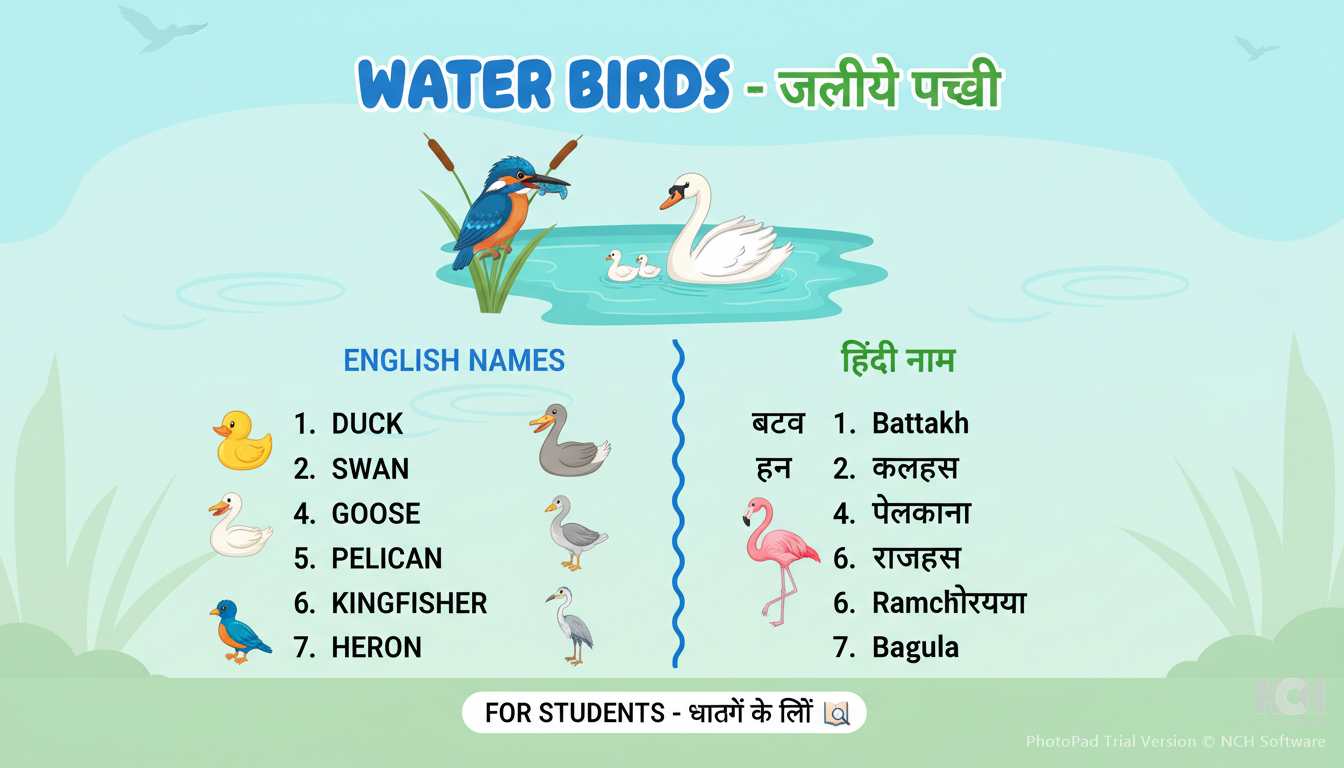
Water Birds Name in English and Hindi (पानी में रहने वाले पक्षियों के नाम)
🦆Water Birds Name in English and Hindi (पानी में रहने वाले पक्षियों के नाम) A goose (Anser cygnoides) is a water bird commonly found near lakes, rivers, wetlands, and coastal areas. A high-quality image of a Goose (Anser cygnoides), a water bird adapted to lakes,…
Continue reading...100 Birds Name in Hindi and English-पक्षियों के नाम हिंदी और अंग्रेज़ी में – आसान, मज़ेदार और पूरी सूची
100 पक्षियों के नाम हिंदी और अंग्रेज़ी में 🌿 Real-Life Example (Gaon Ki Kahani) Maan lo aap summer vacation me gaon gaye ho. Subah 5 baje murga "kukdukoo" karta hai. Thodi der baad ped par baithi koil ki "koo-koo" awaaz aati hai. Ghar ke aas-paas…
Continue reading...20 Birds Name in Hindi and English (20 पक्षियों के नाम) | For Students & Easy Pronunciation
20 Birds Name in Hindi and English Here is a fresh set of 20 birds: क्या आपने कभी notice किया है कि हम रोज़ कई birds देखते हैं, लेकिन उनके English ya Hindi names हमें हमेशा याद नहीं रहते? इसीलिए students अक्सर search करते हैं…
Continue reading...10 Birds Name in Hindi and English (With Easy Meaning & GK Use)
🐦10 Birds Name in Hindi and English Quick Answer: 10 Birds Name in Hindi and English are Hoopoe, Woodpecker, Goose, Dove, Kingfisher, Indian Roller, Bulbul, Lapwing, Penguin, and Kiwi. Kya aapko school homework ya GK preparation ke liye birds ke naam chahiye? Bahut baar students…
Continue reading...