
🐦 Do Birds Have Ears? Where Are Their Ears? | Bird Hearing
🐦 Do Birds Have Ears? Yes, But You Probably Can't See Them
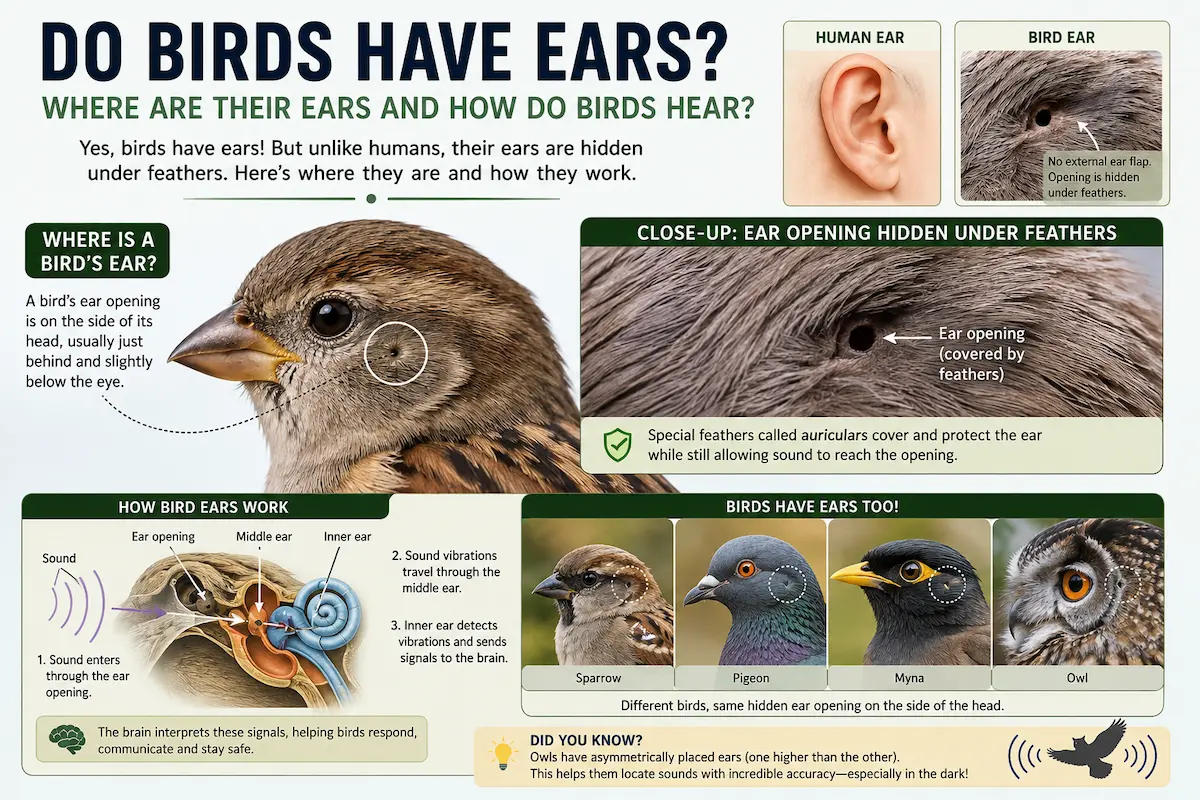
QUICK ANSWER
Yes, birds have ears. However, unlike humans, most birds do not have visible outer ears. Their ear openings are located on the sides of the head, usually behind and slightly below the eyes, and are covered by feathers.
These hidden ears allow birds to hear sounds, communicate with other birds, detect predators and locate important sounds around them.
So, where are birds' ears? Look just behind and slightly below the eye—you may find the ear opening hidden beneath the feathers.🐦👂
Explore our Why Do Birds Have Hollow Bones? guide
🐦 Quick Table: Human Ears vs Bird Ears
| Feature | Humans 👤 | Birds 🐦 |
|---|---|---|
| Visible ear flap | Yes 👂 | Usually no |
| Ear opening | Clearly visible | Usually hidden by feathers |
| Middle ear | Yes | Yes |
| Inner ear | Yes | Yes |
| Hearing | Detects and processes sound | Detects and processes sound |
| External feathers | No | Auricular feathers help cover/protect the ear area |
What Are Bird Ears Called?
Birds have ears, but they generally don't have the external ear flaps called pinnae that humans and many mammals have. The visible feathers around the ear opening are called auricular feathers or ear coverts. Beneath these feathers is the opening to the bird's ear canal. Explore do birds have feathers
👂 Where Is a Bird's Ear?
| What you see | What it means |
|---|---|
| 👁️ Eye | Start here |
| ↙️ Behind/below the eye | Ear opening is generally in this region |
| 🪶 Feathers | Usually hide the opening |
| 👂 No visible ear flap | Birds generally don't have the mammal-style pinna |
Table of Contents
- 🐦 Do Birds Have Ears? Yes, But You Probably Can't See Them
- 👂 So, Do Birds Have Ears?
- 👂 Where Are a Bird's Ears?
- 🔊 How Do Birds Hear?
- 🦉 Why Are Owl Ears So Special?
- 👂 An Owl's Ears Aren't Sitting Where You Think
- 🛰️ The Owl's Face Works Like a Sound Collector
- ❗ Those Aren't Actually the Owl's Ears!
- 🐦 From a Chicken to an Owl
- From a Chicken to an Owl.
- 🔊 Can Birds Hear Us? Yes — And You Can Actually See Them React
- 🗣️ Do Birds Understand Human Speech?
- 🐦 Your Voice Can Become Part of a Bird's Sound World
- 👀 I've Seen Birds Suddenly React
- 🐔 The Chicken-Ear Experiment in My Family
- 🪶 Those Tiny Feathers Have a Job
- 🧠 The More I Watched Birds, the More This Made Sense
- 🦉 The Owl Takes Bird Hearing to Another Level
- 🎯 Why Would an Owl Want Uneven Ears?
- 🧠 The Owl's Brain Does the Hard Work
- 🪶 And Then There Is the Owl's Facial Disc
- 🌙 Hunting When Your Eyes Can't Do Everything
- 🦉 One Important Correction About "Owl Ears"
- 🐦 From a Chicken in Our Hands to an Owl in the Dark
- 🗣️ Birds Don't Just Hear Sounds — They Listen for Information
- 🚨 Imagine a Crow Suddenly Starts Shouting
- 🐦 The Sparrow Outside Your House Has a Sound World Too
- 👂 Hearing Can Tell a Bird More Than "Something Made a Noise"
- 🧠 What Is the Bird Actually Hearing?
- 🐦 This Is Why Your Observation Matters
- ❤️ My Family Helped Me Notice This
- 🎵 Birds Have Their Own "Sound Conversations"
- 🌳 Try This Yourself
- 🎧 Can Birds Hear Things We Cannot?
- 👂 Hearing Is Not Just About "How Loud"
- 🐦 What About the Birds I've Actually Watched?
- 🔬 Scientists Can Actually Measure Bird Hearing
- 🗣️ The Bird May Notice Details We Ignore
- 🚨 A Warning Call Can Change Everything
- 🐦 Crows Are a Really Interesting Example
- 🧠 Hearing + Brain = Understanding the Environment
- ❤️ This Is Why I Don't Think Bird Watching Is Only About Looking
- 🌳 Try This the Next Time You See a Bird
- 🐦 What About Sparrows, Pigeons, Mynas, Crows and Parakeets?
- 🐦 The Sparrow: Tiny Bird, Hidden Ears
- 🕊️ Pigeons: The Birds We Almost Stop Noticing
- 🐦 Mynas: Listen Before You Look
- 🐦 Crows: The Birds You Can Hear Before You See
- 🐦 The Koel: A Bird You Often Hear Before Seeing
- 🐦 Bulbuls and Parakeets
- 🦚 Even the Peacock Has Hidden Ears
- 🦅 What About an Eagle?
- 📸 Your Own Bird Photos Can Become a Learning Tool
- 👨👩👦 This Is Something You Can Do With Your Family
- 🌿 The Birds Around Us Are Already Teaching Us
- 📍 Where Exactly Are a Bird's Ears?
- 🔍 Try Finding the Ear on a Bird
- 🪶 Why Can't We Just See the Hole?
- 🐔 The Chicken Is Actually a Great Bird to Study
- 🕊️ What About a Pigeon?
- 🐦 Not Every Bird Makes the Ear Equally Easy to Find
- 🦉 And Then You Look at an Owl...
- 👂 Bird Ear vs Human Ear
- 🧠 The Important Difference
- 📸 Your Own Bird Photo Can Become a Little Investigation
- ❤️ This Is Why I Wanted to Write This Article
- ❓ Frequently Asked Questions About Bird Ears
- 🐦 Do birds have ears?
- 👂 Where are birds' ears located?
- 🪶 Why can't we see birds' ears?
- 🗣️ Can birds hear human voices?
- 🐦 Can birds hear better than humans?
- 🔊 How do birds hear?
- 🦉 Do owls have ears?
- 🦉 Why do owls have uneven ears?
- 🐔 Can chickens hear?
- 🐦 Do sparrows have ears?
- 🕊️ Do pigeons have ears?
- 🐦 Do birds hear sounds when they are flying?
- 👂 Can birds hear from both ears?
- 🐦 Can birds hear danger?
- 🎵 Can birds hear other birds calling?
- 🤔 Do birds have external ears like humans?
- 🐦 How can birds hear if we can't see their ears?
- 📚 Continue Exploring the Bird World
- 🌿 Keep Exploring
- 🌿 One Last Thing I Learned From Looking for a Bird's Ear
- 🧭 About This Article
Have you ever looked closely at a bird and wondered where its ears are?
You can easily find a bird's 👁️ eyes, beak, wings, legs and feathers. But the ears? They seem to have disappeared.
I have watched many birds over the years—sparrows, pigeons, mynas, cuckoos, peacocks, eagles and owls. I have also photographed several of them. I always knew that birds could hear because I have seen them suddenly become alert, turn their heads, react to a sound or simply fly away when something caught their attention.
But there was one simple question that was surprisingly difficult to answer by just looking at them:
Where is the ear?
At one point, my mother and I even tried looking behind the feathers of a chicken to find its ear. 🐔 We knew the chicken could hear us, but we couldn't easily see the part of its body responsible for hearing.
That little experience made the question even more interesting. 🐦 Want to learn the names of more birds? Explore our [200+ Birds Name in Hindi and English] list with pictures, Hindi names and interesting facts. Explore flying birds
👂 So, Do Birds Have Ears?
Yes. Birds absolutely have ears.
They just don't have the obvious outer ear flaps that we are used to seeing on humans and many other mammals.
A bird's ear opening is located on the side of its head, generally behind and slightly below the eye, and is usually hidden beneath feathers. Underneath those feathers is a complete auditory system that allows the bird to detect and process sounds.
So when you look at a sparrow and think:
"Where are its ears?"
The answer isn't "birds don't have ears."
It's:
"The ears are there. They're simply hidden." 🪶👂
And once you know where to look, the bird's head starts to look a little different.If you're learning the common names of birds, you can also explore our 50 Birds Name list.
🔍 A Small Thing We Often Miss
When we look at a bird, our eyes naturally go to the most obvious features—the beak, eyes, feathers and sometimes the beautiful patterns on its head.
The ear is much easier to miss.
That is probably why the question "Do birds have ears?" feels so strange in the first place. We usually associate an ear with the visible shape on the side of a human head.
Birds don't work that way.
Their hearing system is tucked into a much less obvious part of their anatomy, protected by the surrounding feathers. 🪶
And that leads to the next question:
If we can barely see a bird's ears, how does the bird actually hear?
That's where things get really interesting.
👂 Where Are a Bird's Ears?
Now comes the part that confused me—and probably confuses a lot of people too.
If birds have ears, where are they hiding?
A bird's ear opening is on the side of its head, generally behind and slightly below the eye. Unlike our ears, however, the opening isn't surrounded by a prominent outer ear flap, so you usually won't notice it when looking at a bird from a normal distance.
Instead, the area around the opening is covered by soft feathers called auricular feathers. These feathers help protect the ear opening while still allowing sound to reach the ear. Explore do birds have nose
🪶 Look at the Feathers, Not for an Ear Flap
This is where our human way of looking at things can fool us.
When you look at a person's head, you see the ear sticking out from the side. So when you look at a bird, you naturally expect to find something similar.
But a bird doesn't have that obvious flap.
Instead, imagine looking at the side of a bird's head and gently following the area behind its eye. Somewhere underneath that layer of feathers is the ear opening.
That's also why our chicken experiment was so difficult. 🐔
My mother and I weren't looking in completely the wrong place—we were simply expecting the ear to look like a human ear. Read how do birds sleep guide
🔎 What Is Actually Hidden Under the Feathers?
The visible feathers are not the ear itself.
Underneath them is an ear opening that leads into the bird's auditory system.
In simple terms, the basic pathway is:
🔊 Sound → 👂 Ear opening → Eardrum → Middle ear → Inner ear → 🧠 Brain
So although you may not see a little "ear" sticking out, the bird has the structures needed to collect sound and turn those sound vibrations into information its brain can use.
And this is an important distinction:
Birds don't hear without ears. They hear with ears that are difficult for us to see.
🐦 Why Would a Bird's Ear Be Hidden?
One obvious difference between birds and humans is the shape of the outer ear.
Birds generally lack the external ear flaps, or pinnae, that mammals such as humans have. Their heads are covered with feathers, and the ear opening sits beneath this feather covering.
That arrangement also fits the bird's body remarkably well.
A bird spends much of its life moving through air. It doesn't need a pair of large, projecting ear flaps sticking out from the sides of its head.
Instead, its hearing system is tucked away neatly beneath the feathers. 🪶
👀 The Funny Thing About Bird Watching
Once you know this, watching an ordinary bird becomes a little different.
The next time you see a sparrow, pigeon, crow, myna or koel, don't just look at its beak.
Look at the side of its head.
You probably still won't see an obvious ear.
And that's the whole trick.
The ear was there all along—you just weren't looking for it in the right way.
But there's an even more interesting question waiting underneath this one:
🔊 If a bird's ear is hidden under feathers, how does sound actually reach it?
That's what we'll explore next.
🔊 How Do Birds Hear?
Now we know that birds have ears and that their ear openings are hidden beneath feathers.
But that brings us to the next question:
How does a bird actually hear a sound?
The basic idea is surprisingly similar to what happens in our own ears.
When a sound is produced—a person's voice, another bird calling, a branch snapping or a sudden noise nearby—the sound travels through the air as vibrations.
Those vibrations reach the bird's ear opening and travel through the structures of the ear. The eardrum responds to the vibrations, and the inner ear converts them into signals that the nervous system can process.
In simple terms:
🔊 Sound → 👂 Ear opening → 🥁 Eardrum → 🦻 Inner ear → 🧠 Brain
The brain then turns those signals into something meaningful to the bird.
So when a sparrow suddenly looks up after hearing a sound, it isn't simply "reacting" randomly. Its auditory system has detected something and its brain is processing that information.
🪶 But What About All Those Feathers?
This is the part that initially seems strange.
If the ear is covered with feathers, you might wonder:
Wouldn't the feathers block the sound?
No.
The feathers around the ear don't make the bird deaf. The ear opening remains able to receive sound even though it is protected by surrounding feathers.
These specialized feathers around the ear are known as auricular feathers. They form part of the feathering around the side of the bird's head while leaving the auditory opening functional.
Think of it less like putting a blanket over a speaker and more like having a protective covering around a sensitive opening.
👂 Birds Have More Than Just an "Ear Hole"
Another thing worth understanding is that the visible ear opening isn't the entire hearing system.
Just like humans, birds have an outer, middle and inner ear, although the structures are adapted to their bodies and lifestyle. The middle and inner ear contain the components needed to transmit and detect sound vibrations.
That means the tiny opening hidden beneath the feathers is really just the entrance to a much more complicated system.
You can't judge a bird's hearing ability simply by looking at its head.
🐦 I Have Seen This Without Thinking About the Science
I've noticed something simple while watching birds.
A bird can be sitting quietly, apparently doing nothing, and then suddenly react to a sound.
It might turn its head.
It might become alert.
Sometimes it may simply fly away.
I've seen this kind of reaction in ordinary birds around me, and it made more sense once I understood that their hearing system is constantly giving their brain information about what is happening around them.
The bird doesn't need to be looking directly at something to know that something happened.
It can hear it.
🎯 Hearing Is About More Than Just Detecting Noise
For a bird, hearing can be extremely useful.
Sounds can provide information about:
🐦 Other birds communicating
⚠️ Possible danger
❤️ Potential mates
🐣 Family members or young
🌳 What is happening nearby
🦉 Potential prey in species that rely heavily on hearing
For some birds, especially owls, hearing becomes an extraordinary tool for locating sounds.
And that's where bird hearing gets really fascinating.
🤔 Can a Bird Tell Where a Sound Came From?
Yes.
The bird's brain can use differences in the sound reaching its two ears to help determine where that sound originated.
A sound coming from one side of the bird doesn't reach both ears in exactly the same way. The timing and intensity of the sound can differ, giving the brain useful clues about its direction.
This ability becomes particularly impressive in birds that have specialized hearing adaptations.
And there is one bird that has become famous for taking this ability to another level:
🦉 The owl.
Owls don't just have excellent hearing.
Their anatomy can help them work out where a sound is coming from—even when they can't easily see their prey.
That's where the hidden ears of birds become much more than a curious piece of anatomy.
🦉 Why Are Owl Ears So Special?
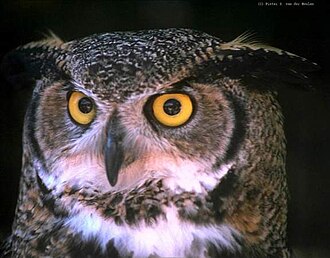
(Photo :Pieter S. van der Meulen., Public domain, via Wikimedia Commons)
If ordinary birds already have interesting ears, owls take the story a step further.
I've photographed an owl myself, and when you look at an owl's face, the first thing that stands out is usually its enormous eyes and that distinctive round face. 👀🦉
But hidden underneath all those feathers is one of the most impressive hearing systems found among birds.
🎧 An Owl Can Hunt by Listening
Many owls are active at night or around dusk and dawn, when light is limited. That makes hearing an incredibly useful tool.
Some owls can locate prey by sound and hunt even when they cannot clearly see what they are trying to catch. Cornell notes that Long-eared Owls, for example, have hearing so acute that they can snatch prey in complete darkness.
Think about how difficult that would be for us.
Imagine sitting somewhere in almost complete darkness and hearing a tiny animal moving through grass.
You don't have a flashlight.
You can't clearly see it.
But you can hear something.
For an owl, that sound can provide valuable information about where the prey is located.
👂 An Owl's Ears Aren't Sitting Where You Think
Here's another fascinating detail.
In many owls, the two ear openings are positioned asymmetrically—they are not simply mirror images at exactly the same height on both sides of the head.
That unusual arrangement helps the owl compare sounds arriving at its two ears and determine where a sound is coming from. Cornell describes asymmetrically placed ears as an important adaptation for owl hearing.
🎯 Why Would Uneven Ears Help?
Imagine dropping a small object on the floor while wearing headphones.
If the sound reaches one side slightly differently from the other, your brain can use those differences to work out where the sound came from.
An owl's brain does something similar—but with a hearing system specially adapted for locating sounds.
And the vertical difference between the two ear openings gives the owl another useful clue.
So the owl isn't simply hearing:
"Something is making a noise."
Its hearing system can help answer:
"Where exactly is that noise coming from?"
That's a huge advantage for a predator hunting in darkness.
🛰️ The Owl's Face Works Like a Sound Collector
Now look at an owl's face.
That large, rounded area of feathers surrounding its eyes is called the facial disc.
It isn't just there to make an owl look cute, serious or permanently surprised. 😄
The facial disc helps collect and direct sound toward the ears, making it an important part of the owl's hearing system. Audubon describes the facial disc as functioning somewhat like a sound-focusing structure, directing sound toward the ears.
A simple way to picture it is:
🔊 Sound → 🦉 Facial disc → 👂 Ears → 🧠 Brain
That doesn't mean the facial disc is literally a satellite dish. That's just an easy way to imagine what it does.
Nature has essentially built the owl a sound-collecting face.
❗ Those Aren't Actually the Owl's Ears!
And here comes one of the easiest bird-anatomy mistakes to make.
Some owls have two prominent feather tufts sticking up from the top of their heads.
They look exactly like little ears.
But they're not ears.
They're feathers. 🪶
Cornell's Bird Academy specifically notes that the feather tufts seen on owls such as Great Horned Owls are modified contour feathers and are completely separate from the ear. They don't help the owl hear.
So when you see an owl with what look like two pointed ears:
🦉 Those are "ear tufts."
👂 The actual ears are somewhere else.
And not every owl even has those tufts. Some owl species have very small tufts that are difficult to see, while others have none at all.
🧠 One Owl Fact Worth Remembering
An owl's visible "ear tufts" are not its ears.
That's probably one of the best examples of why we shouldn't always trust what our eyes seem to tell us about animal anatomy.
🐦 From a Chicken to an Owl
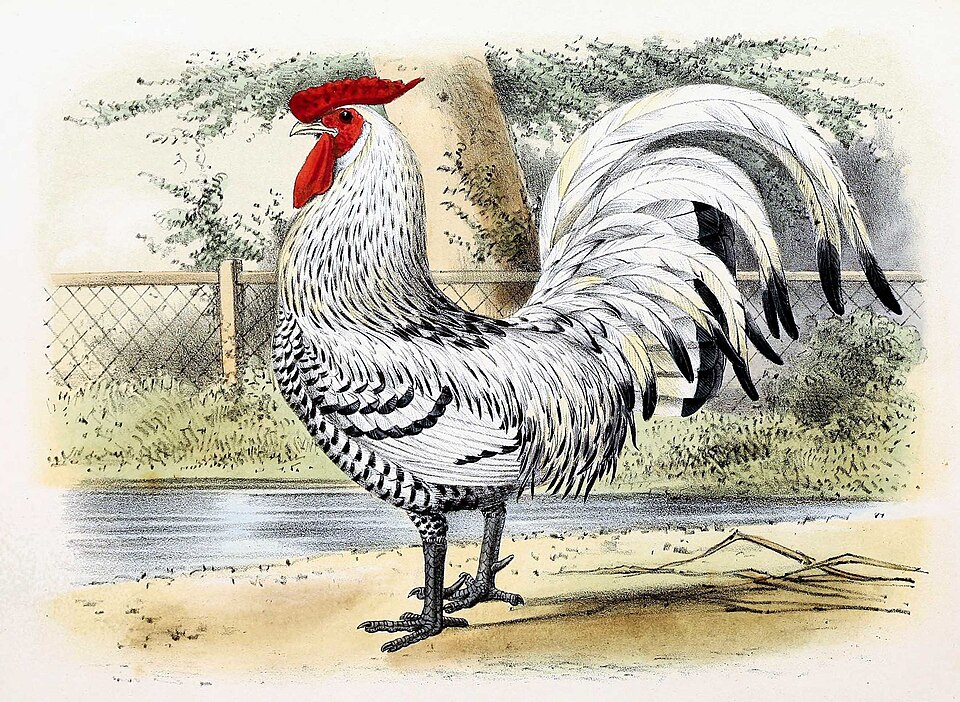
From a Chicken to an Owl.
(Photo : Pieter S. van der Meulen., Public domain, via Wikimedia Commons)
This brings me back to that simple chicken-ear question my mother and I had.
We were looking at an ordinary bird and trying to find something we already knew had to be there.
With an owl, the opposite problem can happen.
You can look at those two pointed tufts on its head and think:
"There are its ears!"
But those aren't the ears either.
In both cases, the lesson is the same:
What we see on the outside doesn't always tell us what is happening underneath.
And that's what makes bird anatomy so fascinating.
A sparrow hiding its ear beneath feathers and an owl using specialized hearing to locate prey may look completely different, but both remind us that birds have evolved some remarkably effective ways of interacting with the world around them.
🦉 A Quick Owl-Ear Summary
| Feature | What it does |
|---|---|
| 👂 Ear openings | Detect incoming sounds |
| ↕️ Asymmetrical placement | Helps with locating sounds |
| 🪶 Facial disc | Helps direct sound toward the ears |
| 🦉 Ear tufts | Feathers, not actual ears |
| 🌙 Sensitive hearing | Helps some owls locate prey in low light or darkness |
So the next time you see an owl, don't just look at those huge eyes.
Look at the whole face.
There is a remarkable sound-detection system hiding in there. 🦉🔊
🔊 Can Birds Hear Us? Yes — And You Can Actually See Them React
Once you know where a bird's ears are, another question naturally comes up:
Can birds hear what we say to them?
Yes, birds can hear us.
But there's something I've noticed from watching birds that makes this much more interesting than simply saying "birds have good hearing."
🐦 Birds React to Sounds Before We See Anything
I've watched ordinary birds such as sparrows, pigeons, mynas, crows, bulbuls and koels react suddenly to sounds around them.
Sometimes a bird is sitting quietly.
Then suddenly:
👂 Something happens.
The bird turns its head.
It pauses.
It looks around.
And sometimes it simply flies away.
I've seen this happen enough times that bird hearing stopped feeling like something I had only read about.
You can actually watch a bird respond to the world through sound.
Of course, we cannot know exactly what a particular bird heard just by watching its reaction. But the behaviour is a reminder that birds are constantly receiving information from sounds around them.
Birds use sound for communication, alarm calls and many other parts of their daily lives.
🗣️ Do Birds Understand Human Speech?
This is where we need to make an important distinction.
A bird can hear your voice without necessarily understanding human language in the same way another person does.
My family has asked this kind of question too.
They know birds can hear, but they don't always know where the ears actually are.
And honestly, that's exactly why this question is so interesting.
When we talk to a bird, it may hear:
🔊 the loudness of our voice
🎵 the pitch and tone
⏱️ changes in the sound
😠 an angry or sudden voice
😊 a familiar gentle voice
👣 other sounds happening around us
But hearing a sentence and understanding its human meaning are two different things.
A bird doesn't need to understand the words "come here" like a human does to recognize that a particular person or sound is familiar.
🐦 Your Voice Can Become Part of a Bird's Sound World
Think about a bird living around a house.
Every day it hears:
🚪 Doors opening
🗣️ People talking
🚗 Vehicles
🐕 Dogs barking
🐈 Cats moving around
🌳 Leaves rustling
🐦 Other birds calling
💨 Wind
👣 Footsteps
To us, this may just be background noise.
To a bird, these sounds are part of its environment.
Birds rely heavily on sound for communication, and many species have calls associated with situations such as alarm, territory, mating and contact with other birds.
So when a sparrow suddenly stops feeding because something made a sound nearby, there may be much more going on than we realize.
👀 I've Seen Birds Suddenly React
This is one of the simplest bird observations I've made.
A bird can be calmly sitting or feeding.
Then suddenly:
🫢 Pause.
Its body changes.
👀 Look around.
And sometimes:
🪽 FLY!
I've seen this with ordinary birds around us.
Sparrows.
Pigeons.
Mynas.
Crows.
And other common birds.
It is easy for us to miss because the reaction can happen so quickly.
But once you start paying attention, you begin noticing how often birds are listening.
And this is one reason I think bird watching is so much more interesting when you stop looking only at their colours and feathers.
👂 Try watching the bird's reaction.
Instead of asking:
"Where are its ears?"
also ask:
"What made it turn its head?"
That question can teach you something about the bird that a photograph cannot.
🐔 The Chicken-Ear Experiment in My Family
There is one particularly funny memory from my family.
I had actually tried to look behind the feathers of a chicken to find its ear.
And my mother did the same thing.
😂
We already knew the chicken had to be able to hear.
But where was the ear?
The feathers made it surprisingly difficult to see.
That little experience made the whole subject much more real for me.
Because when a textbook says:
"The bird's ear opening is covered by feathers."
that sounds simple.
But when you're actually standing next to a chicken and trying to find the opening yourself, you suddenly understand why people ask:
"Do birds even have ears?"
The answer is obviously yes.
The problem is that birds don't make their ears easy for us to find.
And those feathers aren't simply hiding the ears for fun. They protect the ear opening while still allowing birds to hear. In chickens, the ear opening is covered by a specialized tuft of feathers that protects it without preventing hearing.
🪶 Those Tiny Feathers Have a Job
This is another detail I didn't appreciate before looking closely at bird anatomy.
The feathers around a bird's ear are called auricular feathers, or auriculars.
They help protect the ear opening while allowing sound to reach it.
So when you look at a sparrow, pigeon or chicken and see feathers covering the side of its head, don't think:
"The feathers are blocking the ears."
Think:
"Those feathers are part of the protection system."
It's another example of how bird anatomy is designed around their way of life.
A bird needs to hear.
It also needs to move through air, weather, dust and vegetation.
So instead of having a big exposed mammal-like ear sticking out from the side of its head, it has a much more compact arrangement.
🧠 The More I Watched Birds, the More This Made Sense
Before I started paying attention to bird behaviour, I mostly thought about birds visually.
A beautiful peacock.
A flying eagle.
A colourful parakeet.
A tiny sparrow.
A pigeon sitting on a roof.
But birds don't experience the world through their eyes alone.
They are surrounded by sounds.
And once you realize that, ordinary bird behaviour starts looking different.
A sudden head movement isn't necessarily random.
A bird calling from a tree isn't simply making noise.
A flock suddenly taking flight isn't always mysterious.
Sometimes, sound is the information arriving first.
And the bird's ears are already listening.
🐦👂 That's the part I find most fascinating:
We may not be able to see a bird's ears easily, but we can often see the world being heard by the bird.
That is something you can experience yourself the next time you sit quietly and watch a sparrow, crow, pigeon or myna.
Don't just watch where it looks.
Listen to what it might be listening to. 🔊🪶
🦉 The Owl Takes Bird Hearing to Another Level
If you think finding a chicken's ear behind its feathers is difficult, owls take the whole idea of hidden ears to another level.
Owls are famous for hunting in low light and darkness. And for some owl species, hearing is a huge part of how they locate prey.
This is where bird ears become genuinely fascinating.
👂 An Owl's Ears Are Not Where You Think
Look at an owl's face and you might first notice its huge eyes and the circular arrangement of feathers around them.
That circular feathered area is called the facial disc.
It isn't the owl's ear.
And those little feather tufts that some owls have on top of their heads?
Those aren't ears either. 🦉
The actual ear openings are hidden on the sides of the head.
But here's the crazy part:
One ear can be higher than the other.
In many owl species, the two ear openings are positioned asymmetrically. This means sound can reach the two ears slightly differently, giving the owl useful information about where that sound came from.
🎯 Why Would an Owl Want Uneven Ears?
Imagine you're sitting in a dark room.
You hear:
"Scratch... scratch..."
Somewhere nearby.
You can't see the thing making the sound.
What would you do?
You'd probably turn your head and try to figure out:
Where is it?
Above me?
Below me?
Left?
Right?
An owl faces a similar problem when hunting.
Its prey may be hidden in grass, leaves or darkness.
So the owl needs more than simply knowing:
"I hear something."
It needs information about:
"Where exactly is that sound coming from?"
The differences in the sounds reaching the two ears give the owl's brain clues about the sound's location. In asymmetrically eared owls such as barn owls, this system helps with locating sounds both horizontally and vertically.
That's an incredible use of two tiny openings hidden underneath feathers.
🧠 The Owl's Brain Does the Hard Work
The ears don't magically point an arrow toward the mouse.
The brain has to interpret the information coming from both ears.
Think of it almost like having two microphones.
🎤 Left side
🎤 Right side
A sound reaches each side with tiny differences in timing and intensity.
The owl's auditory system processes those differences and helps create information about where the sound is located. Researchers have found specialized neural pathways involved in this sound-localization process.
So when we say:
"The owl can locate its prey by hearing,"
what we're really talking about is a complete system:
👂 Ear → 🔊 Sound → 🧠 Brain → 🎯 Location
That's much more impressive than simply saying an owl has "good hearing."
🪶 And Then There Is the Owl's Facial Disc
Here's another beautiful piece of bird design.
The feathers forming the owl's facial disc help channel sound toward the ear openings.
Think of it as a natural sound-collecting structure around the face.
So the owl isn't relying on its ears alone.
It has:
🪶 Facial feathers
⬇️
👂 Ear openings
⬇️
🧠 Auditory system
⬇️
🎯 Sound localization
The whole arrangement works together.
And suddenly those strange-looking feathers around an owl's face don't look strange at all.
They look purpose-built.
🌙 Hunting When Your Eyes Can't Do Everything
This is where the owl becomes such a perfect example for this article.
A bird doesn't need visible ears to have an amazing hearing system.
And an owl doesn't need perfect visibility to know that something is moving nearby.
Some nocturnal owls can locate prey using sound even in very poor light. Research on barn owls has shown how their asymmetric ear arrangement contributes to locating sounds in three-dimensional space.
So imagine an owl sitting quietly at night.
The forest is dark.
Its eyes can't give it every piece of information.
Then:
👂 rustle...
A tiny sound comes from somewhere below.
The owl doesn't need someone to point at the source.
Its auditory system is already working.
🦉 One Important Correction About "Owl Ears"
There is a common statement online:
"All owls have ears at different heights."
That's too broad.
Some owl species have strongly asymmetric ear openings, while others have more symmetrical ears.
Scientists have actually compared different owl species to understand how these different ear arrangements affect sound localization.
So at Monto Fact Jungle, I'd rather say:
"Many owls have asymmetrically positioned ears that help them locate sounds."
It's less dramatic than saying "every owl has one ear higher than the other."
But it's also more accurate.
And honestly, real nature is already weird enough. We don't need to exaggerate it. 😄
🐦 From a Chicken in Our Hands to an Owl in the Dark
This is what I like about the question "Do birds have ears?"
It starts with something incredibly simple.
My family and I actually tried to find the ear of a chicken by moving aside the feathers.
😂
Then you look at a sparrow.
You can't easily see its ears.
You watch a pigeon suddenly react to a sound.
You notice a crow calling.
You see a myna respond to something nearby.
And then you discover that an owl can have an extraordinarily specialized hearing system for locating prey.
Suddenly, the original question doesn't seem so simple anymore.
"Do birds have ears?"
Yes.
But the better question is:
"What can a bird do with those hidden ears?" 🐦👂
And that is where bird hearing gets really interesting.
🗣️ Birds Don't Just Hear Sounds — They Listen for Information
Now we come to the part that really changed the way I think about bird hearing.
A bird's ears aren't simply there so it can hear noise.
Birds live in a world full of sound, and some of those sounds carry information.
Think about the birds we see around us:
🐦 Sparrow
🐦 Myna
🐦 Pigeon
🐦 Crow
🐦 Koel
🐦 Bulbul
🐦 Parakeet
🦚 Peacock
🦉 Owl
They don't all make the same sounds, and they don't make them for exactly the same reasons.
Some sounds are connected with finding or communicating with other birds.
Some can be associated with danger.
Others are part of territory, courtship or social behaviour. Scientists have found that many bird species use different vocalizations in different situations.
And that's where the ears become incredibly important.
🚨 Imagine a Crow Suddenly Starts Shouting
You've probably seen this yourself.
A crow is sitting somewhere quietly.
Then suddenly:
"CAW! CAW! CAW!" 🐦
And another crow responds.
Then another.
Before you know it, several birds are making noise.
To us, it can sound like a bunch of crows simply arguing.
But bird communication can be much more complicated than that.
Different calls can convey different information, and researchers have documented bird species producing distinct alarm calls in response to different predators or situations.
So imagine another bird hearing that sound.
It isn't necessarily hearing:
"Just another crow making noise."
The sound itself may contain information.
And the bird's hearing system is what allows that information to reach its brain.
🐦 The Sparrow Outside Your House Has a Sound World Too
This is something I want to emphasize because you don't need to travel to a wildlife sanctuary to observe bird behaviour.
You can sit near your house.
Look at a sparrow.
Listen.
You may hear:
chirp... chirp... chirp...
Another bird answers.
Then the first bird responds.
Sometimes a bird disappears into the bushes, but you can still hear it.
This is one reason birdwatching isn't always about seeing the bird.
Sometimes you hear the bird before you find it.
In fact, acoustic monitoring has become an important way for researchers to study birds because recordings can reveal which species are present and, increasingly, what birds are doing.
👂 Hearing Can Tell a Bird More Than "Something Made a Noise"
Here's a simple way to think about it.
Imagine you're sitting at home and hear:
🚪 Door opening
You immediately know something happened.
Then you hear:
👣 Footsteps
Now you know someone is moving.
Then:
🗣️ A familiar person's voice
You may recognize who it is without seeing them.
Birds also live in a world where sounds can provide information about what is happening around them.
A particular call may tell another bird:
"I'm here."
Another may be connected with:
"Danger." 🚨
Another may help attract a mate or defend a territory.
And some birds learn vocalizations from other birds, meaning their sound world isn't simply a collection of automatic noises. Parrots, songbirds and hummingbirds are among the birds known for vocal learning.
🧠 What Is the Bird Actually Hearing?
This is where things get really interesting.
When we listen to a bird singing, we hear something like:
"Chirp-chirp-trrrrr-chirp!"
😂
But the bird may be processing details in that sound that we don't consciously notice.
Researchers studying zebra finches have found that birds can be especially sensitive to certain dimensions of sound that humans don't notice as easily when casually listening to birdsong.
So when we say:
"That bird is singing."
we're describing the sound from a human point of view.
The bird may be detecting a much richer pattern.
It's almost like listening to a song through a cheap speaker versus listening with a high-quality pair of headphones.
The recording is technically the same.
But the amount of detail you notice can be very different.
🐦 This Is Why Your Observation Matters
I've noticed something simple while watching birds.
Sometimes a bird suddenly reacts to something I can't even identify.
It may:
👀 turn its head
🧍 stop moving
🪽 change position
🚀 suddenly fly away
And I'm left thinking:
"What did it hear?"
I can't honestly tell you what that individual bird heard.
That would be guessing.
But the behaviour makes one thing obvious:
There was information reaching the bird that I wasn't consciously noticing.
And that is exactly why watching birds carefully is so fascinating.
You don't have to invent a story for every movement.
Sometimes the honest answer is:
"I don't know what the bird heard — but I saw it respond."
That distinction matters.
❤️ My Family Helped Me Notice This
My family has asked questions about birds' ears too.
They know that birds can hear.
But when you look at a pigeon, sparrow or myna, there isn't an obvious pair of ears staring back at you.
That creates this funny situation:
We know the bird can hear.
We can't see the ears.
So where are they?
😂
My mother has even tried looking behind the feathers of a chicken with me.
And that tiny family experiment taught me something that a textbook explanation doesn't quite capture:
Bird anatomy can be right in front of you and still be surprisingly difficult to see.
🎵 Birds Have Their Own "Sound Conversations"
We shouldn't assume every bird sound is equivalent to a human sentence.
Bird communication is not simply:
"Hello, how are you?"
😂
But birds do use vocalizations in many different contexts.
Scientists have documented alarm calls, contact calls, recruitment calls, territorial songs and other forms of vocal communication.
Some species can even produce different alarm signals associated with different predators or situations.
That means the question:
"Do birds have ears?"
eventually leads us somewhere much bigger:
"What information are birds receiving through those ears?"
And the answer is:
A lot more than we can see. 👂🐦
🌳 Try This Yourself
The next time you sit outside, don't immediately look for the bird.
Instead:
1. 👂 Listen first.
Can you hear a bird?
2. 🔍 Find the source.
Where is the sound coming from?
3. 🐦 Watch the bird.
What does it do after making or hearing the sound?
4. 🔊 Listen for another response.
Does another bird answer?
5. 🧠 Don't assume.
If you don't know what the sound means, simply observe it.
That's how you start moving from "I know birds have ears" to actually understanding how birds experience the world.
And honestly, bro, that's the part of birdwatching I find most beautiful.
You don't always need binoculars.
Sometimes you just need to sit still and listen. ❤️🐦
🎧 Can Birds Hear Things We Cannot?
This is one of those questions that sounds simple, but the honest answer needs a little care.
When I started thinking about bird hearing, I wondered about something myself:
If birds can react to sounds that I don't even notice, can they hear things that humans can't?
The answer is:
Sometimes, yes — but it depends on the bird and the sound.
Birds do not all have identical hearing abilities. Different species have different hearing ranges and sensitivities.
So we shouldn't say:
"Birds can hear sounds humans can never hear."
as though every bird has some kind of superpower.
Nature is more interesting than that.
👂 Hearing Is Not Just About "How Loud"
When we talk about hearing, we often think only about volume.
Something is:
🔊 Loud
or
🔈 Quiet
But sound has several properties.
A bird's auditory system can process things such as:
Frequency — how high or low a sound is
Intensity — how strong the sound is
Timing — when the sound arrives
Direction — where the sound is coming from
Patterns — how sounds change over time
That last part is particularly important for birds because their world contains so many different calls and songs.
A bird doesn't simply need to know:
"There is sound."
It may need to distinguish:
"That is another bird."
"That is my species."
"That sound is coming from over there."
"Something is wrong." 🚨
Bird communication research shows that the meaning of many bird vocalizations depends on both the sound and the situation in which it occurs.
🐦 What About the Birds I've Actually Watched?
This is where I have to separate what I've observed from what I can scientifically prove.
I've watched birds suddenly react to sounds.
A bird may be sitting quietly and then:
👂 pause
👀 look around
🪽 move
or sometimes:
💨 fly away
I've experienced this with ordinary birds such as sparrows, pigeons, mynas and crows.
But I cannot honestly say:
"The bird heard a sound that humans cannot hear."
I didn't measure the sound.
I don't know exactly what the bird detected.
Maybe it heard something I didn't notice.
Maybe it saw movement at the same time.
Maybe another environmental cue triggered the response.
That's the difference between observation and scientific measurement.
And I think that difference is worth keeping in an article like this.
A Simple Observation
I became curious about bird ears after trying to find a chicken's ear by looking at the feathers around its head. The chicken could clearly hear us, but its ear wasn't obvious. That simple observation led me to look more closely at where bird ears actually are.
🔬 Scientists Can Actually Measure Bird Hearing
Researchers don't have to rely only on watching a bird turn its head.
They can study hearing experimentally by presenting controlled sounds and measuring how birds respond.
And scientists have learned that bird hearing is quite diverse.
Some birds are particularly good at detecting and distinguishing sounds important to their lifestyle.
For example, researchers study birdsong and calls not just by listening to them, but by analyzing their acoustic structure and the birds' responses to playback.
That means something important:
A bird's hearing ability is connected to the life it lives.
A nocturnal hunter has different problems from a bird searching for food during daylight.
A highly social bird has different communication demands from a solitary species.
Bird hearing isn't one universal package. explore do birds have tongues
🗣️ The Bird May Notice Details We Ignore
Think about listening to a group of people talking in a busy room.
To me, it might sound like:
"Blah blah blah... noise... noise..." 😵💫
But if someone says my name from across the room:
"Mohan!"
my attention immediately changes.
The overall environment didn't suddenly become silent.
I simply detected something important inside the noise.
Birds have to solve similar problems.
Their surroundings are full of:
🌳 Wind
🐦 Bird calls
🚗 Vehicles
👣 Footsteps
🐕 Animals
🍃 Leaves
🗣️ Humans
🏠 Household sounds
Some sounds matter.
Others don't.
The ability to detect and interpret particular sounds can therefore be extremely useful.
🚨 A Warning Call Can Change Everything
Imagine a group of birds feeding together.
Everything is normal.
Then one bird detects danger and gives an alarm call.
Suddenly the other birds may change their behaviour.
This isn't just theoretical.
Bird communication research has documented alarm calls and other vocalizations that produce different responses in other birds. Cornell's educational material, for example, describes calls used for contact, territory and danger, while research has shown that some species use distinct alarm calls associated with different threats.
So the ability to hear isn't merely about enjoying birdsong.
Sometimes hearing can mean:
"Stay alive." 🚨🐦
🐦 Crows Are a Really Interesting Example
Crows make this even more fascinating.
Researchers have found that American crows can potentially distinguish subtle differences between individual crows' alarm calls.
Think about that.
We hear:
CAW! CAW!
A crow may be hearing much more information in those sounds than our ears and brains naturally notice.
It's a good reminder that saying:
"Birds hear sounds."
is technically correct but incredibly incomplete.
The more interesting question is:
"What information can a bird extract from those sounds?"
That's where bird hearing becomes genuinely fascinating.
🧠 Hearing + Brain = Understanding the Environment
The ear is only the beginning.
Sound enters the auditory system.
The information is processed.
And the brain helps the bird decide what to do with it.
So we can think of bird hearing like this:
🔊 Sound
⬇️
👂 Ear
⬇️
🧠 Brain
⬇️
🐦 Behaviour
And that final step is what we can sometimes observe.
A bird hears something.
It changes its posture.
It looks around.
It calls.
It moves closer.
Or it flies away.
That's when an invisible sense suddenly becomes visible through behaviour.
❤️ This Is Why I Don't Think Bird Watching Is Only About Looking
When I first started paying attention to birds, it was natural to focus on what I could see.
A peacock's feathers.
An eagle flying overhead.
A pigeon on a roof.
A sparrow hopping around.
A myna searching for food.
An owl sitting quietly.
I've also taken photographs of several of these birds.
But the more you watch birds, the more you realize that seeing is only half the story.
Sometimes the bird is responding to something you haven't noticed.
Sometimes you hear a bird before you find it.
Sometimes you see a bird suddenly react and have absolutely no idea what caused it.
And that's okay.
You don't have to invent an explanation.
You can simply say:
"I saw the bird react. I don't know exactly what it heard."
That is a perfectly good observation.
🌳 Try This the Next Time You See a Bird
Here's a little experiment you can do without any equipment.
Find a sparrow, pigeon, crow, myna or another common bird.
Then spend a few minutes doing something surprisingly difficult:
Do nothing.
Don't chase it.
Don't call it.
Don't try to photograph it immediately.
Just sit quietly.
👂 Listen.
👀 Watch.
Notice when the bird:
turns its head
stops feeding
changes direction
calls
looks toward something
suddenly flies
You may start noticing that the bird is responding to a world of sound that we normally ignore.
And that, for me, is one of the most beautiful things about learning bird biology.
🐦 You don't always need to see the ears to understand that they're working.
Sometimes you can simply watch the bird listening. 👂🪶
🐦 What About Sparrows, Pigeons, Mynas, Crows and Parakeets?
We've talked about hidden ears, hearing, communication and the incredible hearing abilities of some owls.
But you might be thinking:
"That's all interesting, but what about the ordinary birds I see every day?"
That's actually where I think bird hearing becomes most interesting.
You don't need to find a rare bird.
You don't need to travel to a forest.
You don't need expensive binoculars.
Look around.
There may be a sparrow, pigeon, crow, myna, bulbul, koel or parakeet somewhere near you right now.
And every one of these birds has ears.
You just have to know where to look.
🐦 The Sparrow: Tiny Bird, Hidden Ears
Sparrows are probably one of the easiest birds to observe.
They are small.
They move quickly.
And their feathers make their ear openings difficult to notice.
I've watched sparrows around us, and what strikes me is how quickly they can switch between different activities.
One moment:
🌾 Searching for food.
The next:
👀 Looking around.
Then:
🪽 Off they go.
It is easy to think the bird simply "got scared."
But when you watch carefully, you start wondering:
What did it notice?
Was it movement?
Was it another bird?
Was it a sound?
Was it a combination of several things?
We shouldn't pretend to know the answer every time.
That's one lesson I've learned from watching birds: explore do birds have tongues
Observation is not the same thing as explanation.
🕊️ Pigeons: The Birds We Almost Stop Noticing
Pigeons are everywhere in many Indian cities.
Because they're so common, we often stop paying attention to them.
But try watching one for a few minutes.
A pigeon may be calmly walking around when something suddenly catches its attention.
Its head changes position.
It pauses.
It looks around.
Then it continues.
Or sometimes the whole group reacts together.
That is a reminder that even a bird we see every single day is constantly receiving information from its surroundings.
And somewhere beneath those feathers are the structures that allow it to hear.
🐦 Mynas: Listen Before You Look
Mynas are particularly fun to observe because they are noisy and active birds.
If you hear one before you see it, don't immediately look upward.
Stop for a second.
Listen.
Then try to locate the sound.
This is almost the reverse of ordinary birdwatching.
Instead of:
👀 See → 👂 Hear
you're doing:
👂 Hear → 👀 Find
And suddenly the question "Where are the bird's ears?" becomes much more practical.
You're using your own ears to locate the bird while the bird is using its ears to understand the environment around it.
Two species.
Two different hearing systems.
Both living in the same sound-filled world.
🐦 Crows: The Birds You Can Hear Before You See
Crows are another obvious example.
Sometimes you don't need to see a crow to know one is nearby.
You hear:
"Caw! Caw!"
and immediately start looking around.
That's a tiny demonstration of how important sound can be for locating birds.
And crows don't simply make one universal sound.
Their vocal communication can contain different types of information, including alarm-related signals. Research has even found measurable differences between individual crows' alarm calls. (news.cornell.edu)
So the next time you hear a group of crows making a tremendous racket, don't automatically assume they're just being noisy.
There may be a conversation happening that we're simply not equipped to understand fully.
🐦 The Koel: A Bird You Often Hear Before Seeing
The koel is another great example.
You may hear its distinctive call long before you actually spot the bird.
This is something I really like about birds.
They don't always introduce themselves visually.
Sometimes they announce themselves through sound.
You can be sitting somewhere thinking:
"Where is that bird?"
while the bird is sitting somewhere nearby, completely hidden among the leaves.
Your ears know the bird is there.
Your eyes just haven't found it yet.
😂
🐦 Bulbuls and Parakeets
Bulbuls and parakeets provide another reason to pay attention to sound.
You may notice:
🎵 Repeated calls
🐦 Responses from other birds
🌳 Movement through vegetation
🪽 Sudden changes in behaviour
Again, we shouldn't assign a specific meaning to every call unless we actually know what it represents.
But we can observe the basic pattern:
Bird makes sound → another bird responds → behaviour changes.
That's enough to make you curious.
And curiosity is where good birdwatching begins.
🦚 Even the Peacock Has Hidden Ears
I've photographed peacocks too.
And peacocks are a funny example because when most people think about them, they immediately think about the giant colourful train of feathers.
🦚✨
The feathers steal the entire show.
Nobody looks at a peacock and thinks:
"I wonder where its ear opening is."
😂
But underneath all that visual beauty is the same basic reality:
A peacock needs to hear its surroundings too.
The spectacular feathers don't replace its sensory systems.
They are simply one visible part of an animal with a much more complicated body.
🦅 What About an Eagle?
I've also photographed eagles.
With an eagle, our attention naturally goes toward the eyes.
And that's understandable.
Birds of prey are famous for their vision.
But having excellent eyesight doesn't mean hearing is irrelevant.
Birds use multiple senses together.
An eagle can look around.
It can hear.
It can feel movement through its environment.
The important lesson isn't:
"Which sense is the best?"
It's:
"How do all these senses work together?"
That's a much more interesting way to think about birds.
📸 Your Own Bird Photos Can Become a Learning Tool
This is something I've started appreciating more.
If you photograph a bird, don't just save the photograph as a pretty picture.
Use it as an anatomy exercise.
Look closely.
🔍 Where are the eyes?
🔍 Where does the beak begin?
🔍 Can you identify the nostrils?
🔍 Where should the ear opening be?
🔍 Which feathers are covering that area?
You may not be able to see the actual opening clearly in every photograph.
That's okay.
Sometimes the difficulty of finding it is the lesson.
A good bird photograph can make you ask questions that a simple text description never would.
👨👩👦 This Is Something You Can Do With Your Family
This doesn't have to become a serious scientific project.
Try it with your family.
Next time you see a pigeon, sparrow or myna, ask:
"Where do you think its ear is?"
Don't tell them immediately.
Let them guess.
Then carefully look at the side of the bird's head.
You may get the same reaction my family had with the chicken:
"Wait... where is it?" 😂
And that's exactly the point.
A simple question can turn an ordinary bird into a little biology lesson.
🌿 The Birds Around Us Are Already Teaching Us
This is probably my favourite thing about this whole topic.
We don't need exotic animals to learn something fascinating about nature.
The birds around us are enough.
🐦 Sparrow
🕊️ Pigeon
🐦 Myna
🐦 Crow
🐦 Koel
🐦 Bulbul
🦜 Parakeet
🦚 Peacock
🦅 Eagle
🦉 Owl
They all look different.
They behave differently.
They live different lives.
But they share something we almost never notice:
They have ears that we usually can't see.
And once you know that, you start looking at familiar birds differently.
The next time a sparrow suddenly flies away, you may wonder:
"What did it hear?"
The next time you hear a koel before seeing it, you'll understand why sound can be just as useful as sight.
And the next time you look at an owl, you'll know that behind that strange, beautiful face is one of the most remarkable hearing systems found among birds.
❤️ Maybe That's the Real Answer
When someone asks:
"Do birds have ears?"
the shortest answer is:
Yes.
But after watching birds yourself, that answer feels almost too small.
Because the interesting story isn't simply that birds have ears.
It's that those hidden ears help birds communicate, detect danger, find one another, locate sounds and understand the world around them.
And you don't need to travel anywhere special to see evidence of it.
Sometimes, just sit near your home.
Put the phone down.
Look at the sparrow.
And listen. 👂🐦🌿
📍 Where Exactly Are a Bird's Ears?
Okay, we've spent a lot of time talking about bird hearing.
But let's get practical.
If you were standing next to a sparrow, pigeon or chicken right now and I asked:
"Show me its ear."
Could you?
A few years ago, I probably couldn't either.
And that is exactly why this question is so interesting.
🐦 The ear opening is on the side of the head, usually just behind and slightly below the eye.
But there is an important catch:
You usually can't see it clearly.
Feathers cover the area.
That's why a bird can appear to have no ears at all.
🔍 Try Finding the Ear on a Bird
Imagine looking at a pigeon from the side.
Start with the eye.
👁️
Now move your attention slightly backward and downward toward the side of the head.
Somewhere in that region is the ear opening.
But instead of seeing something like a human ear:
👂
you'll mostly see:
🪶 feathers
That's the trick.
The ear itself is there.
The obvious external ear flap isn't.
Birds generally lack the projecting external ear structures called pinnae that we associate with mammals. Their ear openings are instead situated on the sides of the head and are usually covered by feathers. (discoverwildlife.com)
🪶 Why Can't We Just See the Hole?
This is where my chicken experiment with my family suddenly makes sense.
I had actually tried moving the feathers aside to find the chicken's ear.
My mother did it too.
And the funny part was:
We knew the ear was there.
We just couldn't easily see it.
😂
That's because the feathers around the ear provide protection while leaving the auditory opening accessible to sound.
These specialized feathers around the ear region are commonly called auriculars.
So if you ever look at a bird and think:
"The feathers are covering its ears."
you're actually pretty close to the truth.
The feathers do cover the ear opening.
But they don't make the bird deaf.
Birds live in remarkably different environments. Some live around homes and gardens, while others are closely associated with lakes, rivers and wetlands. You can explore our 50 Water Birds Name in English and Hindi guide to see some of them.
🐔 The Chicken Is Actually a Great Bird to Study
You don't need a rare bird for this.
A chicken is probably one of the easiest birds for a person to observe closely.
You can see its:
👁️ Eye
🐤 Beak
🪶 Feathers
🦵 Legs
🪽 Wings
And if you carefully examine the side of its head, you can understand why the ear is easy to miss.
This is one of those cases where seeing the real animal beats memorizing a diagram.
When I first tried to find the chicken's ear, the question changed from:
"Do birds have ears?"
to:
"Why can't I see the ear if I know it's there?"
That's a much better question.
🕊️ What About a Pigeon?
Try the same thing with a pigeon.
Don't immediately look for an ear-shaped structure.
Instead, look for the area behind the eye.
The feathers around the side of the head can make the opening difficult to distinguish.
And because pigeon heads move so quickly, getting a good look can be surprisingly difficult.
This is where photographs become useful.
If you've taken a clear side photograph of a bird, you can zoom in and study the anatomy without the bird moving away.
I've taken photographs of birds including pigeons, sparrows, mynas, peacocks, eagles and owls, and looking closely at photographs makes you notice details that you can easily miss when the bird is moving.
🐦 Not Every Bird Makes the Ear Equally Easy to Find
Here's another reason not to rely on one photograph and assume every bird looks identical.
Birds have different:
head shapes
feather patterns
ear-covering feathers
facial structures
lifestyles
An owl's face looks dramatically different from a sparrow's.
A peacock looks different from a pigeon.
A parakeet looks different from a crow.
But underneath those differences, they share the basic avian ear arrangement.
🦉 And Then You Look at an Owl...
With an owl, things get even more confusing.
You see the huge eyes.
You see the facial disc.
You may see ear tufts on some species.
And you might naturally assume:
"Those must be the ears!"
Nope. 😄
The ear tufts are not the actual ears.
The real ear openings are located on the sides of the head and are covered by feathers.
In many owl species, the arrangement is also highly specialized for sound localization.
So the owl is basically the ultimate reminder that:
What looks like an ear isn't necessarily the ear.
And what actually works as an ear may be almost invisible.
👂 Bird Ear vs Human Ear
Here's the simplest comparison:
| Feature | Humans | Birds |
|---|---|---|
| Visible outer ear flap | ✅ Yes | ❌ Generally absent |
| Ear opening | Visible | 🪶 Usually hidden by feathers |
| Middle ear | ✅ Yes | ✅ Yes |
| Inner ear | ✅ Yes | ✅ Yes |
| Hearing | ✅ | ✅ |
| Sound localization | ✅ | ✅ |
| Specialized adaptations | Varies | 🐦 Varies by species |
So when someone says:
"Birds don't have ears."
the problem is really with the definition of the word ear.
If by "ear" you mean a visible flap sticking out from the side of the head:
Birds generally don't have those.
If you mean the biological hearing organs:
Birds absolutely have ears.
🧠 The Important Difference
This is probably the single easiest way to remember it:
Humans have visible ears.
Birds have hidden ears.
That's it.
No mystery.
No missing body part.
No magical way of hearing without ears.
Just a different body design.
And once you understand that, the question becomes much less confusing.
📸 Your Own Bird Photo Can Become a Little Investigation
Here's something I would genuinely recommend trying.
Take a side photograph of a bird.
It could be:
🐦 Sparrow
🕊️ Pigeon
🐦 Myna
🐦 Crow
🦜 Parakeet
🐔 Chicken
Then zoom in.
Start at the eye.
Move backward.
Look carefully through the feathers.
Can you identify the ear opening?
You might not be able to.
And that's okay.
The goal isn't to win a game of "find the ear."
The goal is to realize how cleverly the anatomy is concealed.
If you do find a clear example, save the photograph.
You now have something much more valuable than a random bird picture:
a personal observation of bird anatomy.
❤️ This Is Why I Wanted to Write This Article
I could have simply written:
"Yes, birds have ears. Their ears are hidden under feathers."
And technically, that would answer the question.
But it wouldn't explain why people ask the question in the first place.
It wouldn't explain why my family and I actually tried to find a chicken's ear.
It wouldn't explain why you can watch a sparrow suddenly react to something you didn't notice.
And it wouldn't explain why an owl's hearing system becomes so extraordinary once you understand what a bird's ear really is.
Sometimes the best science questions are the simplest ones.
"Do birds have ears?"
A child can ask it.
An adult can ask it.
My family asked it.
And once you start looking closely, you discover an entire little world hiding underneath the feathers.
🐦👂 The ears were never missing.
We simply weren't looking in the right place. ❤️
❓ Frequently Asked Questions About Bird Ears
After writing about bird ears, hearing, and watching birds in real life, these are some of the most natural questions that come up.
🐦 Do birds have ears?
Yes, birds have ears. Their hearing system includes an outer ear region, middle ear and inner ear, but they generally don't have the visible external ear flaps (pinnae) that humans and many other mammals have.
The actual ear openings are located on the sides of the head and are usually hidden beneath feathers.
So if you've ever looked at a sparrow or pigeon and thought, "Where are its ears?" — they're there. They're just difficult to see.
👂 Where are birds' ears located?
A bird's ear opening is generally located on the side of its head, slightly behind and below the eye.
The exact appearance varies between species, and feathers around the area can make the opening difficult to identify.
This is why looking at a bird from the side can still leave you wondering where its ear is.
🪶 Why can't we see birds' ears?
Birds generally don't have the protruding outer ear flaps that humans have.
Instead, their ear openings are covered by feathers called auriculars.
These feathers help protect the ear region while still allowing sound to reach the ear.
That's also why my family and I had such a hard time finding a chicken's ear when we actually tried looking behind the feathers. 😂
🗣️ Can birds hear human voices?
Yes. Birds can hear human voices.
However, hearing a human voice doesn't automatically mean that a bird understands human language in the same way we do.
Birds can detect sound characteristics such as pitch, intensity and timing, and some birds are capable of learning and recognizing complex vocal patterns.
So when you talk to a bird, it can certainly hear you—but we shouldn't assume that it understands every word you're saying.
🐦 Can birds hear better than humans?
There's no single answer for every bird.
Different bird species have different hearing abilities, and their auditory systems are adapted to their particular lifestyles.
Some birds are especially good at detecting and distinguishing sounds that are important to them.
Owls, for example, have specialized adaptations that help some species locate sounds accurately, particularly when hunting in low light.
So instead of saying "birds hear better than humans," it's more accurate to say that birds have hearing systems adapted to their own needs.
🔊 How do birds hear?
Sound travels into the bird's ear opening and is processed through the middle and inner ear before the information reaches the brain.
The bird's brain then interprets that information.
In simple terms:
🔊 Sound → 👂 Ear → 🧠 Brain → 🐦 Response
That response might be a call, turning the head, moving toward the sound, looking around or flying away.
I've personally noticed birds suddenly react to sounds around them, although I can't always know exactly what sound triggered the reaction.
🦉 Do owls have ears?
Yes. Owls have ears.
Their actual ear openings are on the sides of the head and are covered by feathers.
Some owl species also have asymmetrically positioned ear openings, meaning the two ears are not arranged at exactly the same height. This helps with locating sounds.
And those little feather tufts you see on some owls?
Those aren't their ears.
They're called ear tufts, but they aren't the actual hearing organs.
🦉 Why do owls have uneven ears?
In many owl species, the ear openings are positioned asymmetrically.
This can help the owl compare sounds arriving at its two ears and determine where a sound is coming from, including differences in vertical position.
That's particularly useful for an animal that may need to locate prey in darkness or very poor light.
It's one of the most fascinating examples of how bird anatomy can be adapted to a particular lifestyle.
🐔 Can chickens hear?
Yes. Chickens can hear.
And chickens are actually a great bird for understanding the hidden-ear idea because you can observe them relatively closely.
The ear opening is located on the side of the head and is covered by feathers.
I know this personally because my family and I have actually tried to look behind a chicken's feathers to find its ear.
We knew it was there.
Finding it was the difficult part. 😂
🐦 Do sparrows have ears?
Yes. Sparrows have ears.
Like other birds, their ear openings are located on the sides of the head and are covered by feathers.
Because sparrows are small and constantly moving, getting a good look at the ear opening can be surprisingly difficult.
But the ear is there even though you normally can't see it.
🕊️ Do pigeons have ears?
Yes, pigeons have ears. However, unlike humans, pigeons do not have visible outer ear flaps.
A pigeon’s ear opening is located on the side of its head, slightly behind and below the eye. The opening is mostly hidden by feathers, which is why you may never notice it when looking at a pigeon.
Pigeons use their ears to detect sounds and communicate with other pigeons. Their ears are part of the same basic three-part hearing system found in birds: the outer ear opening, middle ear and inner ear.
So if you look at a pigeon and think, “Where are its ears?” — they are there, just hidden under the feathers.
👂 Where Are a Pigeon's Ears?
A pigeon's ears are located on both sides of its head, behind and slightly below the eyes.
You normally cannot see them because feathers called auricular feathers cover the area around the ear opening.
If you carefully observe a pigeon from the side, you may notice a small opening when the feathers move.
Pigeon Ear table
| Question | Quick Answer |
|---|---|
| Do pigeons have ears? | Yes. |
| Where are pigeons' ears? | On the sides of the head, behind and slightly below the eyes. |
| Can you see pigeon ears? | Usually not, because feathers cover them. |
| Do pigeons have ear flaps? | No, they don't have external ear flaps like humans. |
| Can pigeons hear? | Yes. Hearing helps them detect sounds and communicate. |
| Do pigeons have inner ears? | Yes. Their ears include middle and inner ear structures. |
🐦 Do birds hear sounds when they are flying?
Yes. Birds can hear while flying.
Their ear openings are designed so that they can receive sounds without needing large external ear flaps like humans have.
Birds live in an environment where sound remains important while they are moving, flying, feeding and communicating.
Their streamlined head and feather arrangement allow them to combine hearing with the physical demands of flight.
👂 Can birds hear from both ears?
Yes.
Birds have two ears, one on each side of the head.
Having two ears allows the brain to compare information arriving from each side.
This becomes particularly important for sound localization.
Owls provide one of the most impressive examples because some species have specialized asymmetric ear arrangements that help them determine where sounds originate.
🐦 Can birds hear danger?
Yes, hearing can help birds detect danger.
Birds can respond to alarm calls from other birds and to sounds associated with potential threats.
I've also watched birds suddenly stop what they're doing, look around and sometimes fly away after something caught their attention.
I can't always identify what triggered the reaction—and I don't want to pretend I can.
But bird hearing clearly plays an important role in how birds respond to their surroundings.
🎵 Can birds hear other birds calling?
Absolutely.
Bird communication depends heavily on sound.
Birds can use vocalizations for purposes including contact, territory, courtship and alarm.
That's why you can sometimes hear one bird calling and then notice another bird responding from somewhere nearby.
The next time you hear a koel, crow, myna or bulbul before you actually see it, you're experiencing a tiny part of this sound-based world yourself.
🤔 Do birds have external ears like humans?
No, not generally.
Humans have visible external ear structures called pinnae.
Birds generally lack these projecting ear flaps.
Instead, their ear openings are located on the sides of their heads and are usually hidden beneath feathers.
So:
Human: 👂 visible external ear
Bird: 🪶 hidden ear opening
The hearing system itself is real in both cases—the outside appearance is simply different.
🐦 How can birds hear if we can't see their ears?
Because not seeing an ear doesn't mean the ear isn't there.
Birds have ear openings and internal auditory structures. Feathers cover much of the visible area, making the ears difficult to spot.
It's similar to other parts of anatomy that aren't obvious from the outside.
The important thing is not whether we can see the ear.
The important thing is whether the auditory system can receive and process sound.
And in birds, it absolutely can.
Do Pigeons Have Ears and Where Is the Pigeon’s Ear Hole?
Pigeons have ears, but you usually cannot see them because their ear openings are hidden beneath feathers on the sides of the head. The ear opening is located just behind and slightly below the eye. Pigeons use their ears to hear sounds around them, although their ear structure is different from ours. If you watch a pigeon closely when the feathers move, you may sometimes notice the small opening. So yes, that little bird on your balcony definitely has ears — they’re just cleverly tucked away.
📚 Continue Exploring the Bird World
If you enjoyed learning about bird nests, there is much more to discover. Explore these related guides to learn about bird types, habitats, flight, body parts, and different kinds of birds.
- 🐦 200 Birds Name in Hindi and English — Explore a large collection of bird names in both Hindi and English.
- 🪶 Types of Birds — Learn about different types of birds and how they are commonly classified.
- 🇮🇳 Birds in India — Discover birds found across India and the habitats they call home.
- ✈️ Flying Birds — Learn how flying birds use flight to feed, migrate, escape predators, and survive.
- 🐧 Flightless Birds — Discover birds that cannot fly and the adaptations that help them survive.
- 👃 Bird Beaks — Understand the different shapes of bird beaks and how they help birds feed.
- 🔤 A–Z Birds Name List (Complete Table) — Find bird names arranged alphabetically from A to Z.
- 🌊 Water Birds Name List — Explore birds commonly found around rivers, lakes, ponds, wetlands, and other water habitats.
- 🏡 Pet Birds Name List — Learn about popular birds commonly kept as pets.
- explore do birds have tongues
- explore do birds have teeth
- Do birds have tongue
- Do birds have lips
- Do birds have knees
- do birds eat meat
- 100 interesting facts about birds
- Read our Morning Bird Calls and Pigeon Observation field note
🌿 From tiny garden birds to powerful birds of prey, every bird has its own way of feeding, nesting, flying, and surviving. Keep exploring the MFJ Bird World to discover more.
🌿 Keep Exploring
From tiny garden birds to powerful birds of prey, every bird has a unique way of feeding, nesting, flying, and surviving. Keep exploring the MFJ Bird World to discover more.
🌿 One Last Thing I Learned From Looking for a Bird's Ear
This whole question started with something ridiculously simple:
"Do birds have ears?"
My family and I even tried looking behind a chicken's feathers to find one.
😂
But the more I looked into it, the more I realized that the question isn't really about finding a little hole behind the feathers.
It's about understanding how a bird experiences its surroundings.
A sparrow hears.
A pigeon hears.
A crow hears.
A myna hears.
A koel hears.
A parakeet hears.
An owl can use an extraordinarily specialized hearing system to locate sounds.
And every time we watch one of these birds suddenly turn its head, call, pause or fly away, we're getting a tiny glimpse into a sensory world that we can't fully experience ourselves.
🐦👂 The ears are hidden.
The hearing isn't.
🧭 About This Article
This article was written by Monto Fact Jungle after observing and photographing common birds and asking a simple question: Do birds have ears if we cannot see them?
The author has personally observed birds including sparrows, pigeons, mynas, crows, koels, bulbuls, parakeets, peacocks, eagles and owls. He has photographed several of these birds and noticed them suddenly becoming alert, turning their heads, reacting to sounds or flying away when something caught their attention.
The question became especially personal when the author and his mother tried to locate a chicken's ear by looking behind its feathers. They knew the chicken could hear, but the ear itself was surprisingly difficult to identify.
The firsthand observations in this article are presented as personal experiences and observations, while explanations about bird anatomy, hearing and the structure of the avian ear are presented as scientific information.
What this article explains
Whether birds have ears
Where a bird's ear opening is located
Why bird ears are difficult to see
How feathers around the ear are involved
How sound travels through a bird's auditory system
Whether birds can hear human voices
How bird hearing differs among species
Why owl hearing is especially interesting
What everyday observations of sparrows, pigeons, crows, mynas and other birds can teach us about hearing
Firsthand perspective
The author did not begin with a laboratory experiment. The article grew from ordinary observations of birds around home and from a real attempt by the author and his mother to find a chicken's hidden ear.
That distinction matters: personal observations are described as observations, not presented as scientific experiments or proof.
The goal of Monto Fact Jungle is to turn simple questions about familiar animals into understandable, evidence-based nature lessons while encouraging readers to observe the natural world around them.
References
- Bird ear anatomy and auricular feathers — Springer Nature explains that most bird ears are positioned on each side of the head, generally behind/below the eyes, and that the ear openings are often covered by specialized feathers called auriculars or ear coverts.
Springer Nature — Birds: Outer Ear Anatomy and Physiology - How owls locate sounds — Research published in Brain, Behavior and Evolution describes how asymmetrical ears in some owls improve sound localization, using differences between the two ears to determine where sounds originate.
PubMed — Relative size of auditory pathways in symmetrically and asymmetrically eared owls - Barn owl ear asymmetry — A peer-reviewed study in Zoology examines how asymmetrical ear openings develop in barn owls and their role in sound localization.
PubMed — Development of ear asymmetry in the American barn owl - Owl hearing and ear structure — The British Trust for Ornithology explains owl ear anatomy, including the outer, middle and inner ear and how asymmetrical ear placement helps some owls pinpoint sounds.
British Trust for Ornithology — Owl Hearing - Bird auditory systems — This scientific review discusses the auditory system of birds and the specialized sound-localization abilities of owls.
PMC — Integrating brain, behavior, and phylogeny to understand the evolution of sensory systems in birds
📚 Explore More Useful Name Lists
Looking for more easy-to-understand name lists? Explore these related Monto Fact Jungle guides covering fruits, flowers, birds, animals, body parts, and spices.
- 🍎 50 Fruits Name in Hindi and English
- 🍎 100 Fruits Name in English and Hindi
- 🌸 100 Flowers Name in English and Hindi
- 🐦 200+ Birds Name in Hindi and English
- 🦁 Animals Kya Khate Hain — Animals Food List
- 🧠 100+ Body Parts Name in Hindi and English
- 🌶️ 100 Spices Name in English and Hindi
- ⌨️ Keyboard Symbols Name in Hindi
- 📖 Meaning in Hindi with Examples
You should also read:
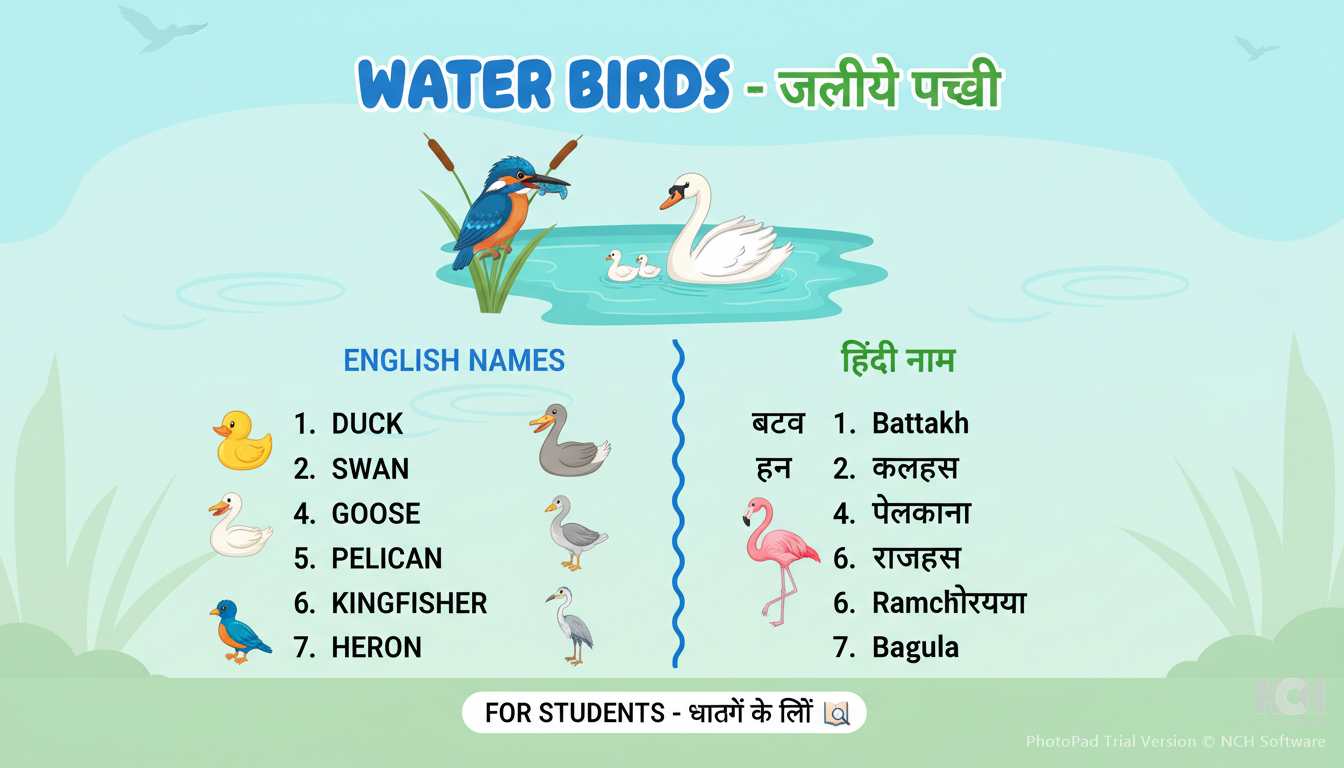
Water Birds Name in English and Hindi (पानी में रहने वाले पक्षियों के नाम)
🦆Water Birds Name in English and Hindi (पानी में रहने वाले पक्षियों के नाम) A goose (Anser cygnoides) is a water bird commonly found near lakes, rivers, wetlands, and coastal areas. A high-quality image of a Goose (Anser cygnoides), a water bird adapted to lakes,…
Continue reading...100 Birds Name in Hindi and English-पक्षियों के नाम हिंदी और अंग्रेज़ी में – आसान, मज़ेदार और पूरी सूची
100 पक्षियों के नाम हिंदी और अंग्रेज़ी में 🌿 Real-Life Example (Gaon Ki Kahani) Maan lo aap summer vacation me gaon gaye ho. Subah 5 baje murga "kukdukoo" karta hai. Thodi der baad ped par baithi koil ki "koo-koo" awaaz aati hai. Ghar ke aas-paas…
Continue reading...20 Birds Name in Hindi and English (20 पक्षियों के नाम) | For Students & Easy Pronunciation
20 Birds Name in Hindi and English Here is a fresh set of 20 birds: क्या आपने कभी notice किया है कि हम रोज़ कई birds देखते हैं, लेकिन उनके English ya Hindi names हमें हमेशा याद नहीं रहते? इसीलिए students अक्सर search करते हैं…
Continue reading...10 Birds Name in Hindi and English (With Easy Meaning & GK Use)
🐦10 Birds Name in Hindi and English Quick Answer: 10 Birds Name in Hindi and English are Hoopoe, Woodpecker, Goose, Dove, Kingfisher, Indian Roller, Bulbul, Lapwing, Penguin, and Kiwi. Kya aapko school homework ya GK preparation ke liye birds ke naam chahiye? Bahut baar students…
Continue reading...