
🌶️40 Common Spices: Names, Pictures, Uses & Interesting Facts
🌶️ 40 Common Spices: Names, Pictures & Uses
40 Common Spices: Names, Pictures, Uses & Interesting Facts
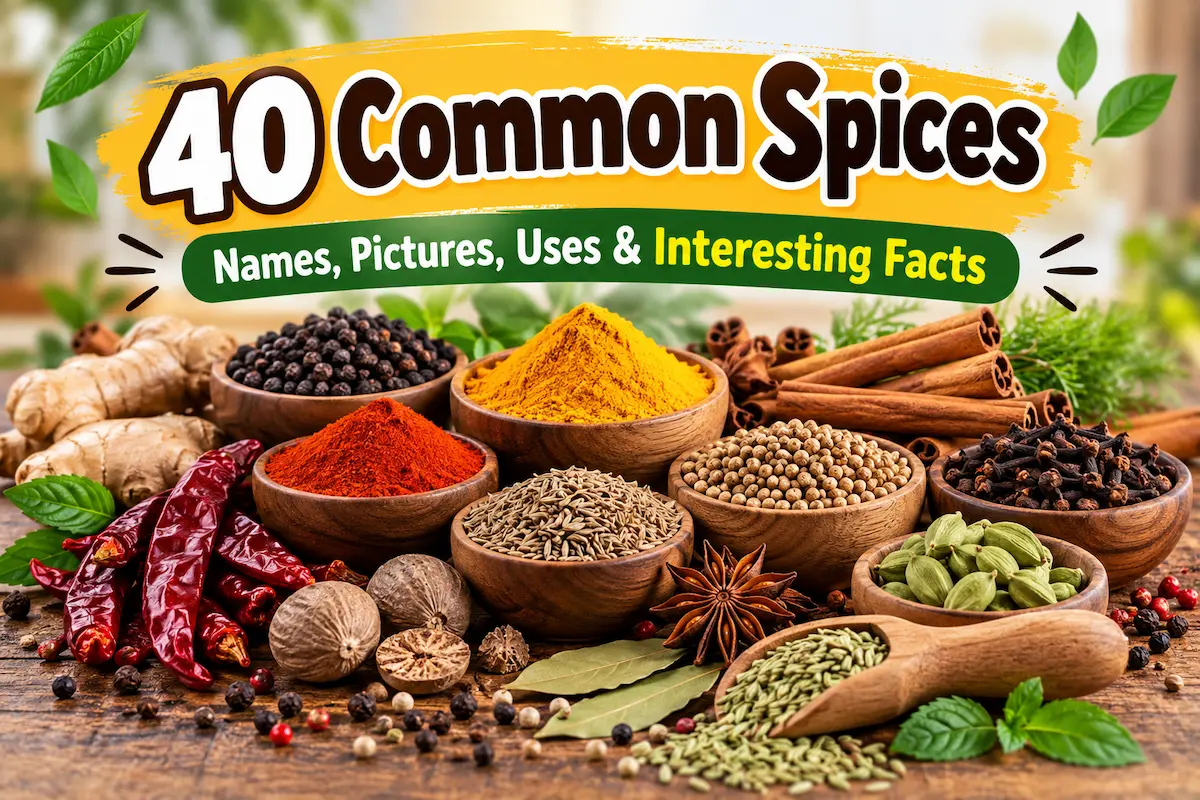
Spices have been part of cooking for thousands of years. They add flavor, aroma, color, and character to food, from everyday home cooking to traditional dishes around the world.
But how many common spices can you actually name?
This guide introduces 40 common spices, explains what they look like, and shows how they are commonly used in cooking. It is designed as a simple reference for children, students, beginners, parents, and anyone interested in food and spices. Explore 100 spices name article
🌿 Quick fact: Cumin, turmeric, and coriander are among the widely used spices found in everyday cooking across many cuisines.
Read Is Paprika Spicy? ,🌶️40 Common Spices: Names, Pictures, Uses & Interesting Facts Guides
📥 Download Free 100 Spices Name PDF
Table of Contents
- 🌶️ 40 Common Spices: Names, Pictures & Uses
- 🌍 40 Common Spices
- 🧂 1. Cumin
- 🟡 2. Turmeric
- 🌿 3. Coriander
- ⚫ 4. Black Pepper
- 🪵 5. Cinnamon
- 🌱 6. Cardamom
- 🌸 7. Cloves
- 🫚 8. Ginger
- 🧄 9. Garlic
- 🌱 10. Mustard Seeds
- 🌿 11. Fennel Seeds
- 🌿 12. Fenugreek Seeds
- 🍃 13. Bay Leaf
- ⭐ 14. Star Anise
- 🌰 15. Nutmeg
- 🌺 16. Mace
- ✨ 17. Saffron
- 🟥 18. Paprika
- 🌶️ 19. Cayenne Pepper
- 🌶️ 20. Red Pepper Flakes
- 🌶️ 21. Chili Powder
- 🌿 22. Caraway Seeds
- 🌱 23. Celery Seeds
- 🌿 24. Dill Seeds
- ⚪ 25. Poppy Seeds
- ⚪ 26. Sesame Seeds
- 🌿 27. Ajwain
- 🌿 28. Asafoetida
- 🍋 29. Sumac
- 🌰 30. Allspice
- 🫐 31. Juniper Berries
- 🌶️ 32. Sichuan Pepper
- 🟤 33. Tamarind
- 🌼 34. Vanilla
- 🌱 35. Horseradish
- 🌿 36. Wasabi
- 🌿 37. Long Pepper
- ⚫ 38. Black Cardamom
- ⚪ 39. White Pepper
- 🟢 40. Green Peppercorns
- 🌿 Cinnamon Benefits
- 🧂 Whole Spices vs Ground Spices
- 🌿 Herbs vs Spices: What Is the Difference?
- 🌎 Common Spices Around the World
- 🧠 Why Do We Use Spices in Cooking?
- 🌶️ 10 Spices Beginners Can Start With
- 💡 Interesting Facts About Spices
- 📋 Quick Summary
- 🧩 Can You Name These Spices?
- 🌿 Keep Exploring
- ❓ Frequently Asked Questions
- 🌍 Explore More Food & Spice Guides
🌶️ What Is a Spice?
A spice is a plant part that is mainly used to flavor, season, or add aroma to food.
Spices can come from different parts of plants, including:
🌱 Seeds
🌳 Bark
🌿 Roots
🍃 Fruits
🌸 Flower buds
🫘 Pods
For example, cinnamon comes from bark, while cloves are dried flower buds and black pepper comes from dried pepper fruits.
Spices may be used whole, crushed, ground, or blended with other spices. Read Best Spices For Beginners
🌍 40 Common Spices
| No. | Spice | Common Use |
|---|---|---|
| 1 | Cumin | Curries, rice, soups |
| 2 | Turmeric | Curries, rice, vegetables |
| 3 | Coriander | Curries, sauces, spice blends |
| 4 | Black Pepper | Soups, meats, vegetables |
| 5 | Cinnamon | Desserts, drinks, curries |
| 6 | Cardamom | Tea, desserts, rice dishes |
| 7 | Cloves | Rice, curries, baked foods |
| 8 | Ginger | Curries, soups, drinks |
| 9 | Garlic | Sauces, curries, vegetables |
| 10 | Mustard Seeds | Pickles, curries, tempering |
| 11 | Fennel Seeds | Spice blends, breads, drinks |
| 12 | Fenugreek Seeds | Curries, pickles, spice blends |
| 13 | Bay Leaf | Rice, soups, stews |
| 14 | Star Anise | Rice dishes, soups, spice blends |
| 15 | Nutmeg | Desserts, sauces, drinks |
| 16 | Mace | Rice dishes, spice blends |
| 17 | Saffron | Rice, desserts, drinks |
| 18 | Paprika | Soups, sauces, vegetables |
| 19 | Cayenne Pepper | Spicy sauces and dishes |
| 20 | Red Pepper Flakes | Pizza, pasta, sauces |
| 21 | Chili Powder | Curries, sauces, chili |
| 22 | Caraway Seeds | Breads, stews, vegetables |
| 23 | Celery Seeds | Soups, salads, seasoning |
| 24 | Dill Seeds | Pickles, breads, vegetables |
| 25 | Poppy Seeds | Breads, desserts, sauces |
| 26 | Sesame Seeds | Breads, sauces, toppings |
| 27 | Ajwain | Flatbreads, snacks, curries |
| 28 | Asafoetida | Lentils, curries, vegetable dishes |
| 29 | Sumac | Salads, meats, dips |
| 30 | Allspice | Meat dishes, sauces, baked foods |
| 31 | Juniper Berries | Sauces and meat dishes |
| 32 | Sichuan Pepper | Noodles, stir-fries, sauces |
| 33 | Tamarind | Chutneys, sauces, curries |
| 34 | Vanilla | Desserts, cakes, drinks |
| 35 | Horseradish | Sauces and meat dishes |
| 36 | Wasabi | Sushi and Japanese dishes |
| 37 | Long Pepper | Curries and spice blends |
| 38 | Black Cardamom | Rice dishes, curries |
| 39 | White Pepper | Soups, sauces, light-colored dishes |
| 40 | Green Peppercorns | Sauces, meats, salads |
🧂 1. Cumin
Cumin is a small, aromatic seed with a warm, earthy flavor.
It is especially common in Indian, Middle Eastern, Mexican, and North African cooking.
🍚 Common uses: Rice dishes, curries, soups, roasted vegetables, spice blends, and meat dishes.
🟡 2. Turmeric
Turmeric is a bright yellow-orange spice made from the dried and ground rhizome of the turmeric plant.
It is famous for its distinctive color and earthy flavor.
🍛 Common uses: Curries, rice dishes, soups, vegetables, and spice blends.
🌿 3. Coriander
Coriander seeds have a warm, slightly citrusy flavor and are widely used as a whole spice or ground powder.
🌮 Common uses: Curries, sauces, soups, spice blends, and meat dishes.
🌱 Did you know? The coriander plant provides both a spice from its seeds and a fresh herb from its leaves.
⚫ 4. Black Pepper
Black pepper is made from dried peppercorns and is one of the most familiar table spices.
It has a sharp, warm, and slightly pungent flavor.
🥣 Common uses: Soups, vegetables, eggs, meat, sauces, and salads.
🪵 5. Cinnamon
Cinnamon is obtained from the inner bark of cinnamon trees.
It has a sweet, warm, woody aroma and is used in both sweet and savory dishes.
🍰 Common uses: Cakes, desserts, hot drinks, rice dishes, curries, and spice blends.
🌱 6. Cardamom
Cardamom is an aromatic spice that comes in small pods containing tiny seeds.
It has a distinctive sweet and fragrant flavor.
☕ Common uses: Tea, coffee, desserts, rice dishes, and spice blends.
🌸 7. Cloves
Cloves are dried flower buds with a strong, warm, aromatic flavor.
They are commonly used whole or ground.
🍚 Common uses: Rice dishes, curries, baked foods, sauces, and spice blends.
🫚 8. Ginger
Ginger is commonly used fresh, dried, or ground.
It has a warm, spicy, slightly citrusy flavor.
🍲 Common uses: Curries, soups, sauces, stir-fries, baked foods, and beverages.
🧄 9. Garlic
Garlic is technically a bulb rather than a traditional dried spice, but dried garlic and garlic powder are widely used as seasonings.
It provides a strong savory aroma and flavor.
🍝 Common uses: Sauces, curries, vegetables, pasta, soups, and marinades.
🌱 10. Mustard Seeds
Mustard seeds are small seeds available in different colors, including yellow, brown, and black.
They develop a stronger flavor when heated.
🍳 Common uses: Tempering, pickles, sauces, curries, and vegetable dishes.
🌿 11. Fennel Seeds
Fennel seeds have a sweet, aromatic flavor with a mild licorice-like character.
They are used in both cooking and spice mixtures.
🥘 Common uses: Curries, spice blends, breads, pickles, and beverages.
🌿 12. Fenugreek Seeds
Fenugreek seeds are small, yellow-brown seeds with a distinctive bitter and aromatic flavor.
They are used in several South Asian dishes.
🍛 Common uses: Curries, pickles, sauces, and spice blends.
🍃 13. Bay Leaf
Bay leaves are aromatic leaves used to flavor soups, stews, rice dishes, and sauces.
The whole leaf is generally removed before serving.
🍲 Common uses: Soups, stews, rice dishes, sauces, and curries.
⭐ 14. Star Anise
Star anise is a star-shaped dried fruit containing several seeds.
It has a strong sweet and aromatic flavor.
🍜 Common uses: Broths, rice dishes, sauces, spice blends, and some desserts.
🌰 15. Nutmeg
Nutmeg is the seed of the fruit of the nutmeg tree.
It has a warm, sweet, and slightly nutty aroma.
🥧 Common uses: Desserts, baked foods, sauces, drinks, and spice blends.
🌺 16. Mace
Mace is the reddish covering surrounding the nutmeg seed.
It has a flavor similar to nutmeg but with its own distinctive aroma.
🍚 Common uses: Rice dishes, curries, sauces, and spice blends.
✨ 17. Saffron
Saffron comes from the dried stigmas of the saffron crocus flower.
It is highly valued because a relatively small amount can add color, aroma, and flavor to food.
🍚 Common uses: Rice dishes, desserts, milk-based drinks, and special dishes.
🟥 18. Paprika
Paprika is made from ground dried peppers.
Depending on the variety, paprika can range from mild and sweet to hot.
🌮 Common uses: Soups, sauces, vegetables, meats, and seasoning blends.
🌶️ 19. Cayenne Pepper
Cayenne pepper is a ground chili pepper used to add heat to food.
🔥 Common uses: Spicy sauces, soups, curries, marinades, and meat dishes.
🌶️ 20. Red Pepper Flakes
Red pepper flakes are dried pieces of crushed red chili peppers.
They are often sprinkled directly onto food.
🍕 Common uses: Pizza, pasta, sauces, vegetables, and spicy dishes.
🌶️ 21. Chili Powder
Chili powder is a powdered chili-based seasoning. Its exact ingredients can vary depending on the blend.
🌮 Common uses: Chili, curries, sauces, marinades, and meat dishes.
🌿 22. Caraway Seeds
Caraway seeds have a distinctive warm, earthy flavor.
🥖 Common uses: Breads, stews, vegetables, and seasoning blends.
🌱 23. Celery Seeds
Celery seeds are small aromatic seeds with a strong celery-like flavor.
🥗 Common uses: Soups, salads, sauces, pickles, and seasoning blends.
🌿 24. Dill Seeds
Dill seeds have an aromatic flavor and are commonly used in pickling and seasoning.
🥒 Common uses: Pickles, breads, vegetables, and sauces.
⚪ 25. Poppy Seeds
Poppy seeds are tiny seeds used in many cuisines.
They can add a mild nutty flavor and pleasant texture.
🥖 Common uses: Breads, pastries, desserts, sauces, and toppings.
⚪ 26. Sesame Seeds
Sesame seeds are small seeds with a nutty flavor.
They can be used whole, toasted, or incorporated into sauces and pastes.
🥗 Common uses: Breads, salads, sauces, toppings, and Asian dishes.
🌿 27. Ajwain
Ajwain, also called carom seeds, is an aromatic spice commonly used in South Asian cooking.
It has a strong, distinctive flavor.
🫓 Common uses: Flatbreads, snacks, fried foods, lentils, and vegetable dishes.
🌿 28. Asafoetida
Asafoetida is a strongly aromatic spice commonly used in small quantities.
It is particularly associated with several South Asian dishes.
🍛 Common uses: Lentils, curries, vegetables, sauces, and spice blends.
🍋 29. Sumac
Sumac is a reddish-purple spice with a distinctive tangy, lemon-like flavor.
It is particularly common in Middle Eastern and Mediterranean cooking.
🥗 Common uses: Salads, grilled meats, dips, rice dishes, and seasoning.
🌰 30. Allspice
Despite its name, allspice is one spice, not a mixture of several spices.
It has a flavor that can remind people of several warm spices.
🍖 Common uses: Meat dishes, sauces, stews, baked foods, and spice blends.
🫐 31. Juniper Berries
Juniper berries are actually modified cones from juniper plants.
They have a distinctive pine-like, aromatic flavor.
🍖 Common uses: Sauces, meat dishes, and traditional European cooking.
🌶️ 32. Sichuan Pepper
Sichuan pepper is known for its distinctive citrusy aroma and tingling sensation.
It is widely associated with Sichuan cuisine.
🍜 Common uses: Stir-fries, noodles, sauces, meat dishes, and spice blends.
🟤 33. Tamarind
Tamarind comes from the fruit of the tamarind tree.
Its pulp has a distinctly sweet-and-sour flavor and is widely used as a souring ingredient.
🥣 Common uses: Chutneys, sauces, curries, soups, drinks, and marinades.
🌼 34. Vanilla
Vanilla comes from the cured fruit pods of vanilla orchids.
It is particularly important in sweet foods and desserts.
🍦 Common uses: Ice cream, cakes, custards, cookies, drinks, and desserts.
🌱 35. Horseradish
Horseradish is a root with a strong, sharp flavor.
It is commonly prepared as a condiment or incorporated into sauces.
🥩 Common uses: Sauces, meat dishes, sandwiches, and condiments.
🌿 36. Wasabi
Wasabi is a plant whose rhizome is traditionally grated to make a pungent green condiment.
It is closely associated with Japanese cuisine.
🍣 Common uses: Sushi, sashimi, noodles, and Japanese dishes.
🌿 37. Long Pepper
Long pepper is a dried fruit with a warm, peppery flavor.
It has been used historically in several Asian cuisines.
🍛 Common uses: Curries, spice blends, sauces, and traditional dishes.
⚫ 38. Black Cardamom
Black cardamom has larger pods and a smoky, earthy aroma compared with green cardamom.
It is particularly useful in hearty savory dishes.
🍲 Common uses: Curries, rice dishes, stews, and spice blends.
⚪ 39. White Pepper
White pepper comes from the same pepper plant as black pepper, but it is processed differently.
It has a warm, peppery flavor and is often useful when cooks want pepper flavor without visible black specks.
🥣 Common uses: Soups, sauces, mashed foods, and light-colored dishes.
🟢 40. Green Peppercorns
Green peppercorns are young pepper fruits harvested before they fully mature.
They have a fresher and milder character than many dried black peppercorns.
🥩 Common uses: Sauces, meat dishes, salads, and gourmet cooking.
🌿 Cinnamon Benefits
Cinnamon is a fragrant spice made from the inner bark of certain trees. Besides adding a warm, sweet aroma to food and drinks, cinnamon has been studied for several potential health effects.
Some research has explored cinnamon's possible role in blood sugar regulation, antioxidant activity, and inflammation, but results can vary depending on the type and amount of cinnamon used.
✨ Potential Benefits of Cinnamon
🛡️ Contains antioxidant compounds that help protect cells from oxidative stress.
🩸 May influence blood sugar regulation, although cinnamon should not be considered a replacement for diabetes treatment.
🔥 Has compounds with anti-inflammatory activity that researchers continue to study.
❤️ May have effects on some cardiovascular risk factors, but evidence is still being investigated.
🌿 Adds flavor without needing much of it, making it a useful way to add variety to foods and drinks.
💡 Important: Cinnamon is a food spice, not a medicine. Research on its health effects is ongoing, and the amount and type of cinnamon may matter.
👉 Learn more: [Cinnamon Benefits: Uses, Nutrition, Potential Benefits & Facts]
🧂 Whole Spices vs Ground Spices
Spices are commonly sold in both whole and ground forms.
| Whole Spices | Ground Spices |
|---|---|
| Often retain their aroma longer when stored properly | Convenient and quick to use |
| Can be toasted before cooking | Mix easily into dishes |
| Useful for slow-cooked dishes | Useful for marinades and spice blends |
| Can be ground when needed | Easier to measure |
🌿 Simple tip: Whole spices can be toasted briefly to release their aroma, but they should be watched carefully because spices can burn quickly.
🌿 Herbs vs Spices: What Is the Difference?
Herbs and spices both come from plants, but they are generally used differently.
Herbs usually refer to the fresh or dried leafy parts of plants.
Spices are often obtained from other parts of the plant, such as seeds, bark, roots, fruits, or flower buds.
For example:
🍃 Basil → herb
🌿 Mint → herb
🌱 Cumin seeds → spice
🪵 Cinnamon bark → spice
🌸 Cloves → spice
The distinction is useful, although culinary terminology can vary between cultures and ingredients.
🌎 Common Spices Around the World
Different regions have their own favorite spices and traditional combinations.
🇮🇳 Indian cooking: Cumin, turmeric, coriander, cardamom, cloves, mustard seeds, fenugreek, and many others.
🇲🇽 Mexican cooking: Chili peppers, cumin, cinnamon, and other seasonings are commonly used.
🇮🇹 Italian cooking: Garlic, chili, black pepper, and other herbs and seasonings are common.
🇯🇵 Japanese cooking: Wasabi, ginger, sesame, and other seasonings are used in different dishes.
🇲🇦 North African cooking: Cumin, coriander, cinnamon, paprika, and spice blends feature prominently.
🌍 Middle Eastern cooking: Cumin, coriander, sumac, cinnamon, cardamom, and other aromatic spices are widely used.
🧠 Why Do We Use Spices in Cooking?
Spices can serve several culinary purposes:
👃 Aroma
Many spices contain natural aromatic compounds that give food its characteristic smell.
👅 Flavor
Spices can add warmth, sweetness, bitterness, pungency, earthiness, citrus-like notes, or heat.
🎨 Color
Some spices can dramatically change the appearance of food. Turmeric and paprika are good examples.
🍲 Variety
The same basic ingredients can taste completely different when different spice combinations are used.
🌶️ 10 Spices Beginners Can Start With
If you are building a basic spice collection, you do not need dozens of jars immediately.
A simple starting collection could include:
🌿 Cumin
🟡 Turmeric
🌱 Coriander
⚫ Black pepper
🪵 Cinnamon
🌱 Cardamom
🌸 Cloves
🫚 Ginger
🌶️ Chili powder
🌿 Mustard seeds
These provide a useful foundation for experimenting with many different dishes.
💡 Interesting Facts About Spices
🌿 1. Spices can come from many parts of a plant.
Seeds, bark, roots, fruits, and flower buds can all become spices.
🪵 2. Cinnamon is bark.
Unlike many spices that come from seeds or fruits, cinnamon comes from the inner bark of certain trees.
🌸 3. Cloves are flower buds.
The cloves used in cooking are dried unopened flower buds.
⭐ 4. Star anise has a distinctive shape.
Its dried fruit forms a star-like structure.
🌱 5. Coriander gives us both an herb and a spice.
The leaves are commonly used as an herb, while the dried seeds are used as a spice.
🌶️ 6. Black, white, and green peppercorns come from the same plant.
Their differences mainly result from harvesting and processing methods.
🍦 7. Vanilla comes from an orchid.
Vanilla is obtained from the fruit pods of vanilla orchids.
🧂 8. A spice blend is not the same thing as a single spice.
Blends can combine several spices to create a particular flavor profile.
📋 Quick Summary
| Question | Answer |
|---|---|
| What is a spice? | A plant-derived ingredient used mainly to flavor or season food |
| What is the most common form of spice? | Spices may be whole, crushed, or ground |
| What spice comes from bark? | Cinnamon |
| What spice comes from flower buds? | Cloves |
| What spice is famous for its yellow color? | Turmeric |
| What spice comes from an orchid? | Vanilla |
| Are black and white pepper different plants? | No, they come from the same pepper plant |
| Is allspice a mixture? | No, allspice is a single spice |
| What is a common sour spice? | Sumac |
| What is a common hot spice? | Cayenne pepper |
🧩 Can You Name These Spices?
Test yourself! 👇
1. Which spice comes from tree bark?
A. Cumin
B. Cinnamon
C. Pepper
D. Cardamom
2. Which spice is famous for its bright yellow color?
A. Turmeric
B. Clove
C. Sumac
D. Nutmeg
3. Which spice is actually a dried flower bud?
A. Fennel
B. Clove
C. Cumin
D. Coriander
4. Which spice is obtained from vanilla orchids?
A. Saffron
B. Vanilla
C. Mace
D. Paprika
5. Black pepper and white pepper come from:
A. Different plants
B. The same pepper plant
C. Different trees
D. Different flowers
✅ Answers
B — Cinnamon
A — Turmeric
B — Clove
B — Vanilla
B — The same pepper plant
🌿 Keep Exploring
Want to learn more about spices, seeds, and everyday food ingredients? Explore these related MFJ guides:
🌶️ 100 Spices Name in English and Hindi — Explore a larger collection of common spice names with pictures and uses.
🌱 50 Seeds Name in English and Hindi with Pictures — Learn about edible, garden, oil, and spice seeds.
🧂 Best Spices for Beginners — Discover 10 essential spices to start building a basic kitchen spice collection.
🥦 Vegetables Name A to Z in English and Hindi — Explore common vegetables with names and pictures.
🍎 100 Fruits Name in English and Hindi — Learn the names of common fruits with pictures and simple explanations.
❓ Frequently Asked Questions
What are the 20 most common spices?
Commonly used spices include cumin, turmeric, coriander, black pepper, cinnamon, cardamom, cloves, ginger, mustard seeds, fennel, fenugreek, bay leaf, paprika, chili powder, nutmeg, saffron, garlic, star anise, cayenne pepper, and sesame.
What are 40 common spices?
Forty examples include cumin, turmeric, coriander, black pepper, cinnamon, cardamom, cloves, ginger, garlic, mustard seeds, fennel, fenugreek, bay leaf, star anise, nutmeg, mace, saffron, paprika, cayenne pepper, red pepper flakes, chili powder, caraway, celery seeds, dill seeds, poppy seeds, sesame, ajwain, asafoetida, sumac, allspice, juniper berries, Sichuan pepper, tamarind, vanilla, horseradish, wasabi, long pepper, black cardamom, white pepper, and green peppercorns.
What are the 12 most popular spices?
Popular spices vary by cuisine and region. Cumin, turmeric, coriander, black pepper, cinnamon, cardamom, cloves, ginger, paprika, chili, nutmeg, and mustard seeds are examples of widely used spices.
What is the difference between a spice and an herb?
Herbs generally refer to the leafy parts of plants, while spices commonly come from seeds, bark, roots, fruits, or flower buds. The culinary distinction can vary depending on the ingredient and culture.
Which spices are good for beginners?
Cumin, turmeric, coriander, black pepper, cinnamon, cardamom, cloves, ginger, chili powder, and mustard seeds are useful starting points for a basic spice collection.
Are all spices spicy or hot?
No. Some spices are hot, such as cayenne pepper, while others are aromatic, sweet, earthy, tangy, or warm. Cinnamon, cardamom, cumin, and saffron are examples of spices that are not primarily used for heat.
🌍 Explore More Food & Spice Guides
If you enjoyed learning about common spices, explore more MFJ food and plant guides covering spice names, seeds, vegetables, fruits, herbs, and other useful food vocabulary.
🌱 Learning about plants and food is not just about memorizing names—it is a simple way to understand the natural world around us.
You should also read:
🌿 Cinnamon Benefits: Uses, Nutrition, Potential Benefits & Facts
🌿 Cinnamon Benefits: Uses, Nutrition, Potential Benefits & Facts Cinnamon Benefits, Uses, Nutrition & Facts Picture Cinnamon sticks and ground cinnamon illustrating the potential benefits, culinary uses, types, nutrition, safety considerations, and interesting facts about cinnamon. Cinnamon is one of the world's best-known spices, valued…
Continue reading...🐦100 Common Birds in the USA: Names, Pictures & Where to See Them
🐦 100 Common Birds in the USA: Names, Pictures & Where to See Them A bird guide illustration featuring familiar USA birds and highlighting names, pictures, habitats, food, identification tips, and where to see them. ⚡ Quick Answer The USA is home to hundreds of…
Continue reading...🐦100 Interesting Facts About Birds: Amazing, Fun & Weird Bird Facts
100 Interesting Facts About Birds: Amazing, Fun & Weird Bird Facts A visual collection of amazing, fun and weird bird facts, from hummingbirds that can fly backward to birds with incredible migration and survival abilities. Above is a Colorful bird infographic featuring examples of amazing,…
Continue reading...
🌶️50 Indian Spices and Their Uses (भारतीय मसालों के उपयोग) – Cooking & Kitchen Guide
🌶️50 Complete Indian Spices and Their Uses (भारतीय मसालों के उपयोग) – Cooking & Kitchen Guide Introduction Indian food is famous around the world because of its rich flavors, colors, and aroma. The secret behind these delicious dishes is spices. From a simple bowl of…
Continue reading...